Mental Health Documentation Guide: How to Write Clinical Notes That Protect Your Practice
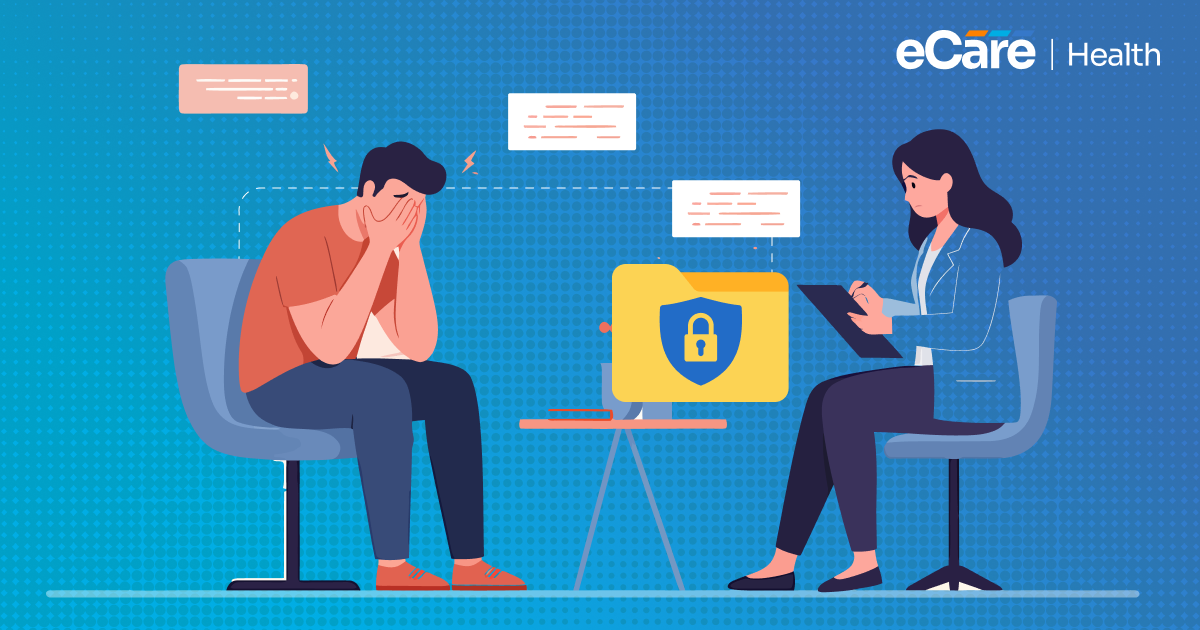
Every therapy session lasts about 50 minutes, but the notes from that session can protect your practice for many years.
After seeing patients all day, it’s obvious that writing clinical notes can feel like just another task on a long to-do list. It’s tempting to finish them quickly and move on. However, even a small missing detail can result in denied claims, compliance issues, or extra work later.
This makes good mental health documentation an important factor. Along with recording what happened during a session, it also shows why the treatment was required, tracks the patient’s progress, and helps your practice if your records are ever reviewed.
However, that documentation does not have to feel overwhelming. With the right approach and mental health EHR software, it becomes easier to create clear behavioral health documentation. Writing accurate notes becomes even easier once you know what to include and what to avoid.
In this guide, we'll walk you through everything you need to know about mental health documentation, from best practices and common mistakes to practical tips that help you create clear, compliant clinical notes.
What Is Mental Health Documentation and Why Does It Matter?
In simple terms, mental health documentation is a record of a patient’s care, which includes assessments, treatment plans, progress notes, and other clinical notes. This further helps you to understand where the patient started, how they are progressing, and what comes next.
It is a fact that good documentation is not only about keeping records, but also helping everyone involved in your patient’s care stay informed, making it easier to provide continuous treatment over time.
Even so, documenting every session is not always easy. With busy schedules, back-to-back appointments, and growing administrative work, it becomes hard to write complete and consistent notes. All these gaps can result in claim denials, compliance concerns, or missing clinical details over time.
For that reason, behavioral health documentation should be clear, accurate, and consistent. Well-written records can enhance patient care, support reimbursement, and help your practice meet mental health documentation guidelines.
Along with this, they also strengthen psychiatric documentation, which makes it easier to demonstrate medical necessity and maintain compliance with clinical notes whenever records are reviewed.
What Makes High-Quality Mental Health Documentation?
High-quality mental health documentation is not only about writing longer notes, but it’s also about writing clear, complete, and meaningful ones. Every record must reflect your patient’s condition, the care provided, and the progress made. By following a consistent approach, it also becomes easier to support patient care, reimbursement, and compliance.
Let’s see some of the key principles that you should keep in mind:
Be accurate & objective:
Without personal opinions, you must record facts, clinical observations, and relevant findings. This helps you create a clear and reliable patient record that other providers can easily understand and trust.
Be timely & consistent:
You should also complete notes soon after each session, while maintaining the same documentation standards throughout treatment. Timely documentation can minimize the chances of missing important details or depending on memory later.
Support medical necessity:
Clearly explaining why the service was needed and how it relates to the patient’s treatment goals can also help to justify the care provided, while supporting reimbursement when claims are reviewed.
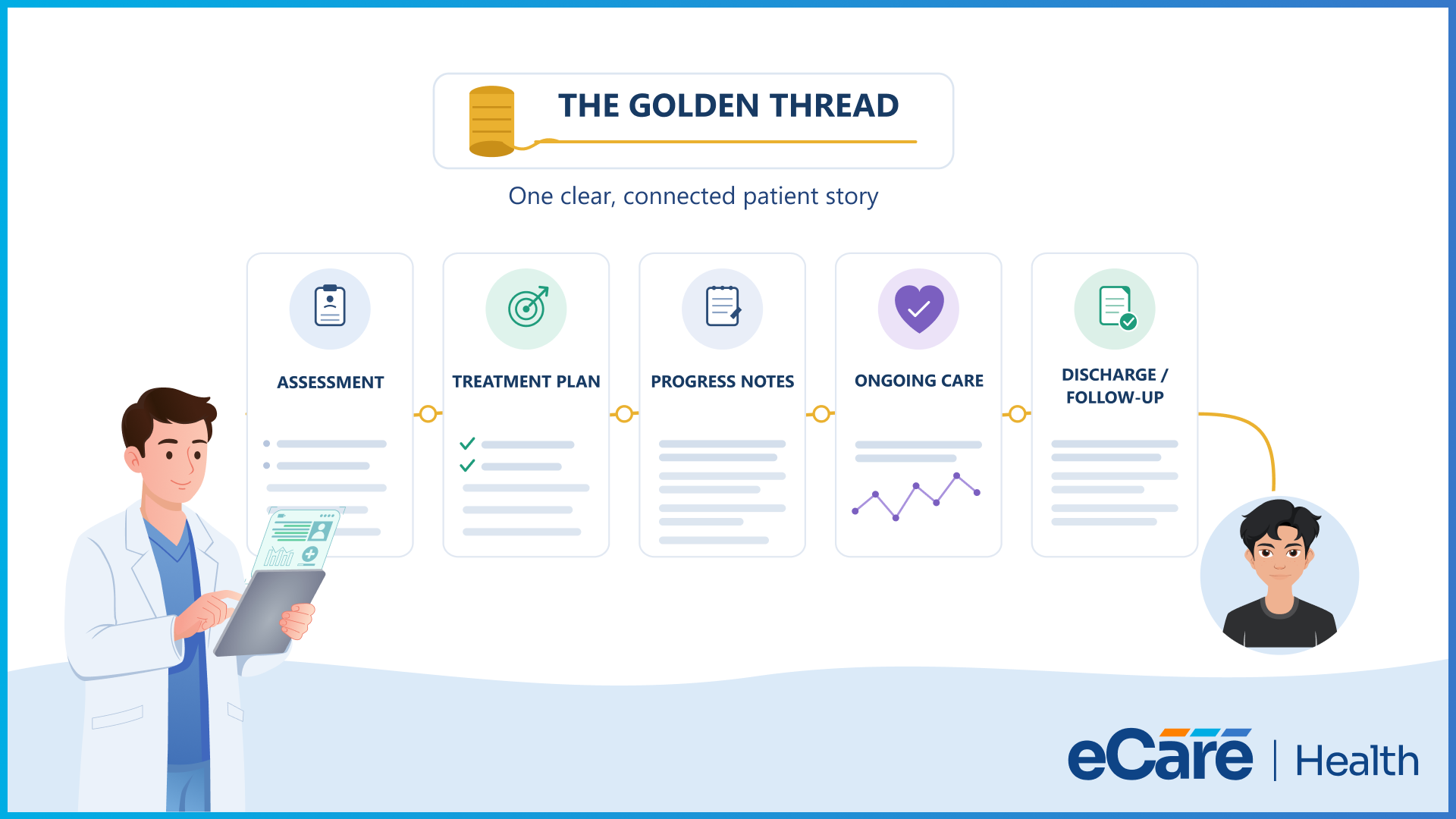
Follow the golden thread:
Along with this, you should also make sure that every document connects logically from assessment to discharge. When each record builds on the previous one, it can create a complete picture of your patient’s care journey.
Follow documentation guidelines:
Standardized mental health documentation guidelines help to improve clinical notes compliance and reduce documentation gaps. They also help in maintaining consistency across providers and patient records.
Protect patient information:
It is also important to keep records secure and maintain patient confidentiality at each stage. By using secure systems and following HIPAA requirements, it’s easy to protect sensitive patient information from unauthorized access.
The Golden Thread in Mental Health Documentation
Simply put, the golden thread means every document must connect to the next, creating one clear and consistent patient history.
| Documentation Stage | Purpose |
|---|---|
| Initial Assessment | Capture the patient's presenting concerns, clinical history, symptoms, and diagnosis. |
| Treatment Plan | Establish measurable treatment goals and planned interventions. |
| Clinical Documentation | Record services provided, therapeutic interventions, and patient response. |
| Progress Notes | Measure progress toward treatment goals and demonstrate ongoing medical necessity. |
| Discharge & Follow-up | Document outcomes, follow-up recommendations, and continuity of care. |
Progress Notes vs. Psychotherapy Notes
Even though they both are important, they actually serve different purposes. Let’s see how they are different from each other:
| Progress Notes | Psychotherapy Notes |
|---|---|
| Part of the official medical record. | Personal notes kept by the therapist. |
| Shared when needed for treatment, billing, or audits. | Keeps separate from the medical record and receives additional privacy protections. |
| Include treatment provided, patient progress, and medical necessity. | Focus on the therapist's personal observations or reflections. |
By knowing the difference, you can maintain accurate mental health clinical documentation and protect patient privacy while meeting documentation requirements.
Best Practices for Writing Audit-Ready Mental Health Clinical Documentation
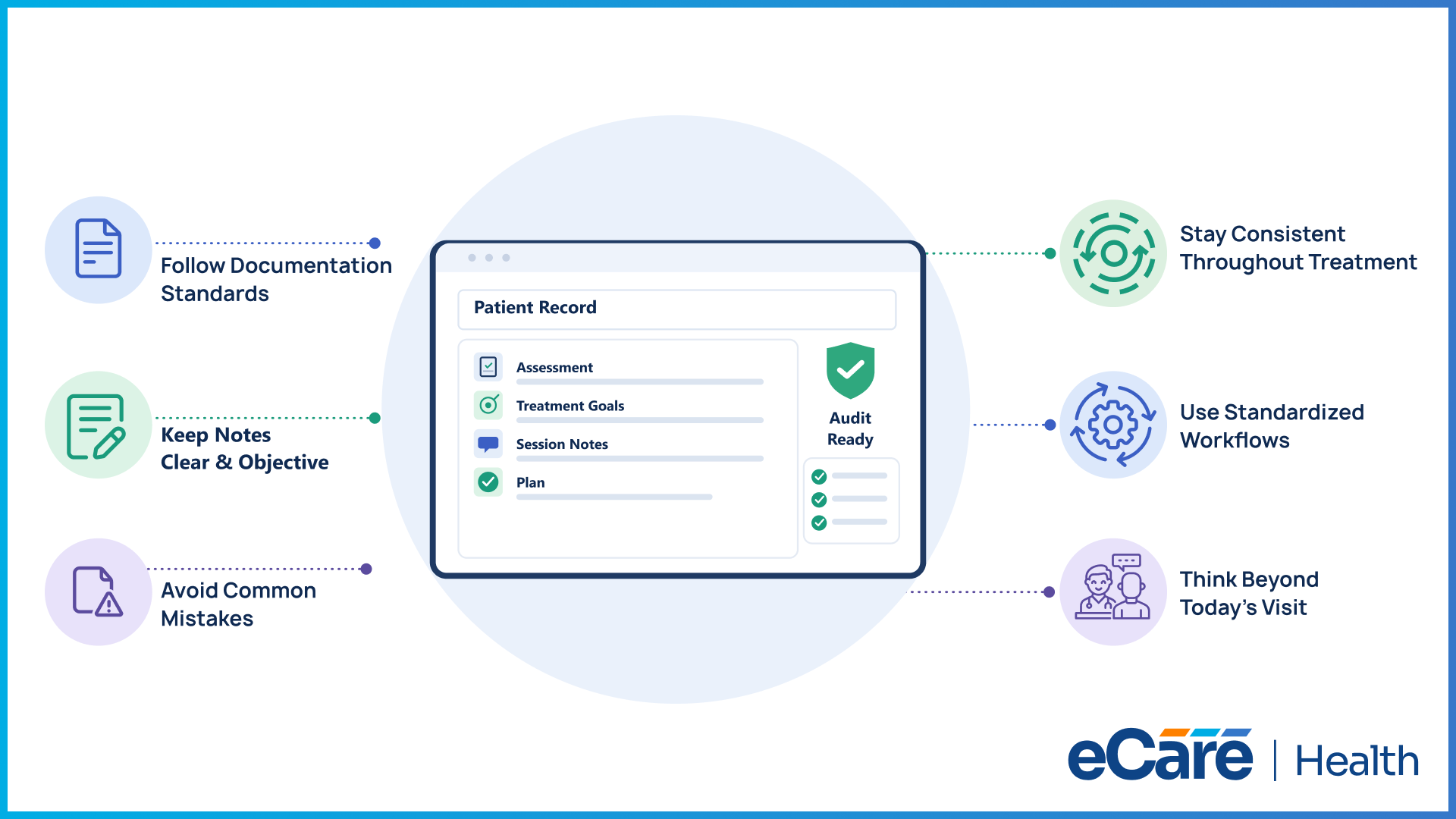
Writing audit-ready documentation is about documenting the right information in a clear, consistent, and meaningful way. These best practices can help to improve the quality of your records and reduce compliance and reimbursement risks.
Follow documentation standards:
You should always use established mental health documentation guidelines and your organization’s documentation policies. This standardized approach can help to keep records consistent and make them easier to review.
Keep notes clear & objective:
Always write what you observed, discussed, and provided during the session. Avoid personal opinions or assumptions, and focus more on clinically relevant information that supports patient care.
Avoid common documentation mistakes:
Steer clear of vague phrases like "doing better" or "same as last visit" without supporting details. Likewise, avoid copy-forward documentation, as it can lead to outdated or inaccurate records.
Stay consistent throughout treatment:
Each note should connect with the patient's assessment, treatment goals, and previous sessions. This consistency makes it easier to track progress and supports ongoing medical necessity.
Use standardized workflows:
Templates, documentation checklists, and Mental Health EHR Software can help improve clinical notes compliance while reducing missing information and documentation errors.
Think beyond today's visit:
Every note should be written with the understanding that it may be reviewed later by payers, auditors, or legal professionals. Clear, complete documentation strengthens reimbursement, supports audits, and helps protect your practice.
SOAP Notes for Mental Health
SOAP notes are one of the most widely used documentation methods in behavioral healthcare, as they provide a simple and organized way to record patient information. Rather than writing long narrative notes, you can document each session in a clear format that is easy to review and follow.
For a more detailed look at how to structure and use this format, see our guide on “SOAP Notes for Mental Health: Format, Examples, and Best Practices for Therapists”.
The SOAP Framework at a Glance:
| Section | What to Include |
|---|---|
| S – Subjective | What the patient reports, including symptoms, concerns, or changes since the last visit. |
| O – Objective | Clinical observations, mental status findings, and measurable information gathered during the session. |
| A – Assessment | Your clinical impression, progress toward treatment goals, and evaluation of the patient's condition. |
| P – Plan | The next steps, including interventions, follow-up appointments, referrals, or treatment changes. |
Let’s see why many providers prefer SOAP notes:
- Creates a consistent structure for every session.
- Makes mental health documentation easier to review.
- Supports communication between providers.
- Helps demonstrate medical necessity for reimbursement and audits.
But when are SOAP notes the right choice?
SOAP notes are perfect for routine therapy sessions, psychiatric follow-ups, medication management visits, and ongoing treatment where patient progress needs to be tracked consistently over time.
DAP Notes vs. SOAP Notes vs. BIRP Notes
It is a fact that there is no single documentation format that works for every behavioral health practice. The right choice usually relies on your clinical workflow, documentation needs, and the type of care you provide.
For a closer look at how these formats compare in real-world therapy documentation, explore DAP Notes vs SOAP Notes vs BIRP Notes: Which Format Is Right for Your Therapy Practice?
Regardless of the format you choose, the goal remains the same: create clear, consistent records that support quality care and compliance.
Here is the quick comparison:
| Documentation Format | Best Used For | Key Focus |
|---|---|---|
| SOAP Notes | Therapy sessions, psychiatric follow-ups, medication management | Organizes documentation into Subjective, Objective, Assessment, and Plan. |
| DAP Notes | Individual therapy and counseling | Focuses on Data, Assessment, and Plan, making notes concise and easy to complete. |
| BIRP Notes | Behavioral health and goal-focused treatment | Documents Behavior, Intervention, Response, and Plan to clearly track patient progress. |
How to Choose the Right Format?
Before selecting a documentation format, consider the following:
- Your clinical workflow: Choose a format that fits naturally into your daily documentation process.
- Documentation requirements: Make sure it supports your organization's policies, payer expectations, and mental health documentation guidelines.
- Consistency: Use the same format across your practice to improve clinical notes compliance and make records easier to review.
- Patient needs: Select the framework that best reflects the type of care you provide and the level of detail required.
Finally, the best documentation format is the one your team can use consistently while creating accurate, meaningful, and compliant behavioral health documentation.
Mental Health Progress Notes
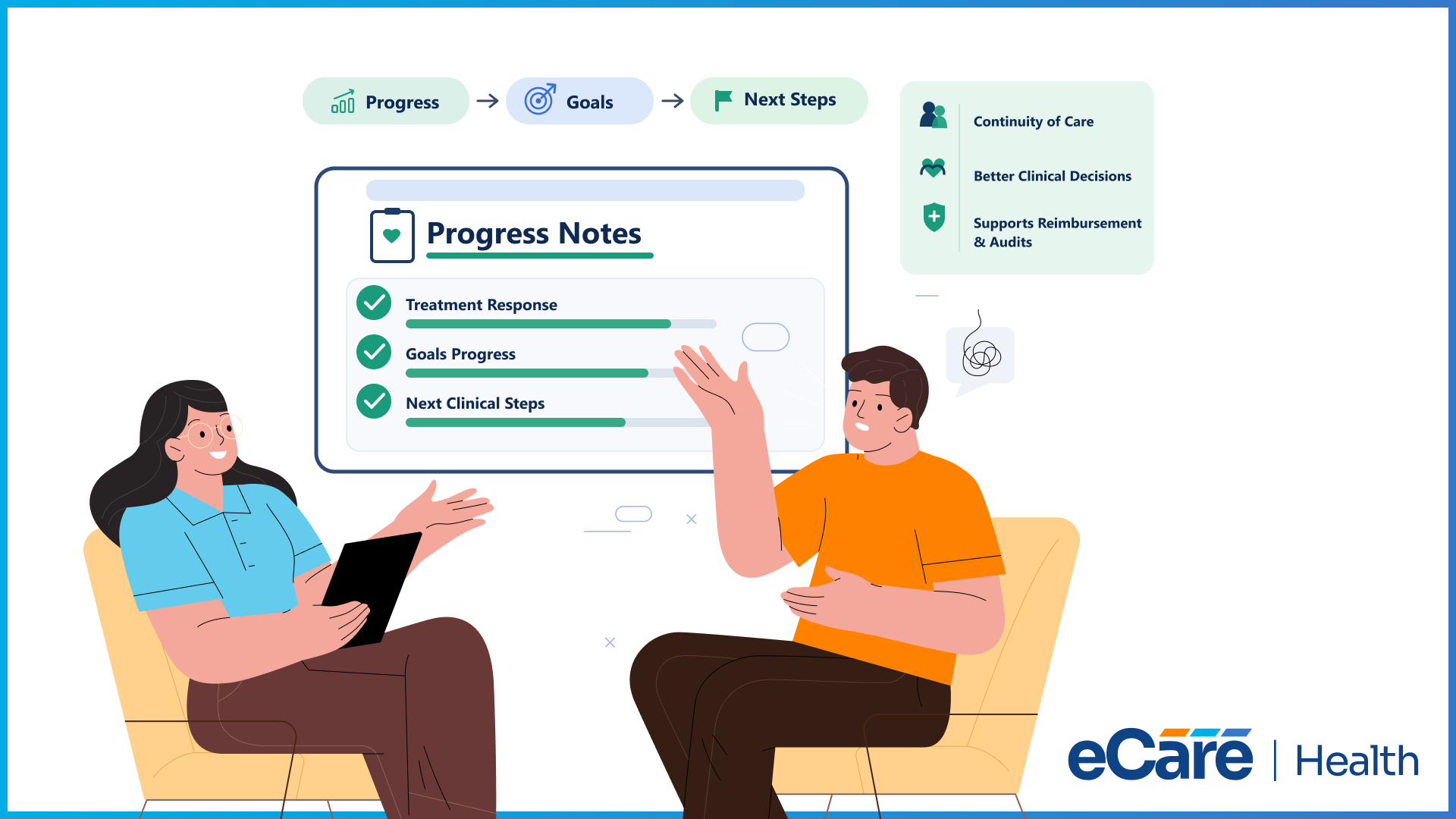
Progress notes are much more than a summary of what happened during a session. They can show how your patient is responding to treatment, whether goals are being met, and what should happen next. These notes further create a clear record of your patient’s care journey, while helping you to make informed clinical decisions.
For practical guidance on creating stronger documentation, explore “Mental Health Progress Notes: How to Write Clear and Defensible Clinical Documentation.”
Moving forward, well-written progress notes also support continuity of care. For example, if any other clinician reviews your patient’s record, they can quickly understand the provided treatment, the patient’s progress, and any changes that may be required. Along with this, they also play a key role in demonstrating ongoing medical necessity for reimbursement and audits.
To make your progress notes more effective, avoid these common mistakes:
- Writing vague or generic statements without clinical details.
- Copying notes from previous sessions without updating them.
- Leaving out the patient's response to treatment or progress toward goals.
- Delaying documentation, which can lead to missing or inaccurate information.
When completed consistently, mental health progress notes can strengthen mental health documentation, enhance care quality, support clinical notes compliance, and provide a reliable record that protects not only patients, but also your practice.
Behavioral Health Treatment Planning
A treatment plan is not just a document; it’s actually a roadmap that guides each stage of your patient’s care. A well-designed plan helps to keep treatment focused, helps measure progress, while ensuring everyone involved in working toward the same goals.
For practical guidance on creating and managing these plans within an EHR, explore “Behavioral Health Treatment Planning: How to Create, Track, and Update Patient Goals in Your EHR”.
Make every plan personal:
As every patient has different requirements, challenges, and treatment goals, creating individualized plans helps to make sure that care is tailored to your patient’s conditions instead of using a one-size-fits-all approach.
Set goals you can measure:
With clear and measurable goals, it becomes easy to evaluate progress over time. Along with this, they also help you adjust interventions when required and demonstrate the effectiveness of treatment.
Review & update regularly:
Treatment plans shouldn't stay the same from the first visit to discharge. Reviewing and updating them as the patient's condition changes keeps care relevant and supports better clinical outcomes.
Keep everyone on the same page:
Structured treatment planning improves communication across the care team and supports coordinated, patient-centered care. It also strengthens mental health documentation by ensuring treatment goals, interventions, and progress remain connected throughout the patient's care journey.
How Mental Health EHR Software Strengthens Clinical Documentation
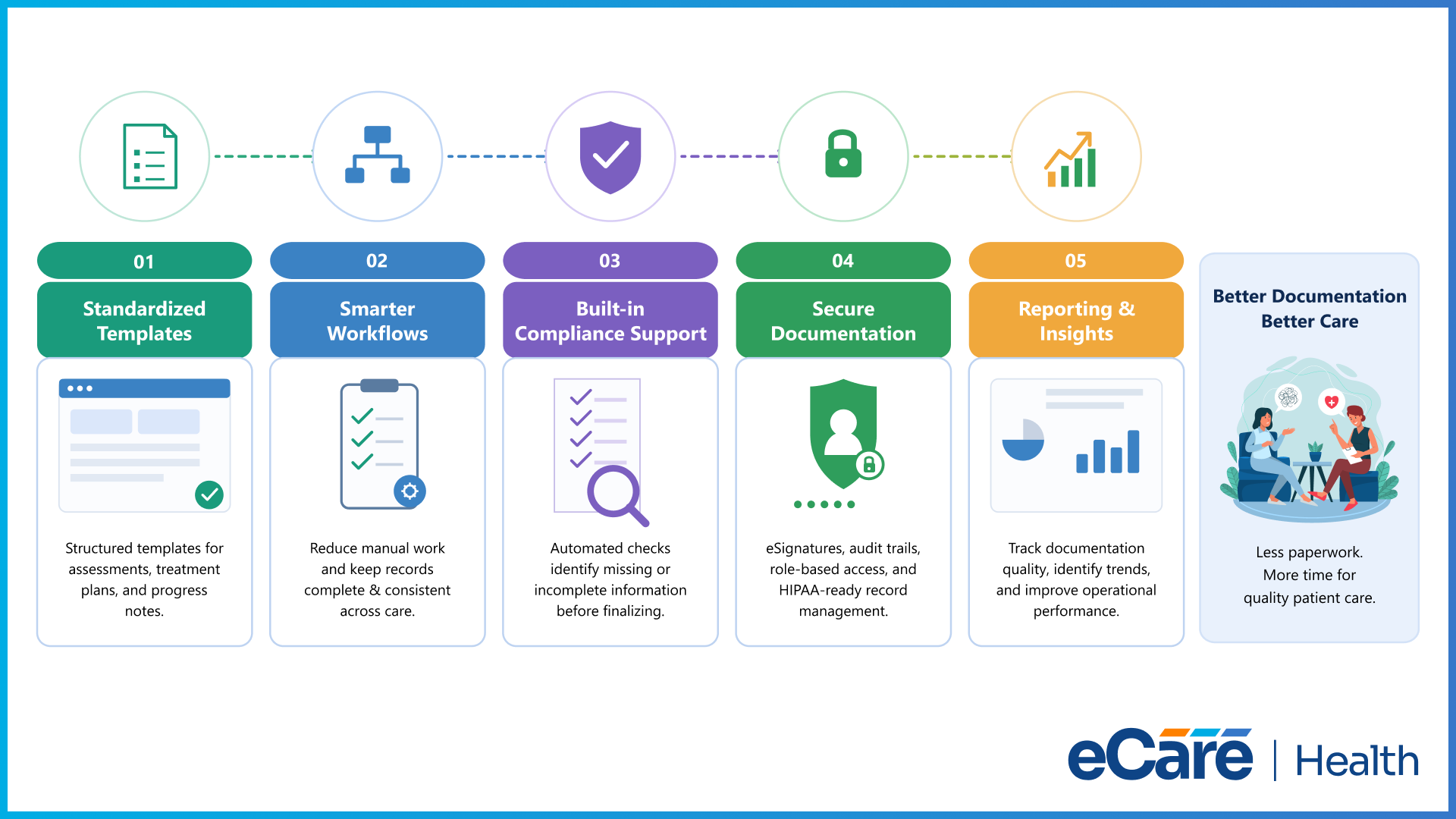
The right mental health EHR software does not just replace paper records; it helps your practice document care more accurately, stay compliant, and spend less time on administrative work.
Standardized templates:
Create consistent behavioral health documentation with structured templates for assessments, treatment plans, and progress notes.
Smarter workflows:
Reduce manual work with documentation workflows that keep records complete and consistent across every stage of care.
Built-in compliance support:
Stay audit-ready with automated documentation checks that help identify missing or incomplete information before records are finalized.
Secure documentation:
Protect patient information through electronic signatures, audit trails, role-based access controls, and HIPAA-ready record management.
Reporting & insights:
Track documentation quality, identify trends, and improve operational performance with built-in reporting and analytics.
The bottom line:
When documentation becomes faster, more consistent, and easier to manage, providers can spend less time on paperwork and more time delivering quality patient care.
Conclusion
Strong mental health documentation is more than a compliance requirement; it's the foundation of better patient care, smoother operations, and a well-protected practice. When documentation is accurate, complete, and consistent, it becomes easier to demonstrate medical necessity, support reimbursement, and stay prepared for audits.
As behavioral health practices continue to evolve, standardized documentation workflows can make a lasting difference. They improve care coordination, reduce administrative burden, and help providers focus more on patients than paperwork.
Looking to simplify your documentation process? eCareHealth's mental health EHR offers specialty-specific templates, integrated compliance workflows, secure audit trails, electronic signatures, and centralized patient record management—all designed to help behavioral health organizations document with confidence and efficiency.
Frequently Asked Questions (FAQs)
1. What is mental health documentation?
Mental health documentation is the process of recording a patient's clinical information throughout their care journey. It includes assessments, diagnoses, treatment plans, progress notes, interventions, and discharge summaries. These records help providers understand the patient's condition, monitor progress, and make informed treatment decisions. In addition to supporting quality care, accurate documentation also helps with insurance reimbursement, regulatory compliance, audits, and legal protection.
2. Why is mental health documentation important for behavioral health practices?
Mental health documentation plays a vital role in both patient care and practice management. It provides a clear record of the services delivered, supports continuity of care, and helps providers demonstrate medical necessity. Well-maintained documentation also improves communication among care teams, reduces the risk of claim denials, supports compliance with regulatory requirements, and provides reliable evidence if records are reviewed during audits or legal proceedings.
3. What are the six principles of effective mental health documentation?
Effective mental health documentation is based on six key principles: being accurate and objective, documenting information in a timely and consistent manner, supporting medical necessity, maintaining the Golden Thread throughout treatment, following standardized documentation guidelines, and protecting patient information. Together, these principles help providers create clear, reliable, and audit-ready records while improving patient care, reimbursement, and compliance.
4. What is the Golden Thread in mental health documentation?
The Golden Thread is a documentation approach that connects every stage of a patient's care. It starts with the initial assessment, continues through the treatment plan and progress notes, and ends with discharge documentation. Each record should support the next, creating a consistent story of the patient's treatment. This helps demonstrate medical necessity, track progress toward treatment goals, and maintain complete, well-organized clinical records.
5. What is the difference between progress notes and psychotherapy notes?
Progress notes are part of the patient's official medical record and document the care provided, treatment progress, and ongoing medical necessity. They may be reviewed for treatment, billing, or compliance purposes. Psychotherapy notes, however, are the therapist's private notes that contain personal observations or reflections. They are kept separate from the medical record and receive additional privacy protections under HIPAA.
6. How do you write defensive mental health clinical notes?
Defensive mental health clinical notes should be clear, objective, and based on clinical facts rather than assumptions. Document the patient's symptoms, interventions provided, response to treatment, and progress toward treatment goals. Be sure to explain the medical necessity of each session and complete your notes promptly. Avoid vague language, incomplete records, or copying previous notes, as these can create compliance and legal risks.
7. What are the medical necessity documentation guidelines for therapists?
Medical necessity documentation should clearly explain why treatment is required and how each session benefits the patient. Therapists should document the patient's diagnosis, symptoms, treatment goals, interventions used, response to therapy, and progress made. Each note should demonstrate that the services provided are appropriate, clinically justified, and aligned with the patient's individualized treatment plan.
8. What are the differences between SOAP, DAP, and BIRP notes?
SOAP, DAP, and BIRP are structured documentation formats used in behavioral healthcare, but each serves a different purpose. SOAP notes organize information into Subjective, Objective, Assessment, and Plan. DAP notes focus on Data, Assessment, and Plan, making them concise and easy to use during therapy sessions. BIRP notes document Behavior, Intervention, Response, and Plan, making them ideal for tracking behavioral changes and treatment outcomes.
9. Why are mental health progress notes important?
Mental health progress notes provide an ongoing record of a patient's treatment, response to interventions, and progress toward clinical goals. They help providers monitor changes over time, support continuity of care, and demonstrate ongoing medical necessity. Well-written progress notes also strengthen communication between care teams while supporting reimbursement, compliance, and audit readiness.
10. Why is behavioral health treatment planning important?
Behavioral health treatment planning provides a clear roadmap for patient care by identifying treatment goals, planned interventions, and expected outcomes. Individualized treatment plans help providers deliver focused, patient-centered care while measuring progress throughout the treatment journey. Regularly reviewing and updating these plans also ensures they remain aligned with the patient's changing needs and clinical outcomes.
11. How can providers improve clinical notes compliance?
Providers can improve clinical notes compliance by following standardized documentation guidelines, completing notes promptly, and maintaining accurate, objective records. Using consistent documentation templates, avoiding copy-forward charting, and regularly reviewing records for completeness can reduce documentation errors. Ongoing staff training and routine documentation audits also help maintain compliance and improve documentation quality.
12. How does Mental Health EHR Software improve documentation workflows?
Mental Health EHR Software simplifies documentation by providing standardized templates, automated workflows, and built-in compliance tools. It helps providers create consistent clinical records, reduce manual documentation, and minimize missing information. Features such as electronic signatures, audit trails, and centralized patient records also improve efficiency while keeping documentation organized and audit-ready.
13. What features should Mental Health EHR Software include for secure and compliant clinical documentation?
A Mental Health EHR Software solution should include specialty-specific documentation templates, automated compliance checks, electronic signatures, audit trails, role-based access controls, and HIPAA-compliant security features. It should also offer centralized patient record management, reporting and analytics, and customizable documentation workflows to help practices improve efficiency, maintain compliance, and deliver high-quality patient care.