Mental Health Progress Notes: How to Write Clear and Defensible Clinical Documentation

If we say every therapy session tells a story, then the one who keeps the story alive is the progress note. If you don’t have clear documentation, important clinical decisions, treatment progress, and even reimbursement can quickly fall through the cracks.
A well-written mental health progress note helps to make sure that every session builds on the last, by creating a complete and reliable record throughout the patient’s journey. And as behavioural health practices continue to see more patients and stricter documentation requirements, writing mental health progress notes has become equally important as delivering quality care.
Because of this, mental health progress notes become much more than a clinical summary. They can create a clear record of your patient’s progress, support treatment decisions, demonstrate medical necessity, and help every provider involved stay on the same page.
Furthermore, documentation becomes even more consistent, efficient, and easier to defend during audits when supported by the right mental health EHR software. Even so, many behavioral health providers still struggle a lot with vague, incomplete, or inconsistent documentation.
Even though at first it seems as a small gap, it can weaken clinical progress, mental health, delay reimbursements, and also increase compliance risks. So, how do you ensure every progress note strengthens patient care instead of creating unnecessary risk?
Let’s dive into the blog to learn why mental health progress notes are the foundation of quality behavioral healthcare, the documentation mistakes to avoid, and practical ways to write clear, accurate, and defensible notes that protect both patients and your practice.
What Every Mental Health Progress Note Should Include
A strong mental health progress note is much more than just a summary of what happened during a session; it should tell a complete clinical story. For example, it should include your patient’s current condition, the care provided, how the patient responded, and what comes next.
When every note follows a continuous structure, you are more likely to demonstrate medical necessity, support continuity of care, and create documentation that is easier to defend during audits and reimbursement reviews.
While every patient encounter is unique, effective behavioral health progress notes should consistently capture the following essential elements:
| Documentation Element | Purpose | What to Include | Common Mistake |
|---|---|---|---|
| Patient Presentation | Record the patient's current clinical status. | Symptoms, mood, affect, behavior, appearance, and any functional changes since the previous visit. | Reusing or copying details from previous session notes without reflecting the current visit. |
| Clinical Intervention | Document the services and therapeutic interventions provided. | Therapy techniques used, medication review, psychoeducation, crisis intervention, or other clinically relevant services delivered during the session. | Listing interventions without explaining how they relate to the patient's condition or treatment goals. |
| Patient Response | Demonstrate how the patient responded to treatment. | Level of participation, symptom changes, patient feedback, behavioral observations, and response to interventions. | Using vague statements such as “doing better” or “stable” without supporting clinical evidence. |
| Progress Toward Goals | Show how the session supports the treatment plan. | Measurable progress, barriers to improvement, goal updates, and changes in functioning linked to established treatment objectives. | Failing to connect documentation with the patient's treatment goals. |
| Next Steps | Support continuity of care between visits. | Homework assignments, referrals, medication changes, follow-up plans, and recommendations for the next session. | Leaving out a clear plan for future care or follow-up. |
Even though the mental health progress notes format varies across practices and specialties, all these core documentation elements must remain constant. All of them together create a complete clinical record, which can support treatment decisions and demonstrate medical necessity, while ensuring continuity of care.
How to Write Clear and Defensible Mental Health Progress Notes
Clear mental health progress notes must tell the complete clinical story of a patient encounter. Instead of documenting every detail, you should focus on recording information that demonstrates your patient’s current condition, the care you provided, the response to treatment, and the plan moving forward.
This approach further helps to support continuity of care, medical necessity, and compliance.
For a broader look at documentation principles, including how to create accurate and defensible clinical records, explore our: Mental Health Documentation Guide: How to Write Clinical Notes That Protect Your Practice.
Therapy Progress Notes Template
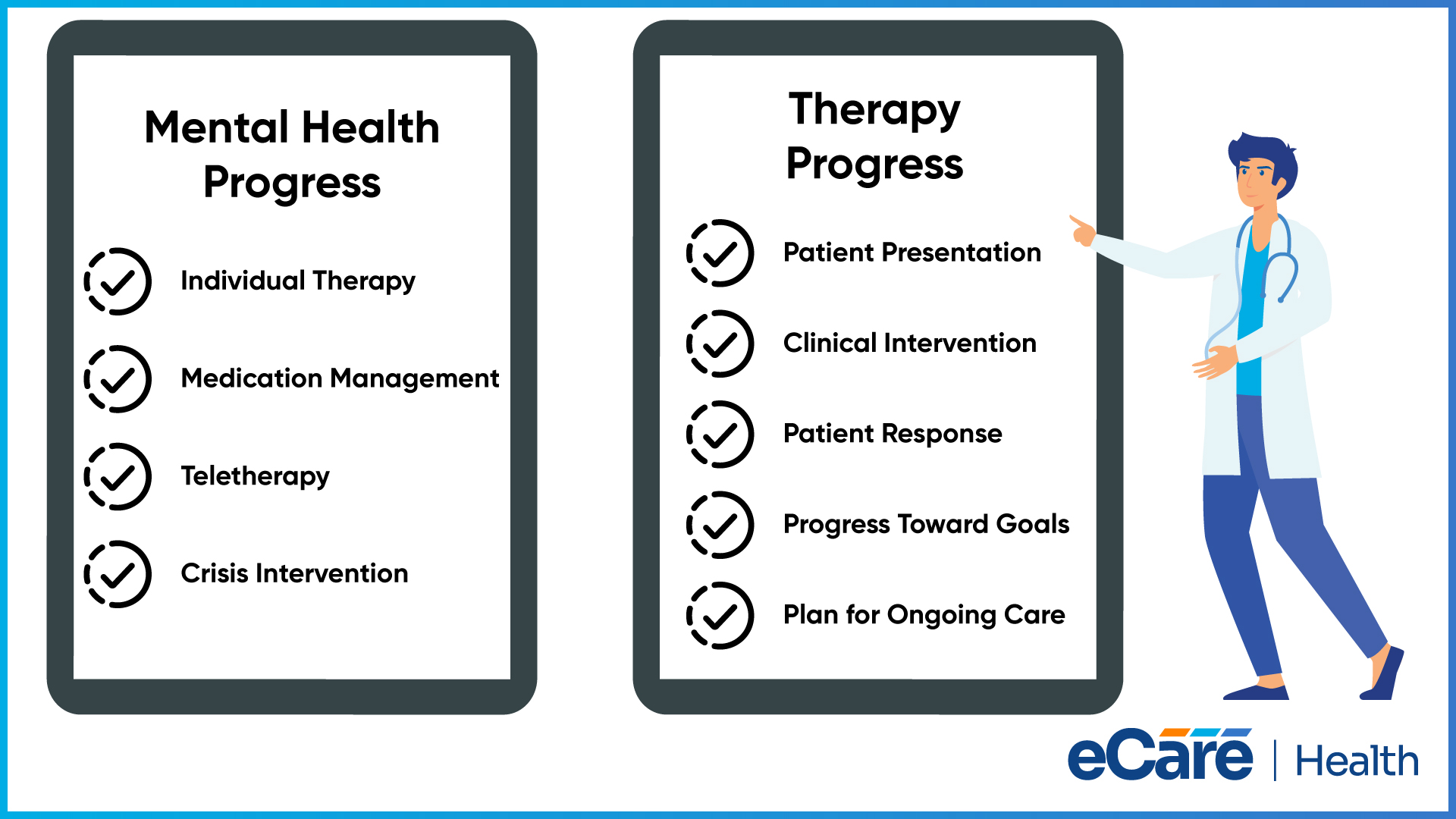
A consistent structure makes documentation more accurate and easier to review. Every therapy progress notes template should include:
- Patient Presentation: Document the patient's current symptoms, mood, behavior, and functional changes. Include relevant mental status observations and any significant changes since the previous visit to provide clinical context.
- Clinical Intervention: Record the therapy techniques, medication review, psychoeducation, or other services provided during the session. Explain interventions that are directly related to the patient's diagnosis or treatment goals.
- Patient Response: Describe the patient's level of participation, symptom changes, and response to treatment. Use objective language and measurable observations whenever possible instead of general statements.
- Progress Toward Goals: Document measurable improvements, barriers to recovery, and updates related to the treatment plan. Clearly linking the session to established goals helps demonstrate medical necessity.
- Plan for Ongoing Care: Include homework assignments, referrals, medication changes, and follow-up recommendations. A well-defined plan ensures continuity of care and sets clear expectations for the next visit.
Mental Health Progress Note Examples
The documentation should always reflect the purpose of the visit. For example:
- Individual Therapy: Focus on therapeutic interventions, patient engagement, and progress toward treatment goals. Include behavioral observations and any coping strategies introduced or reinforced during the session.
- Medication Management: Document medication effectiveness, side effects, adherence, and any dosage changes. Record the clinical rationale behind treatment decisions and any patient concerns discussed.
- Teletherapy: Include telehealth consent, clinically relevant observations, interventions provided, and follow-up plans. Also note any technology-related issues only if they affected the quality or outcome of the session.
- Crisis Intervention: Record risk assessment findings, safety planning, interventions provided, and the clinical rationale for immediate decisions. Document referrals, emergency contacts, or follow-up actions taken to ensure patient safety when applicable.
Common Documentation Mistakes to Avoid
One small documentation habit can weaken a clinical record. You should avoid using vague language like “doing better” without supporting evidence, copying information from previous notes, or documenting progress without linking it to treatment goals.
Just like that, missing follow-up plans, failing to demonstrate medical necessity, or delaying documentation after the patient encounter can increase not only compliance but also reimbursement risks.
However, well-written behavioral health progress notes are always timely, patient-specific, and supported by objective clinical information.
How eCareHealth Simplifies Progress Note Documentation
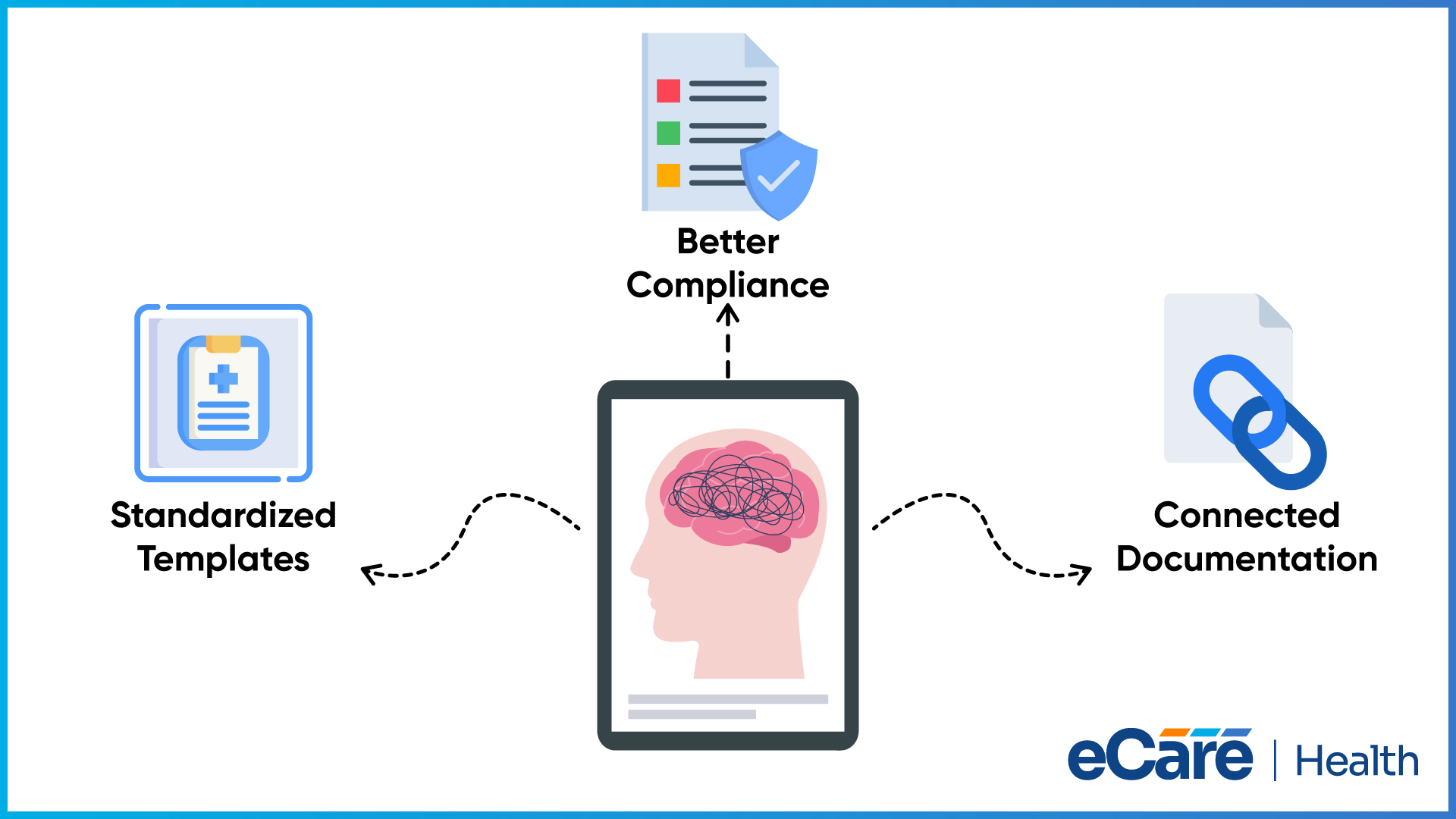
When clinicians have the right tools, writing high-quality mental health progress notes becomes much easier. Rather than depending on manual documentation or disconnected systems, mental health EHR software helps in creating consistent, accurate, and compliance records while reducing administrative burden.
Standardized Progress Note Templates:
eCareHealth offers specialty-specific documentation templates that are specifically designed for therapists, counselors, psychologists, and psychiatrists. On the basis of preferences, you can also customize documentation workflows, which further makes it easier to capture the right clinical information without disturbing their workflow.
Connected Clinical Documentation:
eCareHealth platform helps in connecting mental health progress notes to treatment plans, diagnoses, assessments, medications, appointments, and patient history within a single mental health EHR. This can create a complete longitudinal patient record, which gives you the context that you need to make informed clinical decisions.
Improve Documentation Quality and Compliance:
Factors like built-in documentation prompts, required field validation, electronic signatures, and audit trails help in reducing incomplete records and strengthening compliance. Additionally, documentation tracking and reporting dashboards within mental health EHR software also gives you better visibility into documentation completion, by helping your team stay organized and audit-ready.
Conclusion
Clear and defensible mental health progress notes are more than a documentation requirement, they are an essential part of delivering high-quality behavioral healthcare. Well-structured notes capture the patient's clinical status, interventions, response to treatment, progress toward goals, and future care plan, ensuring every visit contributes to a complete and accurate clinical record.
This not only improves continuity of care but also strengthens medical necessity, supports reimbursement, and reduces compliance and audit risks. As documentation requirements continue to evolve, relying on standardized processes and connected clinical workflows can help providers maintain consistency without increasing administrative burden.
eCareHealth's mental health EHR simplifies progress note documentation through specialty-specific templates, integrated treatment records, secure documentation management, and compliance-focused features.
By bringing everything together in a single platform, it enables behavioral health providers to create accurate, consistent, and defensible documentation while spending more time where it matters most—delivering quality patient care.
Frequently Asked Questions (FAQs)
1. What should a mental health progress note include?
A mental health progress note should provide a complete picture of the patient's clinical status during a specific encounter. It should include the patient's presenting symptoms, mental status, therapeutic or medication-related interventions, response to treatment, measurable progress toward treatment goals, and the plan for ongoing care. The note should also document any significant changes in behavior, functioning, or risk level. Clear, patient-specific documentation helps support continuity of care, demonstrates medical necessity, and creates a reliable clinical record for reimbursement and compliance purposes.
2. How are psychiatric progress notes different from psychotherapy notes?
Psychiatric progress notes are part of the patient's official medical record and document diagnosis, medication management, clinical assessments, treatment interventions, and progress. They may be shared with other members of the care team when appropriate. Psychotherapy notes, however, are the therapist's private notes used to record personal impressions, session process, or observations that are not required for treatment, payment, or healthcare operations. Under HIPAA, psychotherapy notes receive additional privacy protections and are generally maintained separately from the medical record.
3. What is a therapy progress notes template?
A therapy progress notes template is a standardized framework that helps clinicians consistently document each patient encounter. It typically includes sections for patient presentation, interventions provided, patient response, progress toward treatment goals, and follow-up recommendations. Using a structured template improves documentation quality, reduces the likelihood of missing important information, and creates greater consistency across providers and patient visits.
4. What are examples of well-written mental health progress notes?
A well-written mental health progress note uses objective, measurable language instead of vague statements. For example, rather than writing “Patient is feeling better,” a stronger note would state, “Patient reported a reduction in panic attacks from five episodes per week to two episodes per week and successfully practiced breathing techniques during the session.” This type of documentation clearly demonstrates treatment progress and supports ongoing clinical decision-making.
5. How do you document medical necessity in behavioral health progress notes?
Medical necessity is demonstrated by documenting why treatment is clinically appropriate and why continued services are needed. Providers should describe the patient's symptoms, functional limitations, diagnosis, interventions delivered, response to treatment, and progress toward established treatment goals. The note should also explain any barriers to improvement or reasons additional treatment is required. Documentation that clearly connects clinical findings with the treatment plan is more likely to support reimbursement and compliance requirements.
6. What are the best practices for writing defensible mental health progress notes?
Defensible progress notes should be completed as soon as possible after the patient encounter and should accurately reflect what occurred during the session. Use objective and clinically relevant language, avoid unsupported conclusions, document measurable progress, and link each session to the patient's treatment goals. Providers should also avoid copying previous notes, include a clear plan for follow-up care, and ensure all documentation is complete, accurate, and signed according to organizational policies.
7. What are the most common mistakes when writing mental health progress notes?
Some of the most common documentation mistakes include using vague phrases without supporting evidence, copying information from previous visits, failing to document measurable patient progress, and omitting medical necessity or follow-up plans. Delayed documentation can also reduce accuracy and increase compliance risks. Every progress note should be specific to the individual patient and accurately reflect the services provided during that encounter.
8. How can Mental Health EHR Software improve progress note documentation?
Mental Health EHR Software simplifies documentation by providing standardized templates, documentation prompts, required field validation, and integrated clinical workflows. Instead of managing information across multiple systems, providers can document treatment plans, diagnoses, medications, assessments, appointments, and progress notes from a single platform. This improves efficiency, supports compliance, and helps practices maintain complete and accurate behavioral health records.
9. What features should a Mental Health EHR include for behavioral health documentation?
A Mental Health EHR should include specialty-specific documentation templates, customizable workflows, integrated treatment planning, assessment tools, medication management, secure clinical documentation, electronic signatures, audit trails, and reporting dashboards. It should also connect progress notes with patient history, diagnoses, appointments, and other clinical information to create a complete longitudinal record while supporting compliance and high-quality patient care.