Collaborative Documentation in Mental Health: Benefits, Risks, and Best Practices
A mental health note is usually written about the conversation, and not as part of it. However, this approach is starting to change.
With collaborative documentation of mental health, it becomes possible to bring documentation closer to the care process itself. Now, clinicians can capture important details while they are still fresh and, in appropriate situations, through concurrent documentation of therapy and real-time documentation of mental health. This also makes your patients part of the documentation process.
Doesn’t it feel like a simple change in writing notes?
Well, the actual picture is different. In reality, it can change how your patients view their records, how accurately you can capture information, and how easily your care teams stay on the same page. Additionally, it can also reduce the gap between what happens during care and what appears in the clinical record eventually.
However, bringing documentation into the care process is not always meant to be straightforward. Factors like patient comfort, privacy, clinical judgment, and team workflows all should be considered.
The right mental health EHR software helps to support a seamless mental health documentation workflow without turning the process into another administrative burden. Even so, technology alone cannot determine whether this approach is right for every patient or situation.
This balance between greater collaboration and thoughtful clinical practice is where the real conversation starts.
Let’s dive into the blog to take a closer look at the benefits, risks, and best practices of collaborative documentation, helping mental health providers understand where it fits, what to watch for, and how to use it effectively in everyday care.
What Is Collaborative Documentation in Mental Health?
In mental health, collaborative documentation means that the clinical record is not created by one clinician in isolation. Rather, authorized participation in the documentation process might involve other members to your care team, and in appropriate situations, the patient.
The core goal here is to ensure the record highlights relevant information from the people involved in care, while maintaining suitable permissions, privacy, and clinical responsibilities.
Here, the catch is: collaborative documentation and real-time documentation are not the same thing, but they can answer the same question: Who participates in creating the record, and when is the record created?
Collaborative documentation
It focuses more on participation. Multiple authorized contributors might provide, review, or contribute relevant information to the clinical record.
Concurrent or real-time documentation
It focuses more on timing. The clinician creates or updates documentation during the care interaction or shortly afterward, while the details are still fresh.
For example, a therapist documents key points during a session with the patient’s involvement. This can be both collaborative and concurrent. Alternatively, different authorized members of a behavioral health team can contribute to the same patient record at different times. This is still a form of shared behavioral health documentation, even though the documentation is not necessarily created in real-time.
As collaborative documentation is not about asking everyone to contribute to every note, understanding this difference is important for you. It’s actually about deciding who should participate, what information can be documented, and when that involvement supports better care.
Once all these boundaries are clear, you can get to see where this approach can fit into your existing documentation workflow.
How Concurrent Documentation Works in Therapy
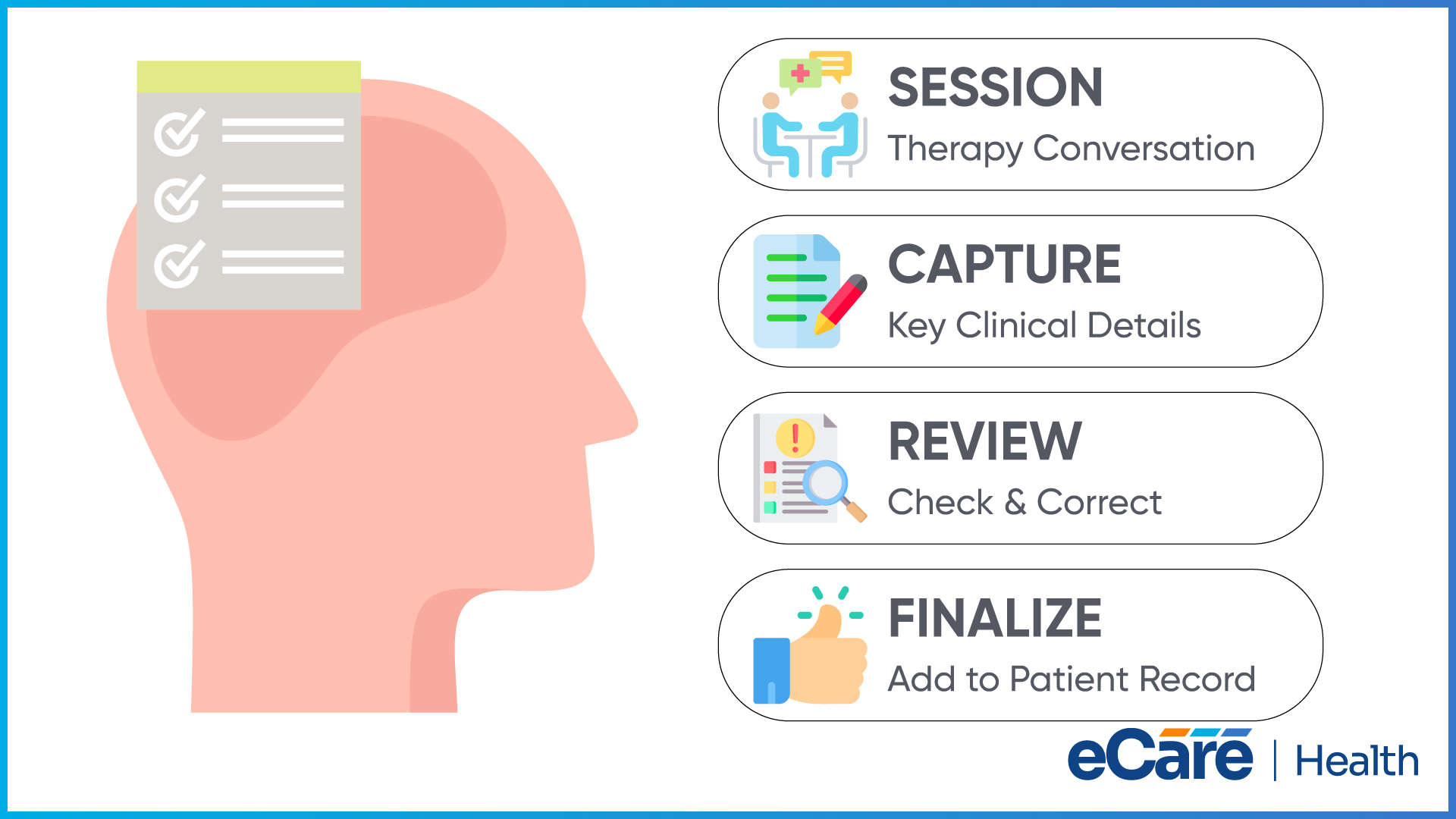
Behind concurrent documentation, there is one simple idea: document while the details are still fresh, instead of trying to reconstruct the session later. This can make documentation feel more connected to the care itself without changing the clinician’s responsibility for the final record.
During or Immediately After the Session
Concurrent documentation in therapy allows clinicians to record relevant information during the session or immediately afterward. Based on the setting and your patient’s comfort, this might involve key concerns discussed, observations, treatment goals, interventions, or next steps.
For example, if a therapist briefly updates the note as the session progresses, then complete the remaining details as soon as the conversation ends. This approach supports real-time documentation of mental health by minimizing the gap between what was discussed and what is entered into the record.
However, the process doesn’t mean that every word is required to be documented as it is spoken. Rather, the focus must be on capturing meaningful clinical information at the right time. This further helps to keep the record accurate and allow the conversation to remain the center of the session.
Review and Finalization
Even though documentation happens closer to the session, clinical ownership does not disappear. The responsible clinician is still required to review the information, make necessary edits, confirm that it accurately reflects the encounter, and finalize the record on the basis of organizational and clinical requirements.
This review step helps the clinician to check for missing details, clarify language, and make sure that only appropriate information is included. After finalization, the note can become part of the patient’s clinical record.
Benefits of Collaborative Documentation
When documentation is closer to the care process and the right people have access to relevant information, the benefits can go beyond simply finishing notes faster. A well-managed approach can assist the entire behavioral health team to work from the same picture of a patient’s care.
Better Communication Across the Care Team
With a shared record, it becomes easier for authorized team members to get a clear view of what has been discussed, documented, and planned. As a result, therapists, psychiatrists, care coordinators, and other involved professionals are less likely to spend their time on piecing together updates from separate notes or messages.
This can make handoff seamless, while reducing the risk of important information getting lost between team members.
More Connected Treatment Planning and Continuity of Care
It is a fact that mental health care rarely happens in isolation. As patients can work with several professionals over the course of treatment, it is necessary to ensure continuity. If relevant updates are documented and available to the right team members, everyone can better understand the patient’s progress, current goals, and next steps.
This can further create a more connected treatment plan rather than leaving each provider to work from only one part of the story.
Less Delayed Documentation and Administrative Work
The longer documentation is left unfinished, the easier it is for details to become harder to recall. By bringing documentation closer to the session, concurrent approaches help to reduce that delay.
Furthermore, it also helps clinicians to avoid carrying a backlog of notes into the rest of their day. From this perspective, collaborative documentation can take some of the paperwork pressure off without taking the focus away from patient care.
Better Visibility and Potential Patient-Safety Benefits
Furthermore, timely documentation gives authorized care-team members faster visibility into relevant patient updates, changes in treatment, or concerns that may require attention. When important information gets easier to find, your team may be better positioned to respond when something changes.
This is one of the important parts of how collaborative documentation improves mental health care. The real value isn’t simply having more people contribute to a record; it’s helping the right people access the right information at the right time. This can further support better coordination and, where applicable, contribute to safer care.
Best practices to deal with Collaborative Documentation Challenges
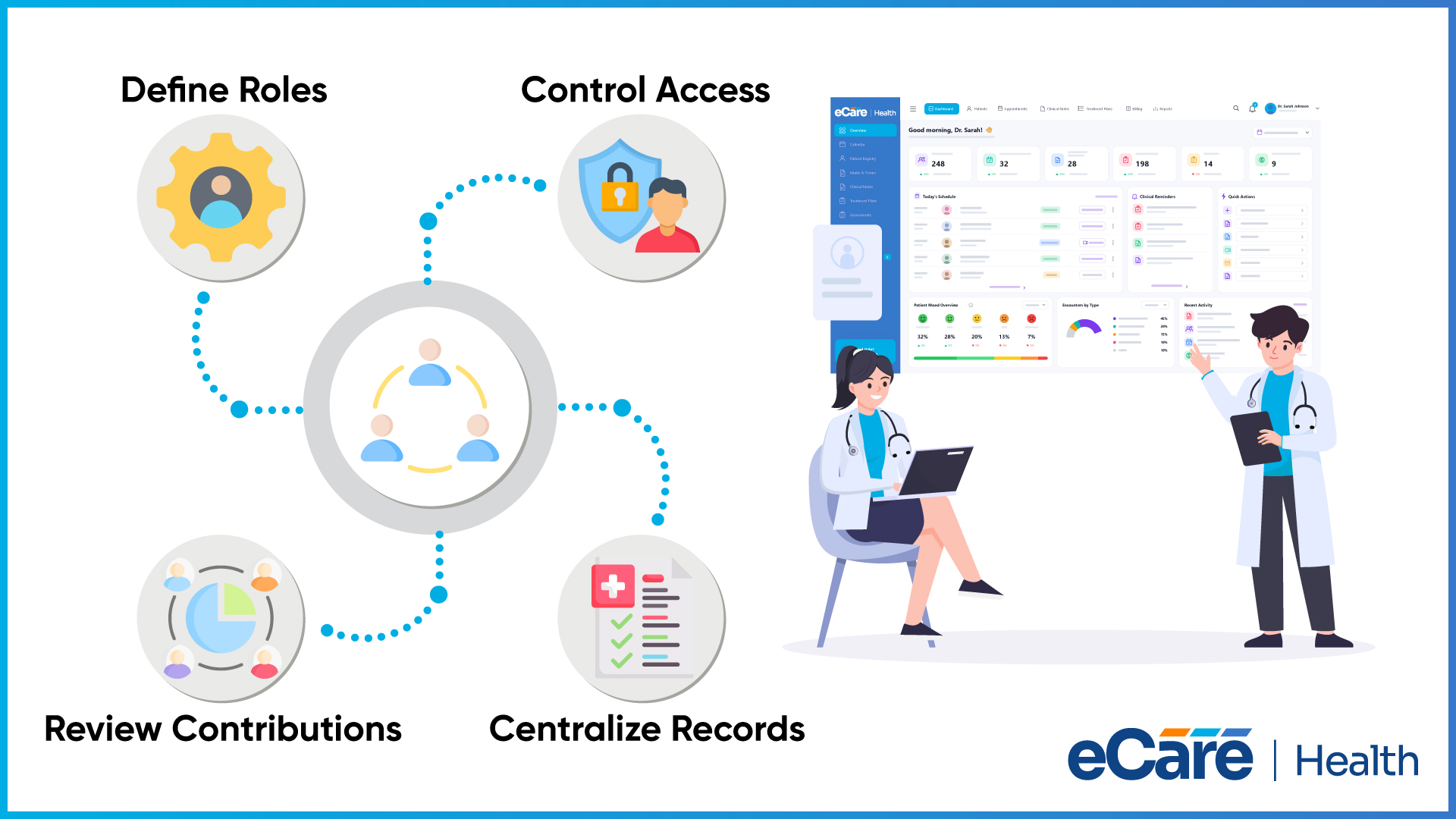
Collaborative documentation can make care more connected, but it also requires clear boundaries to work well. Without these boundaries, multiple contributors can create confusion over who documents what, who can see sensitive information, and which version of a note is final.
Let’s see some of the key practical safeguards that can keep the process organized and accountable:
Set Clear Documentation Roles and Responsibilities
Everyone involved in the documentation process should know their roles and responsibilities, for which you can define who can add information, who can edit or review it, and who is responsible for finalizing the clinical note. With clear ownership, it becomes easier to prevent gaps and address questions about an entry later.
Use Role-Based Access for Sensitive Information
As not every team member requires access to every part of your patient’s record, role-based access enables your organization to limit information on the basis of each person’s responsibilities.
Furthermore, along with supporting privacy, this can also give authorized professionals the information they need for coordinating care.
Establish a Review Process
Duplicate or conflicting entries can turn into a headache when several people contribute to documentation. However, a defined review process can help to catch these inconsistencies before a note is finalized.
Clinicians must have an opportunity to review relevant contributions, clarify unclear information, and remove unnecessary duplication.
Use Structured Workflows and Centralized Records
Collaborative documentation becomes easy to manage with a consistent workflow. Rather than depending on scattered notes, messages, or separate systems, your team can use a centralized record with defined steps to document, review, and finalize information.
This can create a clear, complete record of who contributed and when, while making accountability easier to maintain. Simply put, when everyone knows where the record stands and who owns the final version, collaboration becomes much easier to keep on track.
How eCareHealth Supports Collaborative Behavioral Health Workflows
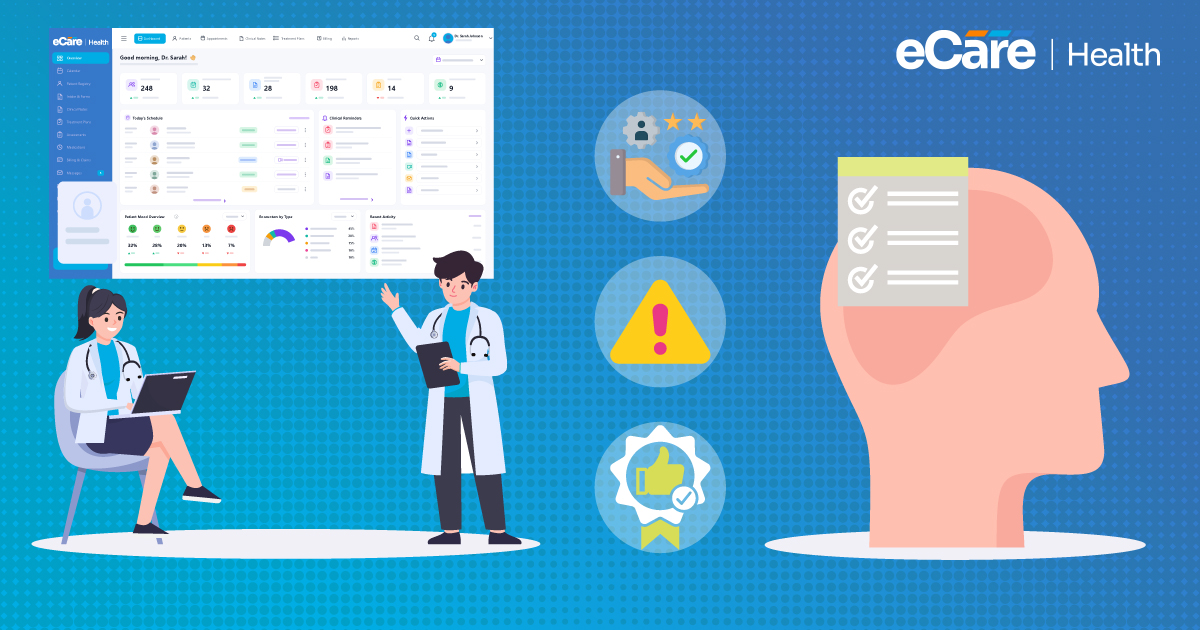
Collaborative documentation can work best only when the underlying EHR keeps your patient information organized and accessible to the right people. This is where eCareHealth can support behavioral health teams. Its EHR helps to bring patient records, clinical documentation, treatment plans, appointments, and other care information into one centralized system.
This also helps providers work from the same patient record rather than depending on disconnected tools. Furthermore, along with behavioral health EHR software, eCareHealth also supports role-based access, supervisor review workflows, and connected clinical records.
All these capabilities help practices give authorized team members access to the information relevant to their responsibilities and maintain clear documentation ownership and oversight.
The actual value here is not about making every team member edit the same note at the same time. It’s actually about creating a centralized and organized environment where care teams can document, review, and access patient information through defined workflows.
This can further make collaboration easier to manage, while keeping privacy, accountability, and clinical responsibility in focus.
Conclusion
Collaborative documentation can make mental health care more connected. It can help teams communicate better, maintain continuity, and spend less time catching up on delayed notes.
Still, good collaboration needs clear boundaries. Privacy, accountability, and well-defined workflows should always come first. When these pieces are in place, documentation can support the care team instead of becoming another hurdle.
The right behavioral health EHR software can also help keep patient information organized and accessible to authorized team members, making collaboration easier to manage.
Frequently Asked Questions (FAQs)
1. Can collaborative documentation be used during a therapy session?
Yes, collaborative documentation can be used during a therapy session when it is appropriate for the patient and the clinical setting. A clinician may document relevant information as the conversation takes place rather than waiting until the session is completely over. In some cases, the patient may also be aware of or participate in the documentation process. However, the clinician should make sure that documentation does not distract from the conversation or affect the patient’s comfort.
2. Is concurrent documentation appropriate for every mental health session?
No. Concurrent documentation is not the best fit for every session. Some conversations involve sensitive or emotional topics where having the clinician focus on documentation could make the patient feel less comfortable or less heard. Providers should consider the patient’s preferences, the type of session, the information being discussed, and the potential effect on the therapeutic relationship before using this approach.
3. How do providers protect patient privacy during shared documentation?
Privacy starts with limiting documentation access to people who are authorized to view the patient’s information. Providers should use secure EHR systems, follow organizational privacy policies, and apply role-based access based on each team member’s responsibilities. It is also important to make patients aware of how their information is being documented or shared when their participation is involved. Regular staff training can further help teams handle sensitive mental health information appropriately.
4. What role-based access controls are important in collaborative charting?
Role-based access should determine what each team member can view or do within the patient record. For example, one user may only need to view information, while another may need permission to add or update clinical documentation. Access to sensitive information should be limited to what is necessary for the person’s role. Clear permissions also make it easier to track contributions and maintain accountability across the care team.
5. Can patients participate in collaborative documentation?
Yes, patients can participate when the approach is appropriate, and they are comfortable with it. They may help clarify information, discuss treatment goals, or review parts of the documentation with the clinician. This can make the record feel more transparent and give patients a better understanding of their care. Still, participation should be guided by clinical judgment, patient preference, privacy requirements, and the provider’s documentation policies.
6. How can teams prevent conflicting or duplicate documentation?
The best way is to establish clear rules about who documents what and who reviews the information before it becomes part of the final record. Using standardized templates and a centralized patient record can also reduce repeated entries across different systems. Teams should review contributions for missing, outdated, or conflicting information before finalizing a note. Clear ownership of the final documentation helps prevent confusion when multiple people are involved.
7. What should be included in a collaborative mental health documentation workflow?
A collaborative workflow should clearly define documentation responsibilities, access permissions, review steps, and final approval. It should also explain how team members add or update information, how corrections are handled, and how sensitive information is protected. Using a centralized record can help keep these steps organized and make relevant updates easier for authorized team members to find. Most importantly, the workflow should support collaboration without making clinical responsibility unclear.
8. What are common challenges when implementing collaborative documentation?
Common challenges include privacy concerns, unclear documentation responsibilities, duplicate or conflicting entries, staff resistance, and difficulty adapting existing workflows. Some clinicians or patients may also feel that documenting during a session could interrupt the therapeutic conversation. Training and clear policies can help teams understand how and when to use collaborative documentation. Starting with a structured workflow and gradually improving it based on staff and patient feedback can make the transition smoother.