The Future of Mental Health EHR: AI, Interoperability & Beyond
Imagine stepping into the role of a therapist. You finish a session, close the patient chart, and get ready for the next appointment. But the work never stops there. Notes still need to be completed, patient information updated, and details shared with the care team when required.
And this is where the role of an EHR has begun to change. Once, mental health EHRs were just about moving paper records onto a screen. Today, they are becoming a bigger part of how behavioral health practices deliver and manage care. The technology is now going a step further from basic recordkeeping to supporting clinical documentation, connecting patient data, and simplifying everyday workflows.
This shift continues to accelerate as AI, interoperability, virtual care, and automation emerge as a key focus. These behavioral health technology trends are reshaping what practices expect from their systems. When all these pieces start to work together, the EHR becomes less of a recordkeeping tool and more of a foundation for how care is delivered.
That shift is at the heart of the future of mental health EHR. The core question is not only what an EHR can do today, but also how well it can adapt as care models, technology, and practice needs continue to evolve.
Let’s dive into the blog to explore the forces driving that change, including AI, interoperability, and mental health software innovation, and what they mean for the next generation of behavioral health.
Why the Future of Mental Health EHR Matters
The therapist from our opening example is only half of the patient’s care journey. A patient may also need to visit a primary care provider, receive a prescription, complete lab work, or be referred to another specialist. All of these steps involve additional information that can shape the next decision.
Before, an EHR had just one job: to keep patient records more organized; however, as behavioral healthcare has become more connected, this role starts to expand. Without adding any extra work to already busy workflows, your care team requires information to move between providers and systems.
The change is happening within practices, too. For example, a small behavioral health practice can grow into a larger organization alongside more clinicians, locations, services, and ways to deliver care. Hybrid and remote care has also become part of the picture, which gives your patients more flexibility in how they receive support.
Furthermore, structured data becomes even more valuable as care becomes more connected. With treatment information, clinical outcomes, referrals, and operational data, it becomes easy for your organization to understand what is actually happening across the practice and make better decisions.
That’s why the mental health EHR trends 2026 go further than adding new features. It now tends toward EHRs that can connect information, support changing care models, and grow with the organizations using them.
Simply put, the future of mental health EHR is not just about having smarter records; it’s also about having a system that can keep up with behavioral healthcare requirements.
Key Trends Shaping the Future of Mental Health EHRs
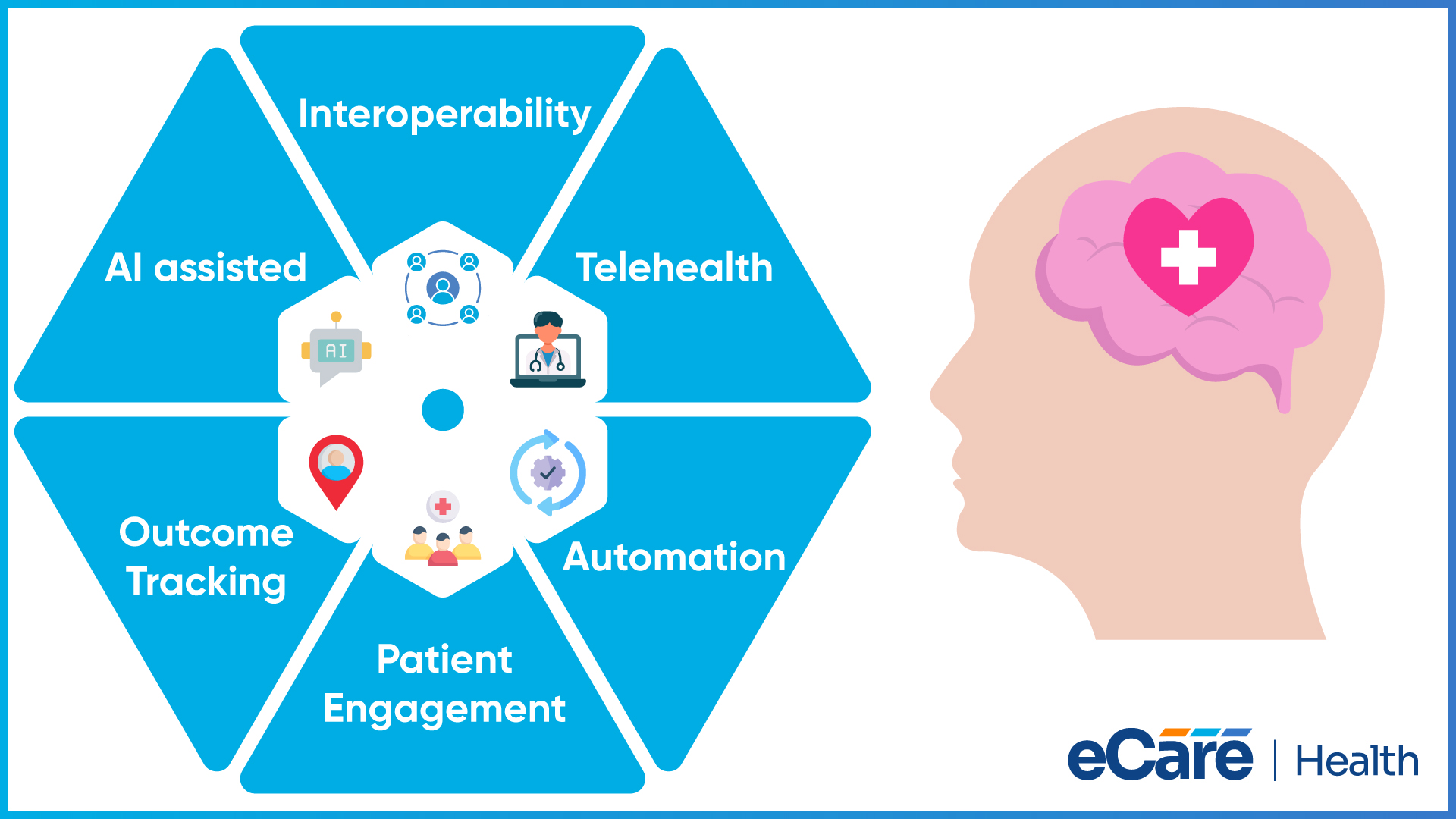
As we discussed, the changes in behavioral healthcare are directing attention to a different kind of EHR. AI is now entering everyday workflows; providers require information to move across care settings, while patients are expecting more flexibility in how they receive care.
AI-Assisted Behavioral Health Workflows
For a busy therapist, even one small administrative task can limit the time spent on patient care. By supporting documentation and automating repetitive tasks, AI-assisted tools help to reduce some of that work.
Rather than replacing clinical judgment, the AI behavioral health future is more about using automation more responsibly, while keeping human review, privacy, and clinical accountability at the forefront.
Greater Interoperability and Integrated Care
In only a few cases, a patient’s care stays within one practice. Information often needs to move between behavioral health providers, primary care teams, pharmacies, laboratories, and referral partners.
With better interoperability, that exchange becomes more secure while keeping care more connected.
Telehealth and Hybrid Care
As the same patient may have one appointment in the office and another from home, future EHRs must be required to support both without making either experience feel disconnected. Scheduling, clinical information, and follow-up must move seamlessly between physical and virtual care.
Measurement-Based Care and Outcome Tracking
Along with all this, behavioral healthcare is also placing more emphasis on measurable outcomes. Tools like PHQ-9 and GAD-7 provide structured information that can further help your care team track changes over time. Future EHRs must capture and organize this information as part of the patient record.
Patient-Centered Digital Engagement
Care does not end when an appointment does. Patient portals, digital assessments, and secure messaging can give patients more ways to stay involved between visits. When these tools connect with the EHR, the digital experience becomes part of the overall care journey rather than another separate platform.
Automation and Workflow Innovation
There is also plenty of room to simplify what happens behind the scenes. Intake, scheduling, documentation, billing readiness, and other repetitive tasks can be connected and automated to reduce operational friction.
What Next-Generation Mental Health EHRs May Look Like
As these trends come together, the EHR itself starts to look different. Instead of several tools handling different pieces of care, the next generation of behavioral health systems could bring more of that information and work into one connected environment.
Unified Patient Information
A therapist may need more than the latest progress note to understand a patient. Clinical records, administrative details, patient-reported information, and outcome data can all add context. Bringing these pieces together can give care teams a clearer view without making them search across multiple systems.
Multidisciplinary and Collaborative Care
Behavioral health rarely happens in a vacuum. Patients may move between therapists, primary care providers, specialists, and other care partners. A next-generation behavioral health EHR can support this collaboration by helping relevant information move between care settings while keeping access limited to the people who need it.
Personalized and Adaptable Workflows
No two practices work exactly the same way. A growing organization may add new services, change its intake process, or create different workflows for different teams. Future EHRs will need to give organizations the flexibility to adjust templates, forms, roles, and workflows instead of forcing everyone into the same process.
Real-Time Access to Relevant Information
During an appointment, clinicians do not have time to dig through several screens just to find one important detail. Having relevant patient and care information available when it is needed can make encounters more informed and workflows more efficient.
Scalable Infrastructure
And as the practice grows, the EHR needs to grow with it. More providers, locations, services, specialties, and integrations should not mean starting over with a new system. The goal is an EHR that can expand with the organization while continuing to support the way its teams work.
Practical Impact on Behavioral Health Providers
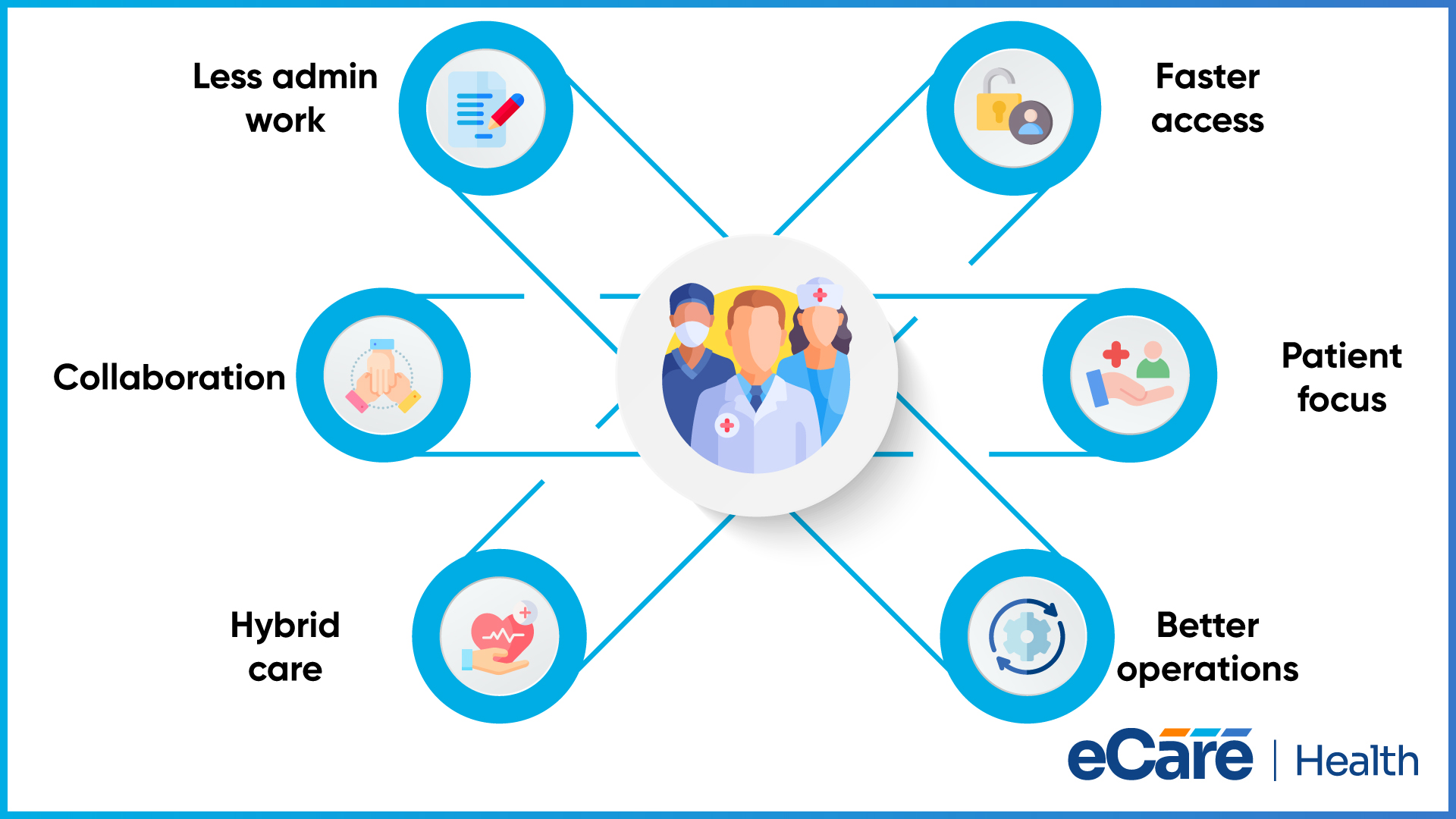
All of these changes eventually come back to one thing: making everyday work easier for behavioral health teams. A therapist should be able to finish a session without carrying a stack of unfinished administrative work into the evening.
With smarter workflows, routine documentation and administrative tasks can take less time, helping reduce the after-hours burden. Better-connected systems can also make it easier for therapists, care managers, primary care providers, and other members of the care team to stay on the same page.
The benefits extend to how care is delivered. Whether a patient walks into the office or joins a virtual appointment from home, connected EHR workflows can help teams maintain continuity without treating in-person and remote care as two completely separate processes.
There is also less digging for information. When relevant patient data is organized and accessible, providers can spend less time searching through disconnected records and more time focusing on the person in front of them.
Behind the scenes, consistent documentation and organized reporting can make everyday operations smoother, too. It can help practices prepare for audits, track important information, and maintain clearer records as they grow.
In the end, the value of a future-ready EHR is not measured only by how advanced the technology sounds. It is measured by how much easier it makes delivering care.
What Organizations Should Look for in a Future-Ready EHR
Knowing where mental health EHRs are heading is one thing. Choosing a system that can actually keep up is another. When organizations evaluate their options, the focus should go beyond a long list of features and toward how well the EHR can fit into the way care is delivered today and how it can adapt tomorrow.
Interoperability and Integration
Start with connection. A future-ready EHR should be able to exchange information securely through APIs and connect with the healthcare systems a practice already relies on. The goal is simple: fewer information gaps and less jumping between disconnected tools.
Security, Privacy, and Data Governance
Behavioral health information requires careful handling. Strong access controls, audit trails, privacy safeguards, and clear data governance should be built into the system rather than treated as an afterthought.
Measurement and Outcome Support
As measurement-based care continues to grow, organizations should also look for EHRs that can accommodate standardized assessments and structured outcome information. This makes it easier to capture meaningful changes over time without creating another layer of manual work.
Specialty-Specific Customization
Behavioral health practices do not all work the same way. Different clinicians, services, and patient populations may require different workflows and documentation. A flexible EHR should allow organizations to adjust these elements instead of forcing teams into a one-size-fits-all process.
Telehealth and Patient Engagement
Virtual care and digital patient interactions are now part of the broader care experience. Patient portals, secure communication, digital workflows, and telehealth capabilities can help keep patients and providers connected before, during, and after appointments.
Compliance and Revenue-Cycle Support
Clinical workflows also need to connect with the business side of the practice. Documentation and billing processes should support accurate, compliant operations, while features such as pre-billing checks and revenue-cycle capabilities can help catch issues before they become costly problems.
Scalability and Adoption
Finally, an EHR should be able to grow without making everyday work harder. As an organization adds providers, services, locations, or new workflows, the system should scale with it while remaining easy for staff to learn and use.
How eCareHealth Supports the Evolution of Behavioral Health Platforms
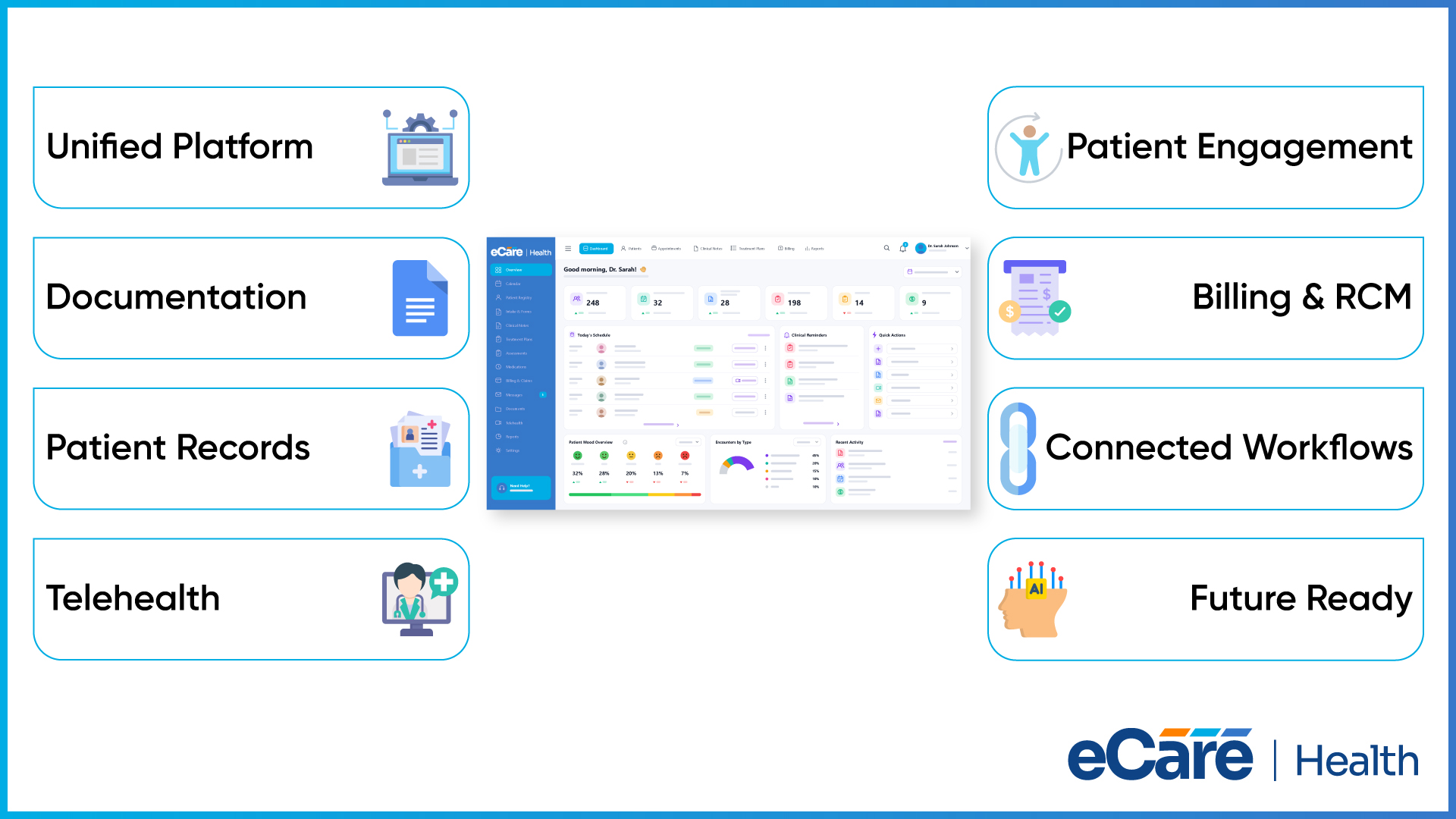
By now, the direction is clear: behavioral health practices need technology that can connect information, support different ways of delivering care, and adapt to everyday workflows. That does not necessarily mean adding more tools. Sometimes, it starts with getting the foundation right.
eCareHealth’s Behavioral Health EHR Software brings key clinical and operational workflows into an organized environment. Specialty-tuned documentation templates can support behavioral health workflows, while centralized patient records give care teams a more organized view of patient information.
The same foundation extends beyond the clinical record. Telehealth capabilities can support virtual visits, while patient engagement portals give patients a way to stay connected with their care team. Billing and revenue-cycle workflows can also help connect clinical documentation with the operational side of the practice.
Together, these capabilities create a more connected workflow instead of leaving teams to piece information together across separate systems. And as behavioral healthcare continues to change, having that organized foundation can make it easier for practices to adjust their workflows without losing sight of the patient experience.
That is ultimately what makes an EHR future-ready: not promising every technology that may arrive tomorrow, but providing a strong foundation for the needs practices have today and the changes they may face next.
Conclusion
The future of mental health EHR is not about adding more features just for the sake of it. It is about creating connected, secure, and adaptable systems that can keep up as behavioral healthcare changes.
For organizations, future readiness comes down to a few essentials: interoperability, responsible automation, strong security, scalability, and reliable support. The right EHR should work for your practice today while giving it room to grow tomorrow.
Take a closer look at whether your current system can keep pace with your long-term needs. Explore behavioral health EHR software to see how an adaptable platform can support the next stage of your behavioral health practice.
Frequently Asked Questions (FAQs)
1. What is the future of mental health EHR technology?
The future of mental health EHR technology is moving toward connected, adaptable, and patient-centered systems. EHRs will increasingly bring clinical data, care coordination, telehealth, outcome tracking, and automation together. The focus will shift from simply storing records to supporting how behavioral healthcare is delivered and managed.
2. What are the biggest mental health EHR trends in 2026?
The biggest mental health EHR trends in 2026 include AI-assisted workflows, greater interoperability, hybrid care, measurement-based care, patient engagement tools, and workflow automation. Together, these trends are helping behavioral health organizations reduce administrative friction, connect information across care settings, and build more flexible systems.
3. How will AI impact behavioral health EHRs?
AI will help behavioral health EHRs automate repetitive administrative tasks, support documentation, organize information, and improve workflow efficiency. However, its role should remain supportive rather than replace clinical judgment. Human review, patient privacy, transparency, and clinical accountability will remain essential as AI becomes more common in behavioral healthcare.
4. Why is interoperability important for modern mental health EHRs?
Interoperability allows relevant patient information to move securely between behavioral health providers, primary care teams, pharmacies, laboratories, and other care partners. This can reduce information gaps, duplicate work, and fragmented care. For modern mental health EHRs, better interoperability supports continuity and gives providers a more complete view of patient needs.
5. How will next-generation EHRs support measurement-based care?
Next-generation EHRs can make measurement-based care easier by capturing standardized assessments and organizing outcome information within the patient record. Tools such as PHQ-9 and GAD-7 can provide structured data that helps care teams monitor changes over time, identify trends, and make more informed treatment decisions.
6. What features define a future-ready behavioral health EHR?
A future-ready behavioral health EHR should offer interoperability, strong security, adaptable workflows, telehealth, patient engagement, outcome tracking, and scalable infrastructure. It should also support compliance and revenue-cycle workflows. Most importantly, the system should be flexible enough to accommodate changing care models, organizational growth, and evolving technology.
7. How will telehealth influence the future of mental health EHRs?
Telehealth will push mental health EHRs to support both virtual and in-person care within connected workflows. Future systems will need to link scheduling, clinical documentation, communication, patient information, and follow-up across care settings. This can help create a more consistent experience for providers and patients.
8. How can behavioral health organizations prepare for evolving EHR technology?
Organizations can prepare by evaluating whether their current EHR supports interoperability, security, flexible workflows, telehealth, patient engagement, outcome tracking, and scalability. They should also consider ease of adoption and vendor support. Choosing technology that can adapt to changing needs can help practices avoid costly system changes later.