Mental Health Billing Mistakes That Cost Your Practice Revenue (And How to Fix Them)
Imagine you provide excellent care to every patient and still lose revenue just because of a tiny billing error. This happens frequently before many practices even realize it.
Even though a missing modifier, an outdated diagnosis code, incomplete documentation, or an insurance eligibility issue seems like a small mistake, it can quickly turn an approved claim into a denied one.
And when all these denials pile up or fail to get corrected and resubmitted, they can eat away at your practice’s revenue by making it more difficult to maintain a healthy cash flow. The frustrating part here is that most mental health billing mistakes are avoidable.
The simple reasons behind these mistakes are incomplete documentation, coding errors, or manual billing processes that can leave room for errors or mistakes. However, fixing these issues does not mean that you need to work hard; it means that you need to work smart.
The right mental health practice management software helps providers to catch errors early, reduce mental health claim denials, and make the billing process faster and more accurate.
Let this blog be your comprehensive guide to know the most common behavioral health billing errors, therapy billing mistakes, and psychiatric billing errors, explain why they happen, and share practical ways to avoid them with better EHR workflows and mental health billing best practices.
What Are the Most Common Mental Health Billing Mistakes?
Even though not all billing errors have the same impact, they all have one thing in common: they delay or reduce reimbursement. Some can result in immediate claims, and some can create payment delays, compliance risks, or unnecessary administrative work.
Yet, most of these behavioral health billing errors can be identified and corrected before a claim is submitted. Let’s have a look at the table to know more about the most common billing mistakes, their impact, and simple ways to prevent them:
| Billing Mistake | How It Affects Your Practice | How to Prevent It |
|---|---|---|
| Carve-out billing errors | Claims are sent to the wrong payer, causing delays and denials. | Verify payer responsibility before claim submission. |
| Incorrect Place of Service (POS) codes | Incorrect reimbursement or rejected claims. | Use the correct POS code based on where services were delivered. |
| Telehealth billing compliance issues | Claims may be denied due to incorrect modifiers or outdated telehealth rules. | Stay current with payer requirements and validate modifiers before billing. |
| Missing or incomplete documentation | Insufficient records can result in claim denials or failed audits. | Standardize documentation and complete notes before submitting claims. |
| Eligibility and authorization failures | Services may not be covered, resulting in denied claims and lost revenue. | Verify insurance eligibility and obtain prior authorization in advance. |
| Credentialing and provider information errors | Claims may be rejected if provider information is inaccurate or outdated. | Regularly review credentialing status and provider records. |
| CPT and ICD-10 coding mistakes | Incorrect coding affects reimbursement and increases denial rates. | Follow the latest coding guidelines. For a detailed breakdown, read our guides on Mental Health CPT Codes and Mental Health Billing Codes. |
Finding these issues after a claim has been denied is like closing the barn door after the horse has bolted. A better approach is to catch them before they reach the payer.
That’s where intelligent EHRs like eCareHealth help by validating documentation, verifying patient information, supporting accurate coding, and flagging potential billing issues before claims are submitted, reducing rework and helping practices get paid faster.
Why Do Mental Health Insurance Claims Get Denied?
Not every claim gets denied because of a billing mistake. Some denials happen because of payer-specific policies or preventable errors made during documentation, coding, or claim submission. By knowing the difference, your practice can focus more on what you can control and reduce avoidable mental health claim denials.
Here is the quick comparison between preventable billing errors and payer-driven denials:
| Preventable Billing Errors | Payer-Driven Denials |
|---|---|
| Caused by documentation, coding, billing, or workflow mistakes within the practice. | Caused by the insurance payer's coverage rules and reimbursement policies. |
| Can usually be prevented before the claim is submitted. | May occur even when the claim is submitted correctly. |
| Examples include missing documentation, modifier errors, eligibility issues, and incorrect patient or provider information. | Examples include CO-50 (Medical Necessity), lack of prior authorization, payer policy limitations, and non-covered services. |
| Practices have direct control over preventing these errors. | Practices can't control payer decisions but can improve documentation and compliance to reduce denials. |
Payer-specific denials are not always avoidable, but many rejected claims result from simple mistakes that can be fixed before submission. The most common reasons behind mental health insurance claims being denied are missing documentation, incorrect modifiers, authorization issues, or incomplete clinical records. All these errors can delay reimbursement and increase administrative work, and the risk of lost revenue.
All these errors can delay reimbursement and increase administrative work, and the risk of lost revenue. For a deeper look at strategies practices can use to reduce denials and improve reimbursement, explore our guide to Behavioral Health Billing in 2026: How to Reduce Denials and Get Paid Faster.
However, a specialty like eCareHealth helps to reduce all these preventable denials by validating patient eligibility, checking documentation, supporting accurate coding, and flagging potential claim issues before they're submitted.
Rather than discovering errors after a rejection, your practice can resolve them upfront while improving chances of getting paid the first time.
How Can Providers Fix Recurring Therapy Billing Errors?
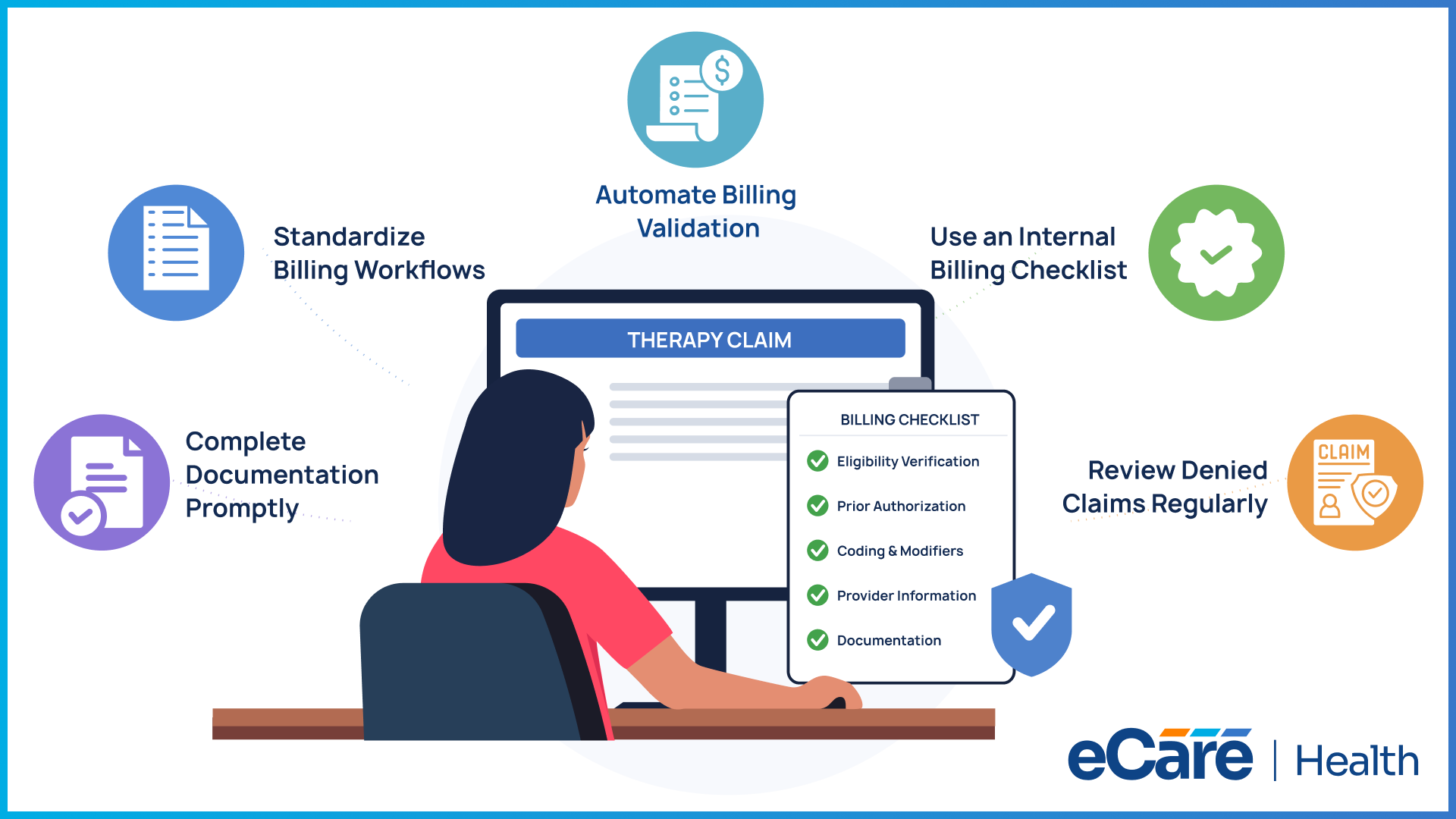
Identifying the root cause is the first step in knowing how to fix recurring therapy billing errors. Most of the time, recurring mistakes are not caused by a lack of knowledge; they are actually caused by inconsistent workflows, incomplete documentation, or manual processes that leave room for errors.
To reduce these issues, providers should focus on a few key mental health billing best practices:
- Standardize billing workflows so every claim follows the same process, from eligibility verification to final submission.
- Complete documentation promptly to ensure clinical notes support the services billed.
- Use an internal billing checklist to verify insurance eligibility, prior authorization, coding, modifiers, and provider information before submitting claims.
- Review denied claims regularly to identify recurring issues and improve internal processes.
Instead of depending solely on manual reviews, eCareHealth helps your practice automate billing validation by identifying missing information and verifying patient and provider details, while flagging potential claim issues before submission. This proactive approach further helps your practice to reduce behavioral health billing errors, enhance reimbursement, and create a more consistent billing workflow.
How Can Group Mental Health Practices Reduce Billing Errors?
As your behavioral health practice grows, billing becomes even more complex. Different providers can document care differently, staff may follow inconsistent billing processes, and communication gaps can lead to avoidable mistakes. All these challenges make reducing billing errors in group mental health practices a top priority.
Standardize Documentation
You should use consistent documentation templates and billing procedures across the practice. Claims are more accurate and easier to process when every provider follows the same standards.
Strengthen Internal Oversight
You must conduct regular billing audits, review denial trends, and provide ongoing staff training. With a centralized billing review process, it becomes easy to catch recurring issues before they affect reimbursement.
Use a Unified EHR
Instead of relying on multiple systems or manual reviews, eCareHealth standardizes documentation, streamlines billing workflows, and validates claims before submission. This helps behavioral health teams improve billing accuracy, reduce administrative work, and submit cleaner claims the first time.
What Are the Best Practices for Preventing Behavioral Health Billing Errors?
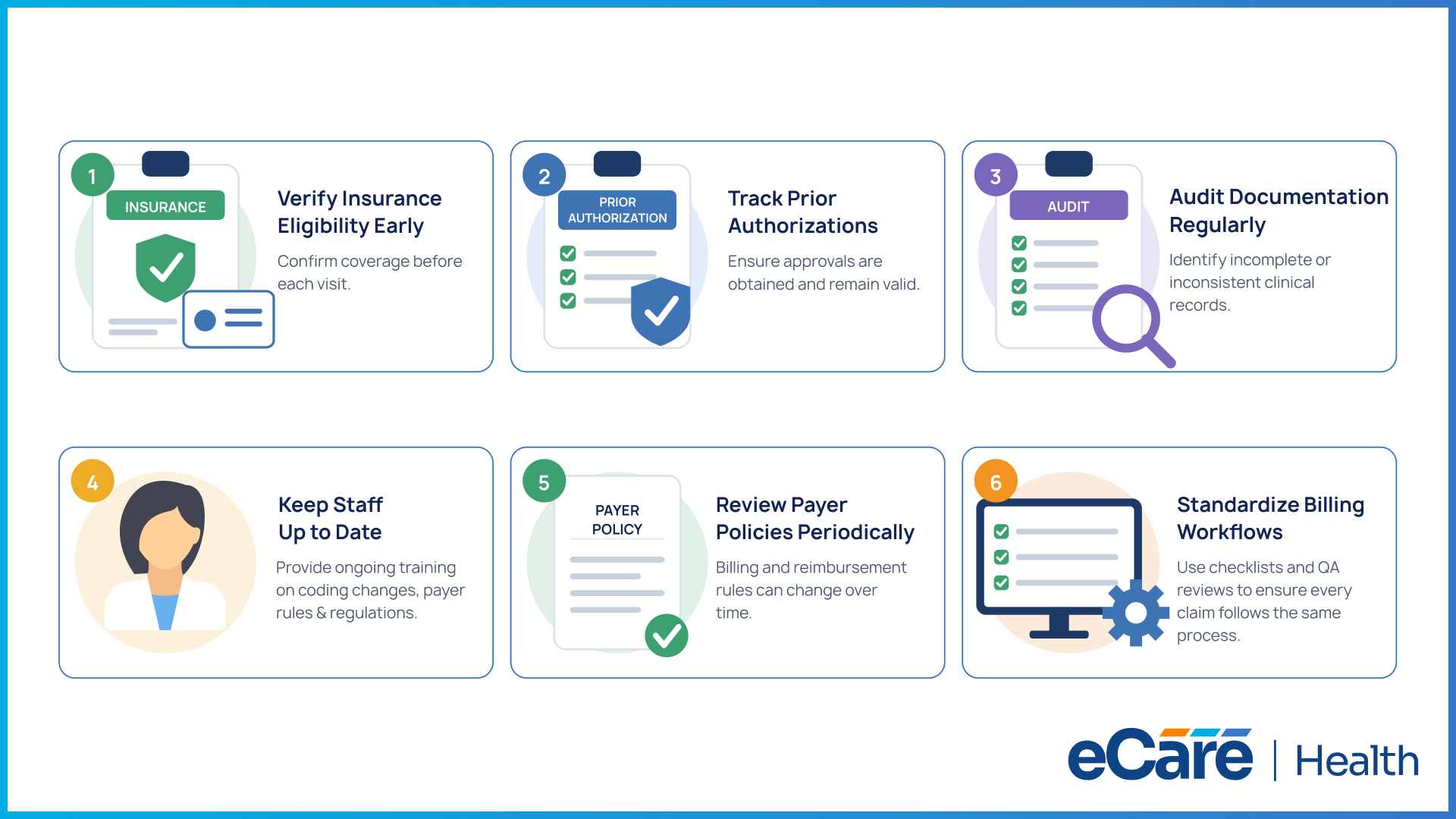
Preventing billing errors is not just about fixing claims after they are denied; it’s actually about building processes that can catch issues before they happen. The following mental health billing best practices can help improve claim accuracy and reduce administrative work:
- Verify insurance eligibility early to confirm coverage before each visit.
- Track prior authorizations to ensure required approvals are obtained and remain valid.
- Audit documentation regularly to identify incomplete or inconsistent clinical records.
- Keep staff up to date with coding changes, payer requirements, and billing regulations through ongoing training.
- Review payer policies periodically since billing and reimbursement rules can change over time.
- Standardize billing workflows with internal checklists and quality assurance reviews to ensure every claim follows the same process.
Instead of depending on manual checks alone, eCareHealth helps your practice automate billing validation, standardize workflows, and support ongoing compliance. Furthermore, identifying potential issues before claims are submitted helps improve operational efficiency while reducing avoidable billing errors.
How Can Mental Health Practice Management Software Prevent Billing Mistakes?
Many mental health billing mistakes don't happen because staff lack experience; they happen because too many billing tasks are still handled manually. Switching between different systems for scheduling, documentation, eligibility checks, and billing increases the risk of missed information, coding errors, and delayed claims.
That's where Mental Health Practice Management Software makes a difference. By bringing scheduling, clinical documentation, billing, reporting, and claims management into one platform, practices can reduce duplicate work and improve billing accuracy.
A solution like eCareHealth goes a step further by automating key billing tasks, including AI-assisted eligibility verification, authorization tracking, claim scrubbing, and workflow validation. Instead of identifying errors after a claim is denied, the system flags potential issues before submission, helping practices reduce mental health claim denials, improve reimbursement, and spend less time on administrative tasks.
In short, the right software doesn't just simplify billing; it creates a more efficient workflow that supports providers, strengthens compliance, and helps behavioral health organizations focus more on patient care and less on paperwork.
Conclusion
Preventing mental health billing mistakes is essential for reducing mental health claim denials, protecting revenue, and improving operational efficiency. Standardized workflows, accurate documentation, regular staff training, and proactive claim validation can help behavioral health practices avoid many common billing errors before they become costly problems.
As a comprehensive behavioral health EHR software, eCareHealth streamlines documentation, automates billing workflows, and validates claims before submission. This helps behavioral health organizations reduce billing errors, improve reimbursement, and focus more on delivering quality patient care.
Frequently Asked Questions
1. What are the most common mental health billing mistakes?
The most common mental health billing mistakes include incomplete documentation, incorrect CPT or ICD-10 codes, missing modifiers, inaccurate Place of Service (POS) codes, eligibility verification failures, authorization issues, carve-out billing errors, and outdated provider credentialing information. These mistakes often result in claim denials, delayed reimbursements, and additional administrative work.
2. Why are mental health insurance claims denied?
Mental health insurance claims are commonly denied due to missing documentation, lack of medical necessity, expired or missing prior authorizations, incorrect billing modifiers, coding errors, or payer-specific policy violations. While some denials are based on insurance coverage rules, many can be prevented through accurate documentation and claim validation before submission.
3. What is a behavioral health carve-out, and how does it affect billing?
A behavioral health carve-out is an arrangement where mental health services are managed by a separate insurance company instead of the patient's primary medical insurer. Billing the wrong payer or failing to identify a carve-out can lead to claim denials and payment delays. Verifying payer responsibility before submitting claims helps avoid these issues.
4. How do incorrect Place of Service (POS) codes lead to claim denials?
Place of Service (POS) codes identify where healthcare services were provided. Using an incorrect POS code can cause reimbursement delays, incorrect payment amounts, or claim denials because the billed service doesn't match the payer's billing requirements. Accurate POS coding is especially important for telehealth and outpatient behavioral health services.
5. How can providers fix recurring therapy billing errors?
Providers can reduce recurring therapy billing errors by standardizing billing workflows, completing documentation promptly, verifying insurance eligibility, tracking prior authorizations, and reviewing denied claims to identify recurring patterns. Using billing automation tools can also help catch errors before claims are submitted.
6. How can group mental health practices reduce billing errors?
Group practices can reduce billing errors by using standardized documentation templates, implementing consistent billing procedures across all providers, conducting regular internal audits, and providing ongoing staff training. A centralized billing process also helps improve consistency and claim accuracy.
7. What are the most effective mental health billing best practices?
Some of the most effective mental health billing best practices include verifying insurance eligibility before appointments, obtaining required authorizations, maintaining complete clinical documentation, following current coding guidelines, reviewing payer policy updates, and using quality assurance checks before submitting claims.
8. How does mental health practice management software reduce billing errors?
Mental health practice management software helps reduce billing errors by automating eligibility verification, tracking authorizations, validating documentation, flagging coding issues, and streamlining claim submission. Integrating scheduling, documentation, billing, and reporting into one platform also reduces manual work and improves billing accuracy.
9. How can behavioral health practices improve clean claim rates?
Behavioral health practices can improve clean claim rates by submitting complete and accurate claims the first time. This includes verifying patient eligibility, confirming authorizations, using correct diagnosis and procedure codes, maintaining thorough documentation, and reviewing claims for errors before submission. Standardized workflows and automated claim validation further increase first-pass claim acceptance.