Starting a Psychiatric Private Practice: EHR and Technology Setup Guide for 2026

Imagine you are opening your own psychiatry practice, and you are all set to welcome your first patients. However, before that happens, you start to struggle with managing appointments, clinical notes, billing, insurance, compliance, and patient communication.
In fact, according to the American Medical Association, every week physicians spend almost 20 hours on paperwork and administrative tasks.
As a result, administrative work can pile up, and without the right technology, it can also quickly become overwhelming. And because of this, starting a psychiatry private practice is not just about choosing an office location or attracting patients.
From day one, the technology you choose can shape how efficiently your practice runs for years to come. Essential psychiatric practice technology like a reliable psychiatry EHR, psychiatry practice management software can help to keep everything connected. It can further help you to spend less time juggling tasks and more time focusing on your patients.
However, the main challenge here is knowing where to start and which tools are actually worth investing in.
So, let’s dive into this blog to learn more about how to start a psychiatric private practice in 2026, the key steps involved in a successful psychiatry practice setup, and what to consider when choosing the right EHR and software for a new psychiatry practice.
By the end, you'll have a clear roadmap to build a practice that's efficient, compliant, and ready to grow.
What Should You Set Up Before Opening Your Psychiatric Practice?
Before you welcome your first patient, there are a few key steps that need your attention. By getting these right early, you can save yourself from compliance issues, delayed reimbursements, and unnecessary stress later. It is fair enough to say that a little planning now goes a long way.
You should always start with selecting the right business structure and completing your state licensing requirements. Along with this, as approvals can take almost 60-180 days, you must begin insurance credentialing with Medicare, Medicaid, and commercial payers.
Furthermore, if you will prescribe controlled substances, you should also register for your DEA number, enroll in your state’s PDMP, and enable EPCS before you start seeing patients. While all these tasks are in progress, it’s also the right time to set up your psychiatry EHR, psychiatry practice management software, and other necessary psychiatric practice technology.
As many of these activities can run in parallel, planning ahead can help avoid last-minute delays and keep your psychiatry practice setup on track. Furthermore, a simple launch time can also help you stay organized, while ensuring nothing falls through the cracks.
| Phase | Typical Timeline | Can Run in Parallel? |
|---|---|---|
| Business Formation | 2–4 Weeks | Yes |
| Insurance Credentialing | 60–180 Days | Yes |
| DEA & PDMP Registration | Varies by State | Yes |
| EHR & Technology Implementation | 2–6 Weeks | Yes |
| Staff Training & Practice Go-Live | 1–2 Weeks | No |
What Technology Does a New Psychiatric Private Practice Need?
With the right technology, running a psychiatric practice becomes much easier from day one. Rather than using separate tools for different tasks, you should always look for solutions that work together and support both clinical and administrative workflows.
To manage scheduling and daily operations, you should start with a psychiatry EHR for specialty-specific documentation and patient records, while pairing it with psychiatry practice management software.
Furthermore, if you are planning to offer virtual care, you should also add a secure telepsychiatry platform. You will also need EPCS with PDMP integration for compliant electronic prescribing.
You can also include a patient portal with online scheduling, digital intake forms, and secure messaging to create a better patient experience. Finally, you should also choose integrated billing tools that support insurance eligibility verification, claims management, and payment processing. Together, all these technologies form the foundation of an efficient and connected practice.
Let’s see the technology setup checklist:
| Technology | Purpose | Why It Matters |
|---|---|---|
| Psychiatry EHR | Clinical documentation | Centralizes patient care |
| Practice Management Software | Scheduling & operations | Improves workflow efficiency |
| Telepsychiatry | Virtual care | Expands patient access |
| EPCS | Electronic prescribing | Supports compliant controlled-substance prescribing |
| Patient Portal | Patient communication | Improves patient engagement |
| Billing Software | Claims & payments | Simplifies financial workflows |
How Do You Choose the Right Psychiatry Software for Your New Practice?
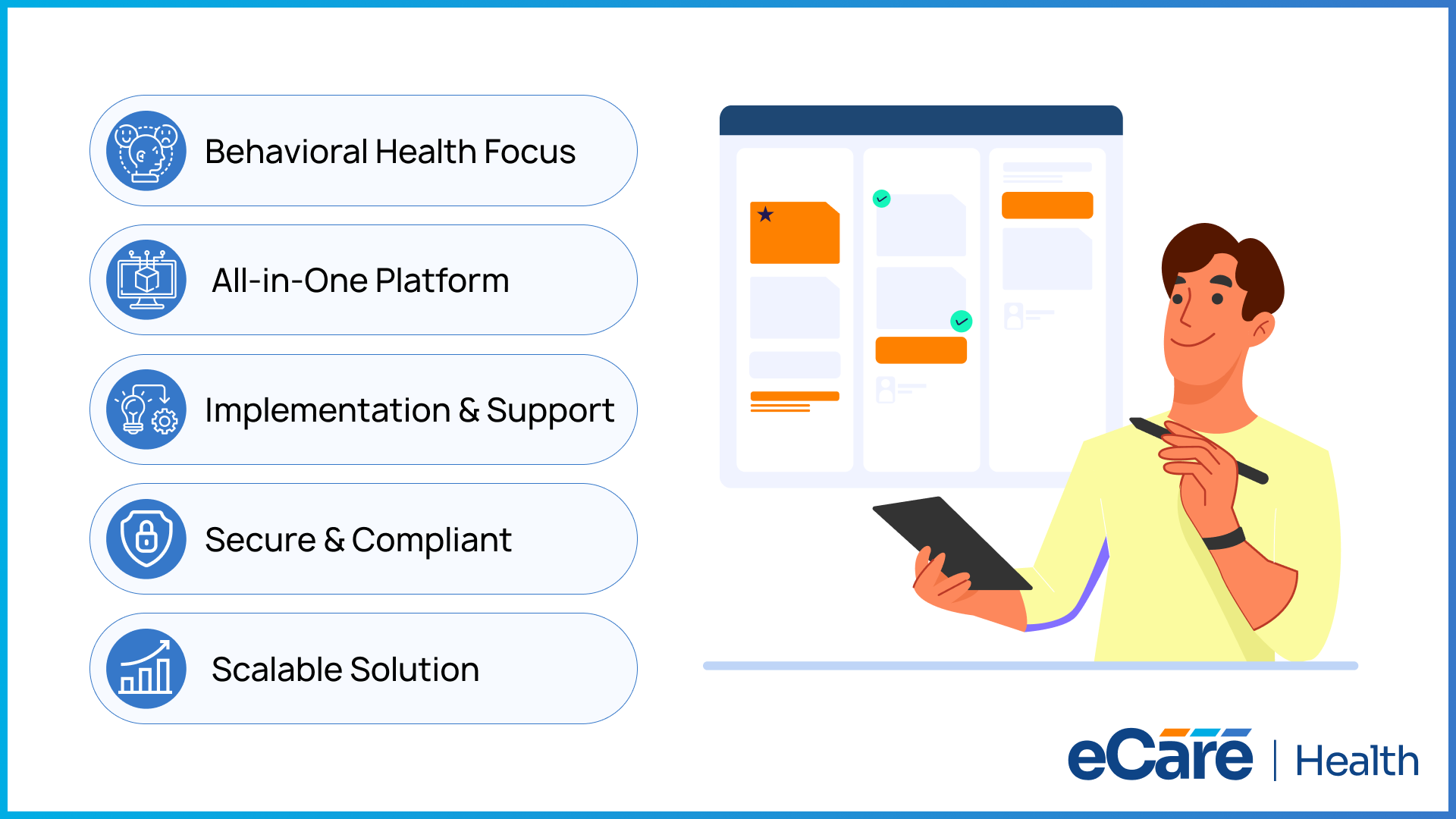
Selecting the right psychiatry software is not just any medical practice; it’s all about finding a solution that fits your specialty. You should look for software designed for behavioral health with features that can support psychiatric documentation, treatment planning, medication management, and patient care workflows.
Along with clinical features, you must also choose a platform that can bring everything together. With integrated scheduling, billing, telehealth, e-prescribing, and patient communication, it becomes easy to minimize manual work and eliminate the need to switch between multiple systems.
For a closer look at the essential capabilities to evaluate, see our guide on Psychiatry EHR: The Complete Guide to Choosing Software for Psychiatric Practices in 2026.
Furthermore, it’s also necessary to evaluate the vendor’s implementation process, staff training, and ongoing support for ensuring a seamless transition. A reliable solution also must be HIPAA compliant, interoperable, cloud-based, and secure while offering the flexibility to grow with your practice.
While launching a solo clinic or planning to expand into a group practice, selecting private practice psychiatry software that can scale with your requirements will save time, money, and future migration headaches.
How Can the Right Technology Support Long-Term Practice Growth?
It is important for you to understand that the technology you select today shapes how your practice grows in the years ahead. An integrated system helps you work more efficiently, deliver a better patient experience, and adapt as your practice evolves.
Streamline everyday operations:
Automation takes repetitive administrative work off your plate. From appointment reminders and documentation to billing and follow-ups, the right technology helps your team spend less time on manual tasks and more time caring for patients.
Strengthen patient relationships:
Digital tools such as patient portals, secure messaging, and online scheduling make it easier for patients to stay engaged throughout their care journey. Better communication often leads to improved satisfaction and stronger long-term relationships.
Stay compliant and in control:
Technology can simplify HIPAA compliance, reporting, audit readiness, and performance tracking. Having access to real-time insights also helps you make informed decisions as your practice grows.
Grow without starting over:
Whether you're adding new providers, opening another location, or expanding your services, an integrated technology ecosystem can scale alongside your practice. That means fewer disruptions today and a stronger foundation for tomorrow.
Conclusion
Launching a successful psychiatric private practice starts with making the right decisions before you see your first patient. From completing licensing and credentialing to choosing the right technology, every step plays a role in building an efficient, compliant, and future-ready practice.
Rather than managing multiple disconnected tools, investing in an integrated platform from the beginning can simplify documentation, scheduling, telepsychiatry, EPCS, billing, patient communication, and day-to-day operations as your practice grows.
eCareHealth's Psychiatry EHR is designed to support every stage of your journey. Combined with its comprehensive psychiatry software, it brings together specialty-specific documentation, practice management, billing, and patient engagement tools in one place, helping you launch with confidence and focus on delivering exceptional patient care.
Frequently Asked Questions (FAQs)
1. How do I start a psychiatric private practice in 2026?
Starting a psychiatric private practice begins with creating a solid business and operational plan. Choose the right business structure, obtain the necessary state licenses, complete insurance credentialing, and register for DEA, PDMP, and EPCS if you'll prescribe controlled substances. It's equally important to invest in the right technology before opening your doors. Setting up an EHR, practice management software, billing, and telepsychiatry tools early can help you launch more efficiently and avoid operational challenges later.
2. How long does it take to start a psychiatric private practice?
The timeline depends on your location and the complexity of your practice, but most psychiatric practices take 2–6 months to become fully operational. Business registration and technology implementation can often be completed within a few weeks, while insurance credentialing typically requires 60–180 days. Planning these activities in parallel instead of one after another can significantly reduce delays and help you begin seeing patients sooner.
3. What software do I need when starting a psychiatry private practice?
A new psychiatry practice should have technology that supports both clinical care and daily operations. This typically includes a Psychiatry EHR, practice management software, telepsychiatry capabilities, EPCS-enabled e-prescribing, a patient portal, digital intake forms, and integrated billing software. Choosing a single platform that combines these features can improve efficiency, reduce administrative work, and eliminate the need to manage multiple disconnected systems.
4. How do I choose the right EHR and software for a new psychiatry practice?
Choose software that's designed specifically for behavioral health rather than a general medical practice. Look for features such as specialty-specific documentation, scheduling, billing, telehealth, medication management, and electronic prescribing. You should also evaluate HIPAA compliance, interoperability, cloud accessibility, vendor support, implementation assistance, and the software's ability to scale as your practice grows.
5. What should be included in a technology checklist for starting a psychiatric private practice?
A complete technology checklist should include a Psychiatry EHR, practice management software, telepsychiatry platform, EPCS with PDMP integration, patient portal, secure messaging, online appointment scheduling, digital intake forms, and integrated billing with insurance eligibility verification. Together, these tools help streamline clinical, administrative, and financial workflows while creating a better experience for both providers and patients.
6. Why is psychiatry practice management software important for new practices?
Psychiatry practice management software simplifies everyday administrative tasks such as appointment scheduling, patient registration, billing, insurance verification, and reporting. Instead of relying on multiple systems or manual processes, you can manage daily operations from a single platform. This improves workflow efficiency, reduces administrative burden, and allows providers and staff to spend more time delivering quality patient care.
7. Do I need DEA registration, PDMP access, and EPCS before seeing patients?
If your practice includes prescribing controlled substances, obtaining DEA registration, enrolling in your state's Prescription Drug Monitoring Program (PDMP), and enabling Electronic Prescribing of Controlled Substances (EPCS) are essential. Completing these requirements before your first patient visit helps ensure compliance with federal and state regulations while allowing you to prescribe medications without unnecessary delays.
8. What should I consider before investing in private practice psychiatry software?
Before selecting software, consider whether it supports psychiatric workflows, integrates documentation, scheduling, billing, telehealth, and e-prescribing, and complies with HIPAA requirements. It's also important to evaluate implementation support, staff training, customer service, cloud accessibility, and future scalability. Investing in the right platform from the beginning can help you avoid costly software changes as your practice expands.
9. How can a Psychiatry EHR support the long-term growth of a psychiatric private practice?
A Psychiatry EHR does more than store patient records, it supports efficient documentation, medication management, scheduling, billing, telepsychiatry, and patient communication within one connected platform. As your practice grows, an integrated EHR can improve operational visibility, reduce manual work, strengthen compliance, and make it easier to add providers, expand services, or open additional locations without disrupting existing workflows.