How Much Does an EHR System Cost in 2026? Pricing Models Explained
Your practice might find an EHR system fitting your requirements, but only to discover that the final bill is much higher than expected. Even though the monthly fee looks affordable, setup, staff training, data migration, and extra features can quickly add to the cost.
And when vendors offer different packages and payment plans, comparing prices becomes even harder. To understand how much an EHR system costs, you must look beyond the advertised price.
The cost usually relies on the number of providers, the features your practice requires, and how the system is set up. For example, if your practice is looking for an EHR with telehealth, you may need to check whether virtual visits are included in the package or cost extra.
Some expenses are paid upfront, while others continue each month or year. If you know the difference, it becomes easy for your practice to plan a budget and avoid unexpected expenses after choosing a vendor.
Let’s explore EHR software pricing, common payment models, and the costs to consider while choosing a system in 2026. It also covers how to estimate the full cost of ownership so you can compare options and find one that fits your practice's needs and budget.
What Factors Determine the Cost of an EHR System?
An EHR system cost usually relies on your practice’s size, required features, hosting method, and integration requirements. If you understand all those factors, you can easily compare vendors and choose a system that fits your budget.
Practice Size and Number of Providers
Many vendors charge per provider or user; on the other hand, some may offer a fixed monthly fee. A small clinic with two doctors might pay less compared to a multispecialty practice with several providers and locations. Always check how adding more users or expanding your practice will affect the price.
Features and Functionality
Basic plans may involve patient records and clinical documentation, and others may offer scheduling, e-prescribing, billing, reporting, and telehealth. All these features can increase the EHR system cost, especially when they need separate modules.
Instead of paying extra for features your team may rarely use, focus more on the tools your practice actually needs.
Cloud-Based vs. On-Premise EHR Systems
Cloud-based EHR systems typically use monthly or annual subscriptions, with the vendor managing much of the hosting infrastructure. On-premise systems may require upfront spending on servers and installation, along with ongoing IT maintenance. Compare both initial and recurring expenses before deciding which option suits your practice.
Integrations and Customization
You may need additional setup or maintenance fees for connecting an EHR with billing platforms, laboratories, pharmacies, and other applications. Along with this, custom templates and specialty-specific workflows can also increase costs.
Always ask vendors which integrations and customization options are included in the standard price and which cost extra.
How Much Does EHR Software Cost per Month?
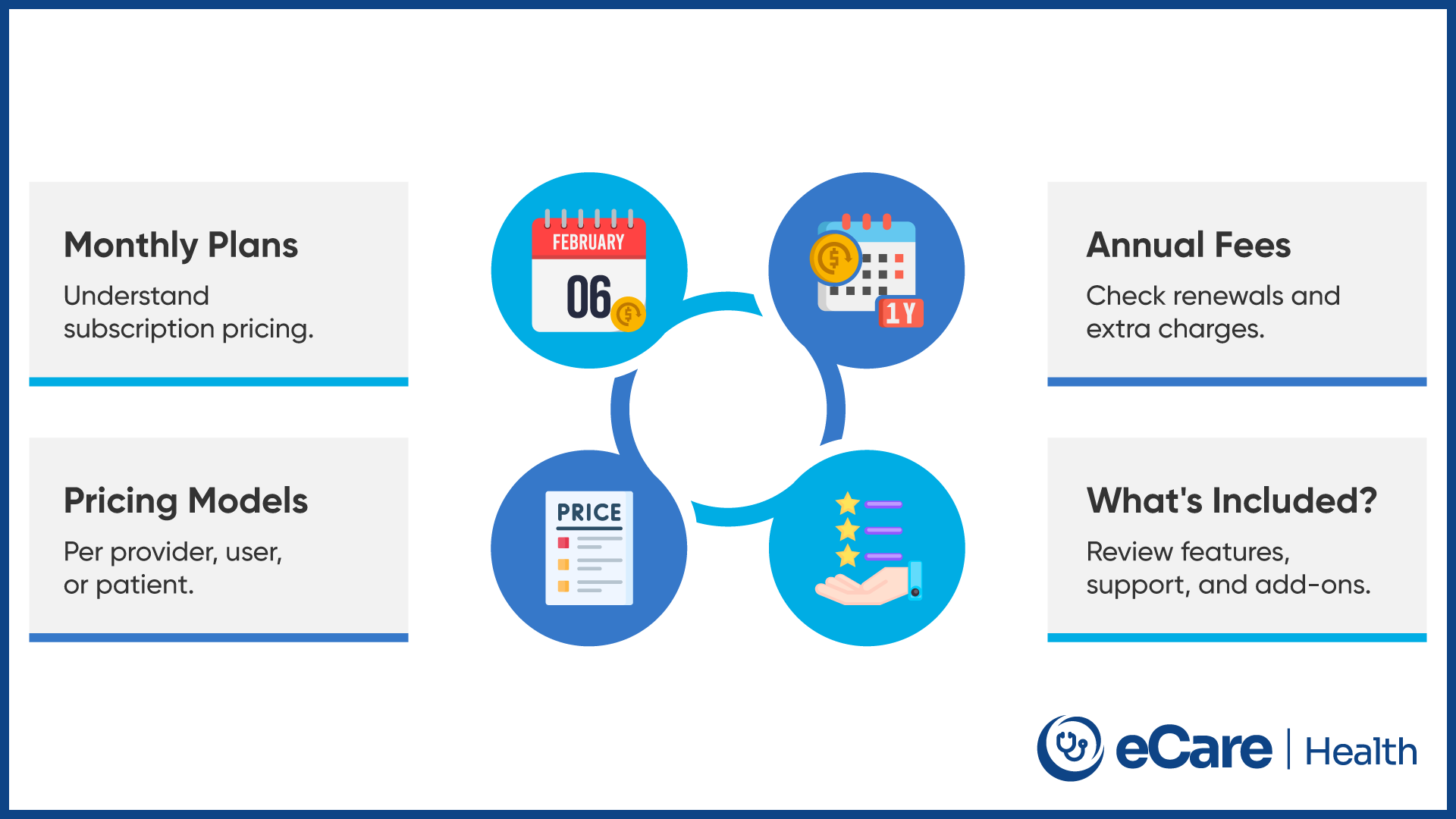
The monthly EHR software cost relies on the vendor’s pricing model, the number of users, and the features included in the plan. Some vendors charge a fixed subscription fee, while others calculate costs on the basis of providers, staff users, or patient volume.
Monthly Subscription Pricing
As we discussed earlier, many EHR vendors offer monthly subscriptions, allowing your practice to pay for software access rather than making a large upfront payment. The EHR cost per month can differ depending on the plan, number of users, and available features.
Before you compare prices, check whether the quoted amount covers your practice’s actual requirements.
Per-Provider vs. Per-User Pricing
With per-provider pricing, the fee is based on the number of doctors or other eligible providers using the system. Per-user pricing, on the other hand, may count everyone who needs access, including nurses and administrative staff.
Some vendors also use a per-patient pricing model. eCareHealth, for example, offers a per-patient charge model, which can be worth considering for practices that want pricing linked to their patient volume. Ask vendors how they calculate charges and whether minimum fees or usage limits apply.
Annual Subscription and Licensing Fees
Some vendors offer annual subscriptions, which require payment for the year upfront and may come with different rates from monthly billing. Others use licensing arrangements that involve separate fees for software access, maintenance, or upgrades.
Check the contract for renewal terms, price increases, and additional charges. Understanding these details helps you estimate what your practice will pay over time.
What Is Included in the Subscription?
A subscription may include core EHR features, cloud hosting, software updates, and technical support. However, services such as data migration, advanced reporting, integrations, or additional training may cost extra.
Ask the vendor for a clear list of included services and optional add-ons. This helps you compare plans fairly and understand the actual value of the subscription rather than judging it by the monthly price alone.
What Is Included in EHR Implementation Costs?
The monthly subscription is only half the story of the investment. Before an EHR system is ready for everyday use, your practice must pay for setup, data transfer, staff training, and technical work. All these expenses can differ by vendor and depend on your existing systems and requirements.
| Implementation Cost | What It Covers | What to Ask the Vendor |
|---|---|---|
| Software setup and configuration | Setting up user accounts, clinical templates, access permissions, and practice workflows. | Is initial setup included, or are customization requests charged separately? |
| Data migration | Transferring existing patient records, clinical notes, medications, and other relevant information into the new EHR. | Does the fee cover all records, and how is data accuracy checked? |
| Staff training and onboarding | Training doctors, nurses, and administrative staff to use the new system. | Are training sessions and ongoing learning materials included in the price? |
| Hardware and IT infrastructure | Servers, networking equipment, computers, storage, and maintenance, where required. | Will we need new equipment or additional IT support? |
| Integration and deployment | Connecting the EHR with billing software, laboratories, pharmacies, and other applications. | Which integrations are included, and are there setup or third-party fees? |
How Much Should You Budget for Implementation?
The answer to how much it costs to implement an EHR system relies heavily on the size of your practice, the amount of data transfer, and the complexity of your workflows and integrations.
Cloud-based systems may need less investment in on-site hardware; on the other hand, on-premises systems can involve additional infrastructure costs.
Also ask vendors for an itemized implementation estimate that separates one-time charges from recurring fees to compare proposals and understand the initial investment before committing to a system.
What Hidden Costs Should You Consider When Buying EHR Software?
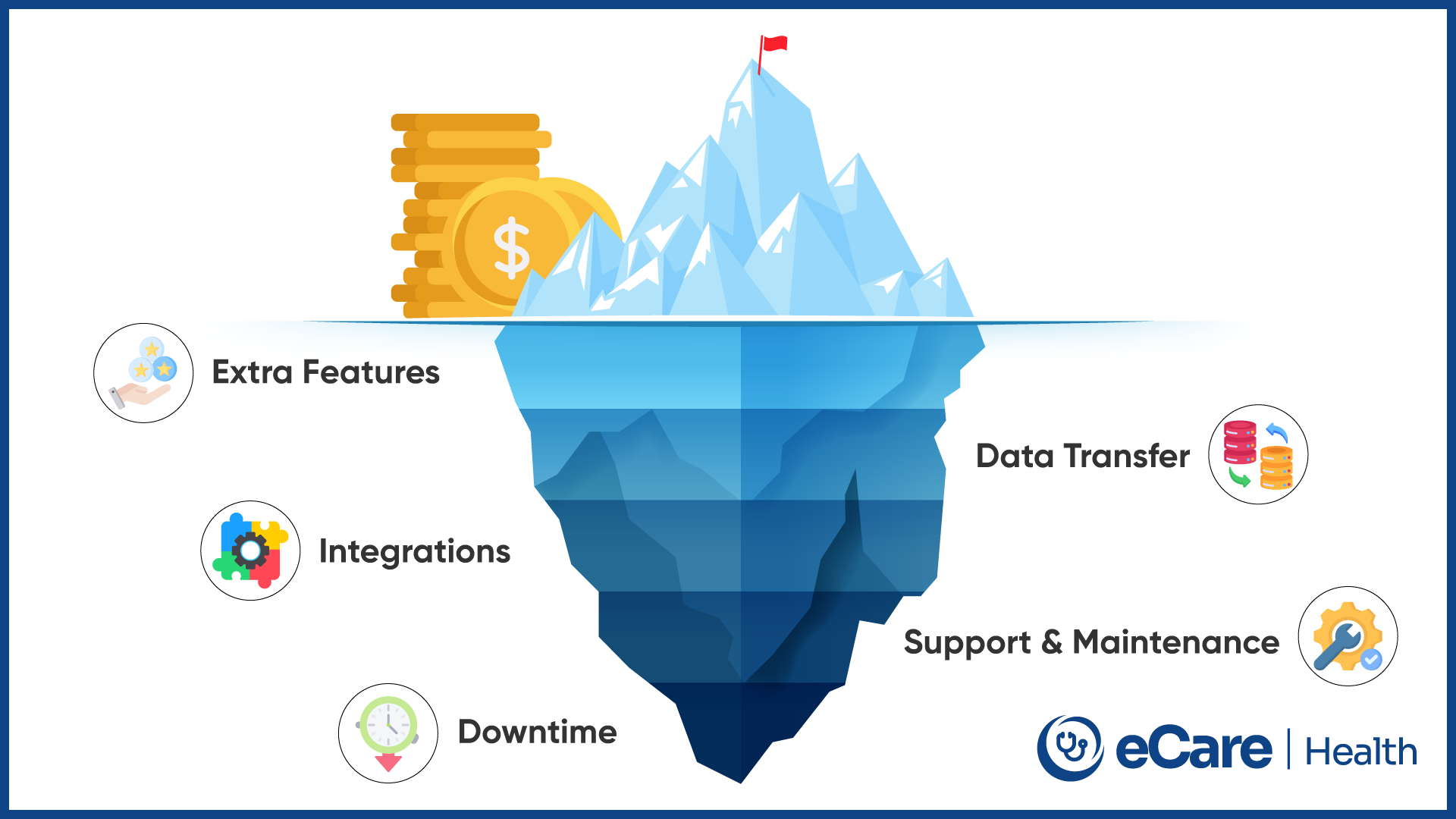
The price shown by an EHR vendor may not cover every expense your practice will face. Extra charges can appear as your needs change or when you require services outside the standard package. Here are some costs to check before signing a contract.
Additional Features and User Fees
Some vendors charge extra for premium features, advanced reporting, or optional modules. Adding more doctors or staff members may also increase your subscription fee. Ask which features are included in your plan and how the price changes as your practice grows.
Maintenance and Technical Support
Software updates and basic support may be included in your subscription, but some vendors charge separately for specific maintenance services or advanced technical assistance. Confirm what support is covered, whether urgent help costs extra, and if any additional maintenance fees apply.
Third-Party Integrations
Connecting your EHR with billing software, laboratories, pharmacies, or other applications may involve setup fees or recurring charges. Ask whether the vendor supports your existing systems and whether third-party providers charge separately for these connections.
Data Export and Vendor Switching
Changing EHR vendors can involve costs for exporting patient records, preparing data for transfer, or getting technical assistance. Before signing a contract, check whether export fees apply, which formats are available, and how long it takes to retrieve your records.
Downtime and Productivity Costs
Implementation delays or unexpected outages can interrupt daily work. Staff may spend extra time managing records or completing tasks manually while the system is unavailable. Ask about downtime procedures, recovery plans, and implementation timelines to understand how the vendor helps limit disruption.
Considering these expenses alongside the subscription fee gives you a clearer picture of the EHR total cost of ownership. Request a written breakdown of additional charges so you can plan your budget and avoid unexpected costs later.
How Much Does an EHR System Cost for a Small Medical Practice?
For a small medical practice, EHR costs depend on the number of providers, the features needed, and the vendor's pricing model. A clinic that needs basic patient records may have different expenses from one that also requires billing, e-prescribing, and telehealth.
Monthly and Annual Expenses
Subscription fees may be charged per provider, per user, per patient, or through a fixed plan. To estimate annual spending, multiply the monthly fee by 12 and include any recurring charges for integrations, support, or additional features.
Initial Implementation Expenses
Small practices should also budget for setup, data migration, staff training, and integration with existing systems. Some vendors include these services in their packages, while others charge separately. Request an itemized estimate before choosing a plan.
Estimating the Total Budget
To understand how much does an EHR system cost for a small medical practice, add the initial implementation expenses to the expected subscription and other recurring costs.
For example, if a practice pays $300 per month, its annual subscription would be $3,600. If implementation costs another $1,000, the first-year cost would be $4,600, excluding any additional fees. This is an illustrative calculation, not a market price estimate.
How to Calculate the Total Cost of EHR Ownership
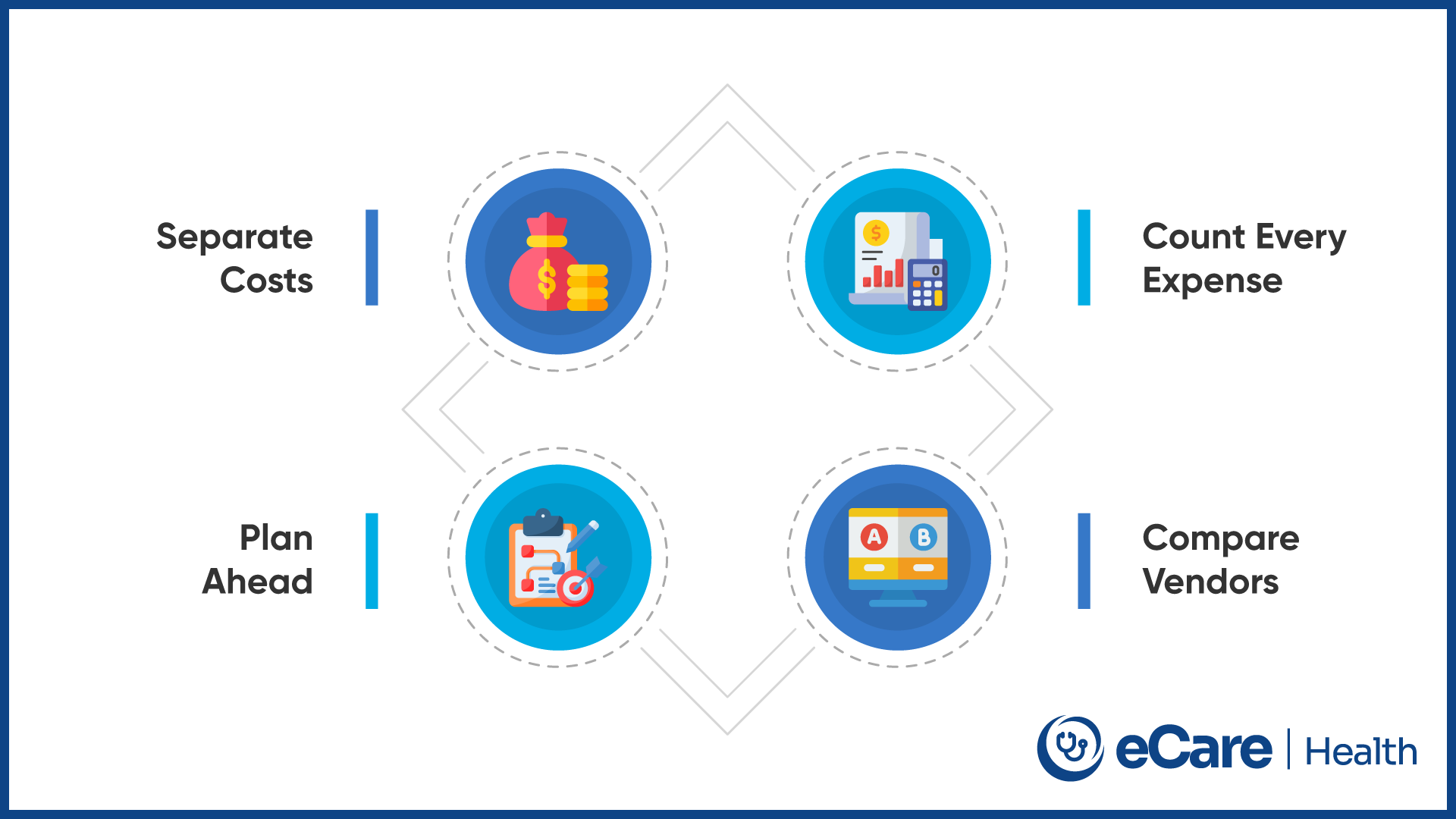
The subscription fee tells you what you pay for access to the software, but it doesn't show the full cost of using the system over time. The EHR total cost of ownership includes initial expenses, recurring charges, and other costs that may arise during everyday use.
Initial Costs vs. Recurring Costs
Start by separating one-time expenses, such as setup, data migration, and initial training, from recurring costs, such as subscriptions, support, maintenance, and integration fees. This makes it easier to see how much you need upfront and what your practice will pay regularly.
Calculating Costs Over Three to Five Years
Choose a period of three to five years and estimate the expenses for each year. Include subscription fees, renewals, support, integrations, maintenance, and any expected price increases. Add the initial implementation costs to calculate the estimated total for that period.
Direct and Indirect Costs
Direct costs include software fees, hardware, training, and integrations. Indirect costs may include staff time spent learning the system, temporary workflow disruptions, and productivity losses during implementation. Considering both gives you a more realistic budget.
Comparing Total Cost Across EHR Systems
When comparing vendors, use the same time period and account for similar features, users, and services. A system with a lower subscription fee may cost more over time if it requires expensive add-ons or additional support. Compare the full estimated cost before making your decision.
EHR System Cost vs. Paper-Based Recordkeeping
Paper records may seem less expensive because they don't require a software subscription. However, maintaining physical files also involves supplies, storage, and staff time. Comparing these expenses with the cost of digital records can help practices understand the financial differences.
Costs of Paper-Based Recordkeeping
Paper-based practices may spend money on printing, paper, folders, filing cabinets, and storage space. Staff also spend time filing records, locating patient information, and updating documents. These expenses can add up as the practice grows.
Costs Associated With Digital Records
Digital records involve costs such as EHR subscriptions, implementation, training, integrations, and ongoing support. Some practices may also need new equipment or IT assistance. In return, digital systems can make records easier to search, update, and access, depending on the software and how it is used.
Comparing Long-Term Recordkeeping Costs
Rather than comparing software fees with the cost of paper alone, consider the full expense of each approach. Include supplies, storage, and staff time for paper records, then compare them with subscription, setup, maintenance, and support costs for an EHR. The better option depends on your practice's size, workflows, and needs.
Conclusion: Understanding the Full Cost of an EHR System
The cost of an EHR system goes beyond its monthly subscription. Provider count, software features, implementation, integrations, training, and ongoing support can all affect how much your practice spends. Some expenses are paid upfront, while others continue throughout the life of the system.
Before choosing a vendor, compare pricing models, request a breakdown of additional fees, and estimate costs over several years. Looking at the full investment rather than the advertised monthly price can help you select a system that fits your practice's needs and budget.
To explore EHR solutions and understand which options may suit your practice, learn more about eCareHealth.
Frequently Asked Questions (FAQs)
1. How much does an EHR system cost per month?
The monthly cost of an EHR system depends on the vendor, pricing model, number of users, and included features. Some vendors charge per provider or user, while others offer fixed subscriptions or per-patient pricing. Practices should compare subscription fees and additional charges before choosing a plan.
2. How much does an EHR system cost for a small medical practice?
The cost for a small medical practice depends on its number of providers, required features, and implementation needs. Basic plans may cost less than systems with advanced integrations or specialty-specific tools. Practices should consider setup, training, data migration, and recurring fees when estimating their budgets.
3. What factors influence the cost of an EHR system?
EHR pricing depends on practice size, number of users, software features, hosting method, and integration requirements. Customization, implementation, training, technical support, and contract terms can also affect the total cost. Comparing these factors helps practices understand what they will pay upfront and over time.
4. How much does it cost to implement an EHR system?
Implementation costs vary depending on system configuration, data migration, staff training, hardware requirements, and integrations. Some vendors include basic setup in their packages, while others charge separately for these services. Practices should request an itemized implementation estimate before signing a contract.
5. What hidden costs should practices consider when choosing EHR software?
Practices should check for additional user fees, premium features, integration charges, maintenance costs, and extra technical support fees. Data export and vendor switching may also involve expenses. Reviewing the contract and requesting a written breakdown of additional charges can help prevent unexpected costs.
6. What is the total cost of ownership of an EHR system?
The total cost of ownership includes all expenses associated with purchasing, implementing, and using an EHR over time. These may include subscriptions, setup, training, integrations, maintenance, support, hardware, and staff time. Estimating costs over three to five years helps practices compare vendors more accurately.
7. Is cloud-based EHR software less expensive than an on-premise system?
Cloud-based EHR software typically uses a subscription model and requires less investment in on-site servers. On-premise systems may involve higher upfront hardware and installation costs, along with ongoing IT maintenance. However, the more affordable option depends on the practice's requirements, resources, and long-term expenses.
8. How much does EHR software cost per patient?
The cost of EHR software per patient depends on the vendor's pricing model and how patient volume is calculated. Some vendors charge based on the number of patients, while others use provider-based, user-based, or fixed subscription fees. Practices should ask about minimum charges, patient limits, and additional fees before comparing plans.