EHR Vendor Selection: 10 Steps to Find the Right Platform for Your Practice
For any medical practice, choosing an EHR system is a big decision. The right platform can make your daily tasks easier; on the other hand, the wrong choice can result in extra cost, workflow issues, and delays in getting your team up to speed.
That’s why EHR vendor selection becomes as important as the software itself. While comparing the best EHR software options, always look beyond features and pricing.
Also, consider the vendor’s experience, implementation process, staff training, and ongoing support. All of these factors can affect how easily your team can adjust to the new system and use it in daily work.
Always start by understanding what your practice actually needs. For example, a small clinic may focus more on appointment scheduling and simple documentation, while a larger practice may require multiple location support, advanced reporting, or connections with other healthcare systems. The right choice relies on your team’s workflows, patient volume, budget, and plans for growth.
Furthermore, it also helps you compare vendors using the same set of requirements instead of depending only on product demonstrations or sales promises. Always ask vendors how they will handle data migration, system updates, technical issues, and contract renewals before making a decision.
This blog will cover 11 practical steps to help you compare options, ask the right questions, and choose an EHR vendor that fits your practice’s needs now and in the future.
10-Step Guide on How to Choose an EHR Vendor
Step 1: Define Your Practice Goals and Budget
Always start by identifying what your practice wants to improve with a new EHR system. Observe whether your staff are spending too much time on documentation. Is appointment management difficult? Are billing delays affecting your daily operations?
List all these problems and decide what you want the new system to address. Then, set a realistic budget, timeline, and plan for the people and resources required to implement it.
Step 2: List and Prioritize Your EHR Requirements
Create a list of the features your practice requires, including clinical documentation, appointment scheduling, billing, e-prescribing, telehealth, or a patient portal.
Then, separate all the essential features from those that would be useful but are not immediately necessary. Also involve physicians, nurses, billing staff, and administrators so the final requirements can reflect how your practice operates.
Step 3: Research and Shortlist EHR Vendors
Based on your practice size, specialty, budget, and care setting, make an EHR vendor list. Start reviewing vendor websites, product information, customer feedback, and experience working with similar practices.
Shortlist all the vendors that meet your essential requirements. This can save time and help your practice focus on more relevant options.
Step 4: Compare Features and System Integrations
A detailed EHR vendor comparison helps you to understand how different systems can meet your requirements. Check whether each vendor supports your clinical workflows while connecting with the tools you already use, like billing software, laboratories, pharmacies, and other healthcare systems.
Step 5: Calculate the Total Cost of Ownership
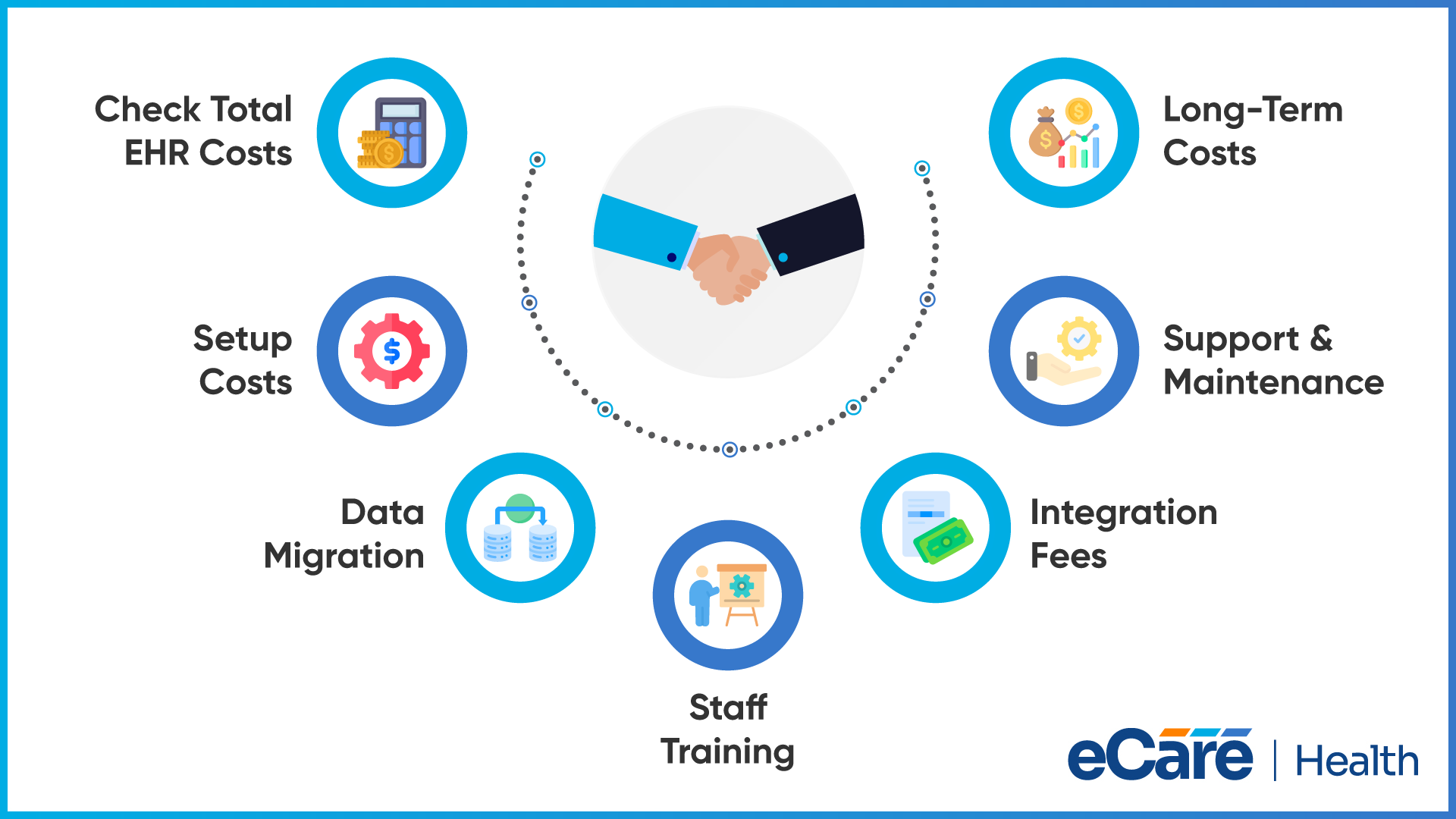
Don’t make your decision only on the subscription price. Ask vendors about implementation, data migration, staff training, integrations, customization, and additional modules.
Additionally, include ongoing support, maintenance, and renewal costs in your calculations. If you compare the full cost for several years, it gives you a clear picture of what each option may cost your practice.
Step 6: Check the Vendor’s Experience and Reputation
To know how to evaluate EHR vendors for a medical practice, you must look beyond product features. Start by reviewing the vendor’s experience, customer feedback, service history, and ability to support practices similar to yours.
Also, ask for references from existing customers, as their feedback can help you to understand how well the vendor handles implementation, staff training, technical issues, and ongoing support.
Step 7: Review Security, Compliance, and Data Ownership
Patient information needs appropriate protection. Ask vendors about access controls, encryption, audit logs, backups, and security incident procedures. For US practices, clarify how the system supports applicable HIPAA requirements and verify any relevant certifications or independent security assessments.
Also, confirm who owns your data, how records can be exported, and what happens to them if you change vendors. Ask about supported formats, such as FHIR or C-CDA, where applicable.
Step 8: Test Vendors Through Realistic Demonstrations
A product demonstration should show how the system works during a typical day at your practice. Ask vendors to demonstrate tasks such as documenting a patient visit, reviewing medications, scheduling appointments, and processing billing information.
Have physicians, nurses, and administrative staff participate. Collect their feedback using the same evaluation criteria for every vendor instead of relying on first impressions alone.
Step 9: Plan Data Migration, Training, and Support
Before choosing a vendor, understand how patient records will move from your existing system. Clarify which records will be transferred, who will check their accuracy, and how the migration will be tested.
Ask about training options, go-live assistance, support hours, response times, and escalation procedures. If the vendor offers service-level agreements (SLAs), review the commitments carefully.
Step 10: Review the Contract and Make Your Decision
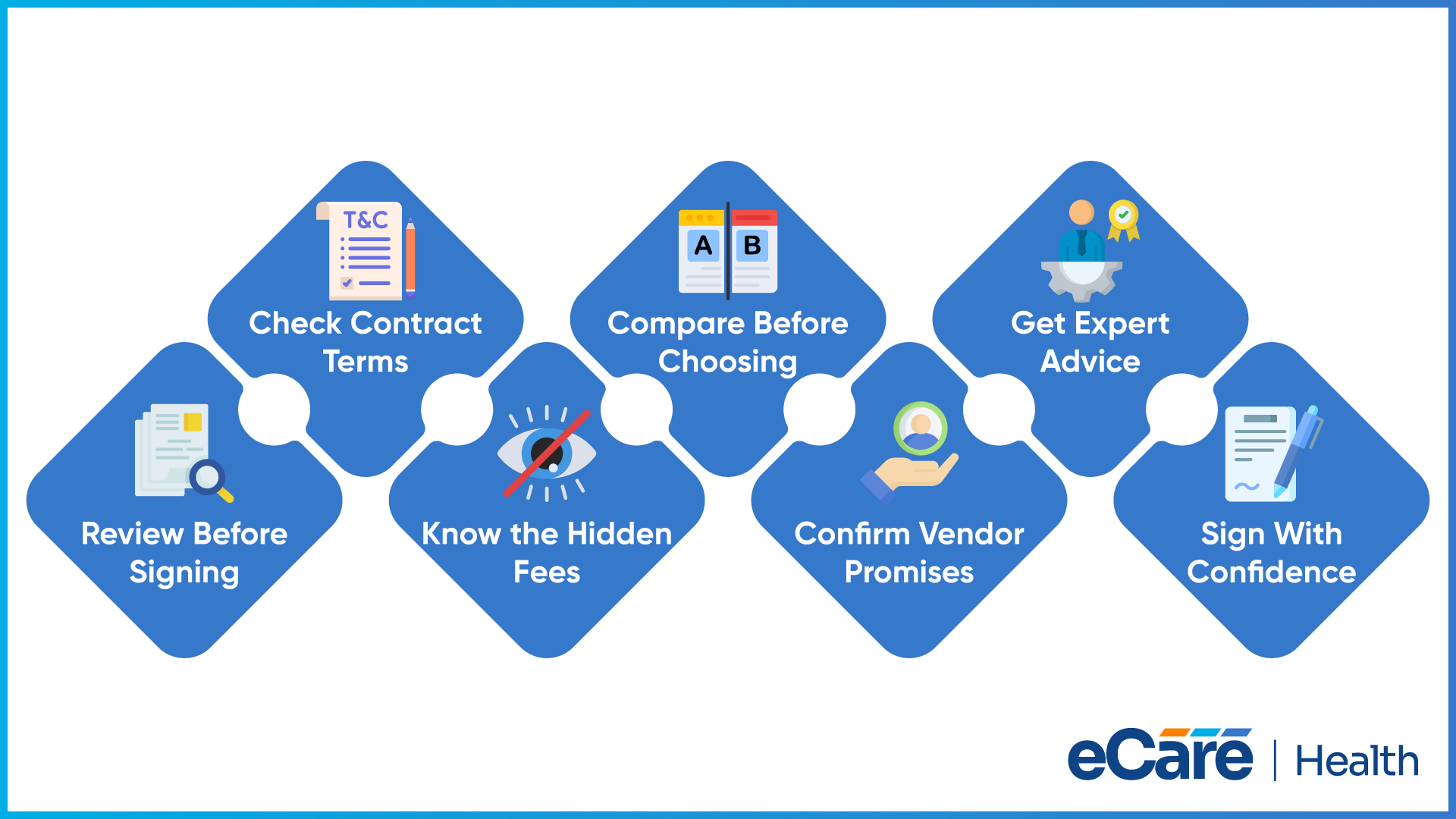
Before signing, review the contract’s pricing, renewal conditions, termination fees, implementation responsibilities, and support commitments. Seek legal or compliance advice when needed, especially if the agreement includes complex data-handling obligations.
Use a scoring sheet to compare your shortlisted vendors against your priorities, total costs, usability, and support. This structured EHR procurement process helps your practice make a decision based on documented requirements rather than sales promises alone.
Once you’ve selected a vendor, confirm that all important commitments are included in the written agreement before moving forward.
Conclusion
Choosing the right EHR vendor takes more than comparing features and prices. A structured evaluation helps you understand what your practice needs, compare suitable vendors, and prepare for implementation. It also helps you avoid unexpected costs and workflow challenges that could affect your practice over time.
Focus on three key factors: clinical fit, ease of use, and overall cost. The system should support your team’s daily work, fit your budget, and offer reliable training and ongoing support. Before signing, review the contract carefully and confirm important commitments in writing.
Finding the right EHR partner can help your practice manage its current needs and prepare for future growth. If you need help exploring your options, talk to our experts to discuss your practice’s EHR requirements.
Frequently Asked Questions (FAQs)
1. How do you choose the right EHR vendor for a medical practice?
Start by identifying your practice’s clinical and administrative needs, budget, and workflow requirements. Compare vendors based on features, usability, integrations, security, implementation, and support. Request demonstrations, check customer references, and review contract terms before making your final decision.
2. What factors should be considered when comparing EHR vendors?
Consider clinical features, ease of use, integration capabilities, data security, implementation timelines, staff training, customer support, and total costs. Also, check whether the system can accommodate future growth and whether the vendor provides clear terms for renewals, termination, and data export.
3. How can healthcare practices find a reliable EHR vendor?
Healthcare practices can research vendors through industry reviews, professional recommendations, and feedback from similar practices. Check the vendor’s experience, customer support history, security practices, and implementation process. Speaking with existing customers can provide useful insights into the vendor’s reliability and long-term service quality.
4. What should an EHR vendor comparison include?
An EHR vendor comparison should include essential features, integrations, usability, security measures, implementation support, training, and ongoing service. Compare the full cost of each option, including setup fees and additional services. Using the same criteria for every vendor makes it easier to identify the best fit.
5. How many EHR vendors should a practice evaluate?
A practice can start by researching several vendors and narrow the list to around three to five suitable options for detailed evaluation. This provides enough choice without making the process unnecessarily time-consuming. The ideal number depends on the practice’s size, specialty, budget, and specific requirements.
6. What is involved in the EHR procurement process?
EHR procurement involves defining requirements, setting a budget, researching vendors, comparing solutions, evaluating demonstrations, and reviewing costs. It also includes checking security, planning implementation, assessing support, and negotiating contract terms. A structured process helps practices make an informed decision that aligns with their operational needs.
7. Why is vendor support important when selecting an EHR system?
Vendor support helps practices address technical issues, train staff, manage system updates, and resolve problems during implementation and daily use. Reliable support can reduce workflow disruptions and help staff use the system effectively. Practices should check support hours, response times, escalation procedures, and any additional fees before signing.