Psychiatry Billing Software: Key Features and How to Choose the Right Solution for Your Practice
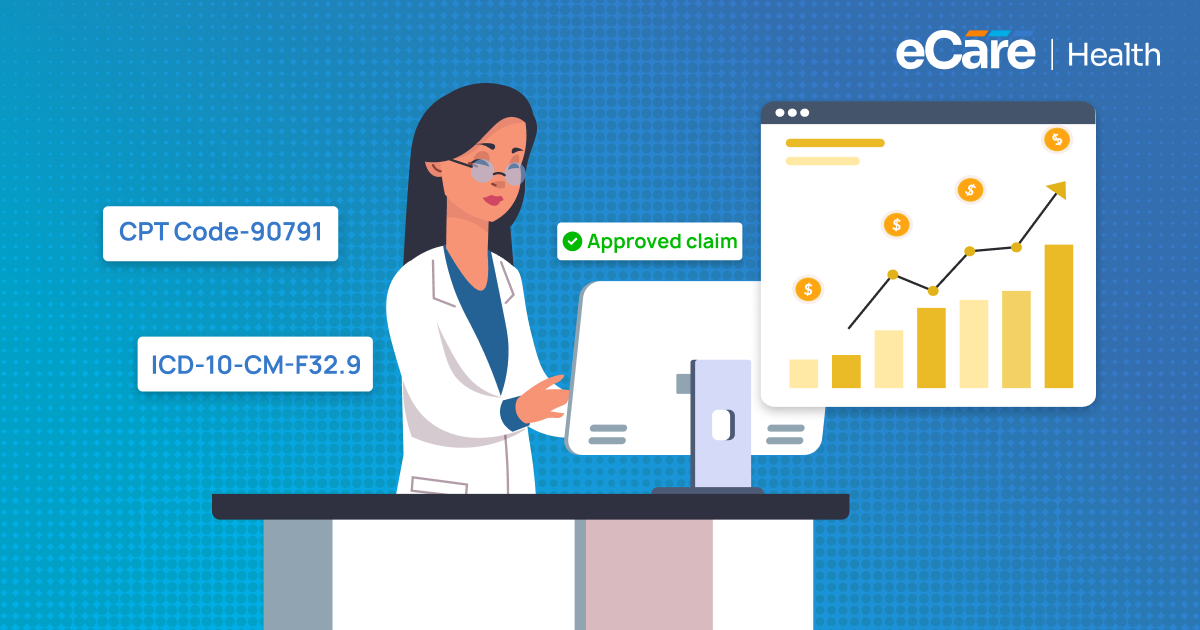
For turning a paid claim into a denied one, it takes only one overlooked modifier. And for psychiatric practices, it is more common than many realize.
Even a small coding or documentation error between time-based psychotherapy codes, medication management, telepsychiatry, and payer-specific billing rules can delay reimbursements and create unnecessary administrative work.
As all these challenges continue to grow, many practices start to replace generic billing tools with psychiatry billing software, which is specifically built for behavioral health. With a specialized psychiatry billing software solution, providers can streamline billing workflows, reduce claim errors, and improve reimbursement accuracy.
After integrating with a psychiatry EHR and psychiatry practice management software, it can also connect documentation, scheduling, and billing into one seamless workflow. However, selecting the right solution is not just about automating claims. It means finding software that can understand the unique billing, coding, and compliance requirements of psychiatric practices.
So, let’s explore the key features to look for in psychiatric billing software and how to choose a specialized billing solution for psychiatry that helps your practice improve efficiency, stay compliant, and maximize revenue.
What Makes Psychiatry Billing Different from Other Medical Specialties?
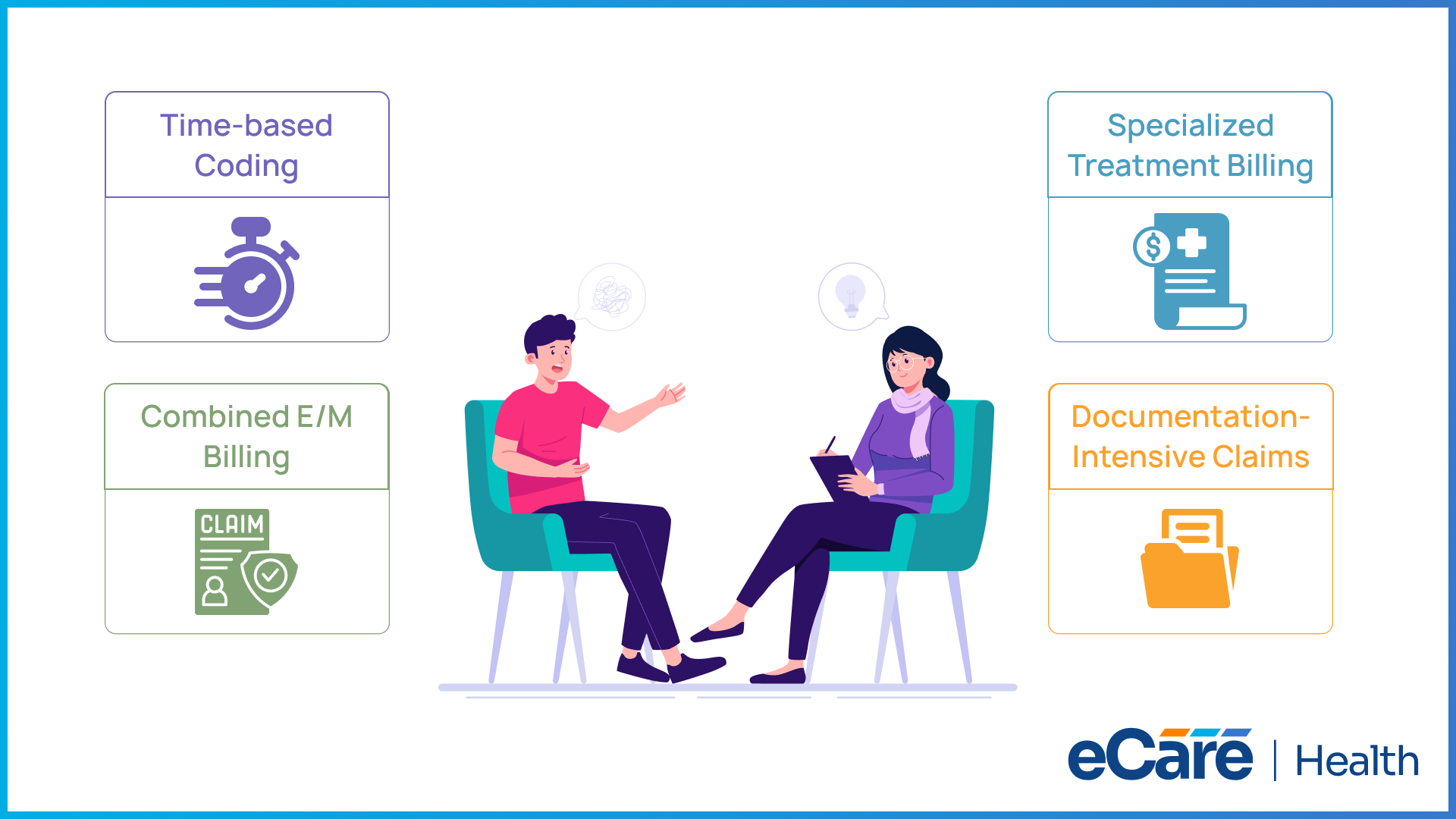
Psychiatric billing goes far beyond assigning diagnosis and procedure codes. As compared to other specialists, reimbursement often relies on session duration, psychotherapy services, clinical documentation, and payer-specific billing rules. And because of this, many psychiatric practices are looking for workflows designed especially for behavioral health, instead of depending on generic billing systems.
Let’s see exactly what factors make psychiatry billing unique:
Time-based coding:
Many psychiatric services are billed on the basis of the length of the patient sessions, which makes managing time-based psychiatric CPT codes and modifiers necessary for accurate reimbursement.
Combined E/M & psychotherapy billing:
Psychiatrists frequently provide Evaluation & Management (E/M) services alongside psychotherapy during the same visit. By correctly reporting psychotherapy add-on codes, modifiers are more likely to prevent claim denials.
Specialized treatment billing:
Advanced services like TMS, ketamine therapy, and SPRAVATO have unique coding, authorization, and reimbursement requirements that standard billing workflows may not adequately support.
Documentation-intensive claims:
Every billed service must be backed by detailed clinical documentation demonstrating medical necessity, treatment time, and the care provided to maintain billing accuracy and compliance.
Generic billing platforms often struggle to keep pace because of these specialty-specific requirements. Dedicated psychiatry billing software can streamline these complex workflows, reduce manual errors, and support efficient behavioral health revenue cycle management. This further helps practices stay focused on patient care instead of administrative hurdles.
Which Features Should Every Psychiatry Billing Software Include?
The right psychiatry billing software should not only generate claims, but should also simplify the entire billing lifecycle. Every feature from validating claims before submission to tracking reimbursements and managing denials should help improve billing accuracy, reduce administrative effort, and support better financial outcomes.
To evaluate a solution, the following essential psychiatric EHR billing features for psychiatric practices should always be checked:
| Feature | What It Does | Why It Matters for Psychiatry |
|---|---|---|
| Automated Claim Scrubbing | Detects coding and billing errors before claims are submitted. | Reduces denials and supports psychiatric billing software with automated claim scrubbing for cleaner claims. |
| CPT & ICD-10-CM Support | Provides built-in CPT, ICD-10-CM, diagnosis, and modifier mapping. | Improves coding accuracy and reimbursement for psychiatric services. |
| Clearinghouse Integration | Enables electronic claim submission with real-time claim tracking. | Speeds claim processing and provides better claim visibility. |
| Insurance Eligibility Verification | Verifies patient coverage and helps manage prior authorizations before appointments. | Minimizes rejected claims and unexpected billing issues. |
| ERA/EFT Payment Posting | Automates payment posting, reconciliation, denial management, and accounts receivable tracking. | Improves cash flow while reducing manual administrative work. |
| Reporting & Analytics | Provides revenue dashboards, financial reports, and MACRA/MIPS reporting support. | Helps practices monitor performance, identify trends, and make informed business decisions. |
All these capabilities together can help your practice to streamline psychiatry medical billing, enhance reimbursement accuracy, and strengthen overall behavioral health revenue cycle management without adding unnecessary administrative burden.
How Does Integrated Psychiatry Billing Software Improve Practice Efficiency?
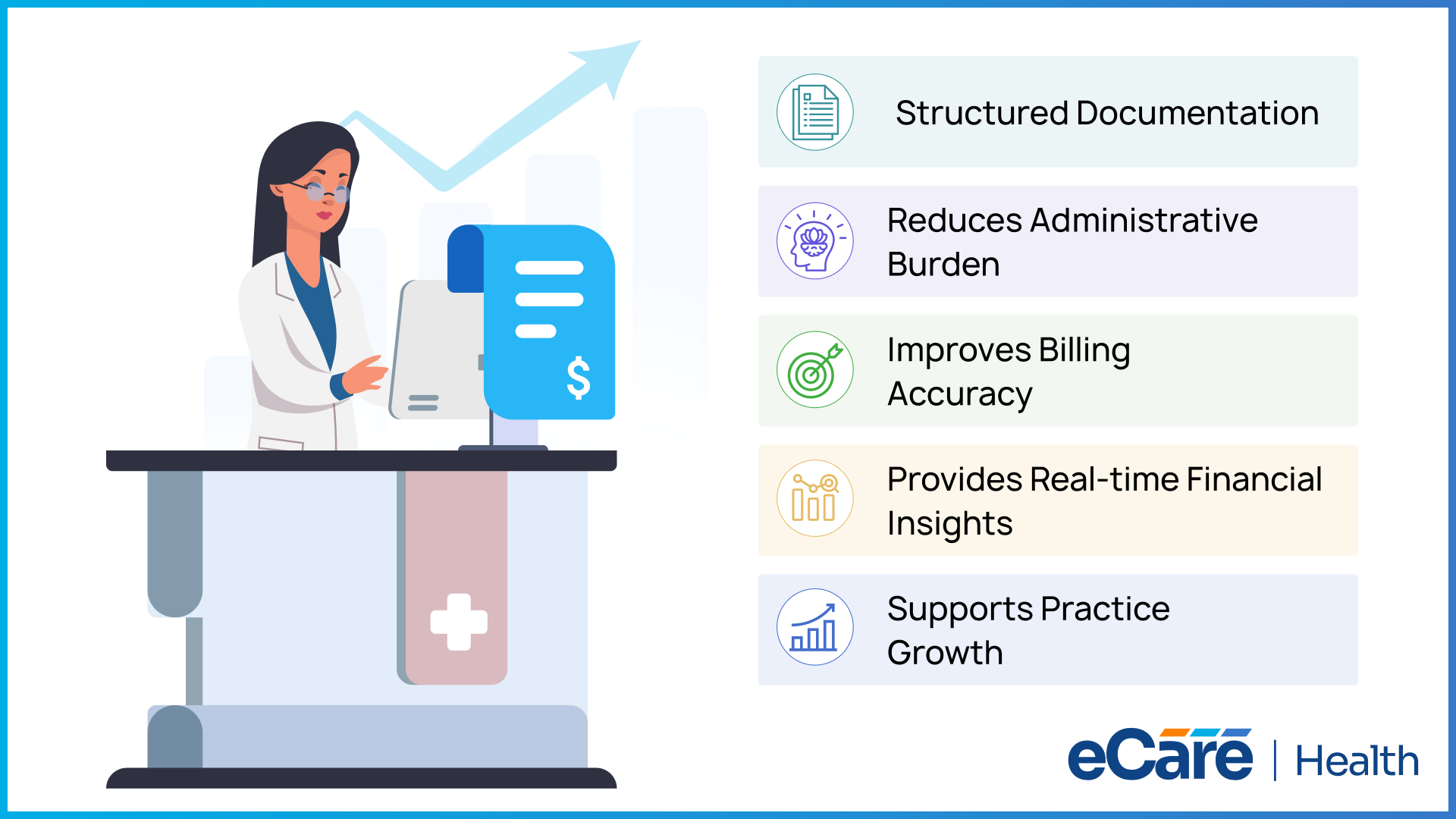
Appointments, documentation, billing, and payments through separate systems usually lead to duplicate work and increase the risk of errors. Integrated psychiatry billing software brings these processes together by helping your practice streamline daily operations and improve not only financial but also clinical workflows.
Let’s see how:
Connects the entire patient journey:
An integrated platform helps to keep every step from appointment scheduling and clinical documentation to claim submission and payment posting connected. This can reduce the risk of duplicate data entry, while ensuring billing reflects the services actually provided.
Reduces administrative burden:
With automation, it becomes easy to handle repetitive tasks like eligibility verification, claim generation, payment posting, and follow-ups. This further allows your staff to spend less time on paperwork and more time on supporting patients. It’s actually a win-win for both productivity and patient care.
Improves billing accuracy:
If billing is directly linked to clinical documentation, it is easier for you to capture the correct diagnoses, CPT codes, and modifiers without switching between systems. This also helps to reduce coding errors and claim denials.
Provides real-time financial insights:
With built-in dashboards and reports, your practice can gain quick visibility into claim status, collections, outstanding balances, and even revenue trends, identifying issues before they affect overall cash flow.
Supports practice growth:
Furthermore, integrated workflows can also scale with the organization as patient volume increases or new providers join the practice. Rather than adding administrative complexity, the software can help to maintain efficient behavioral health revenue cycle management and support long-term growth.
How Do You Choose the Right Psychiatry Billing Software?
It is a fact that not every billing solution is built for the complexities of psychiatric care. Even though a generic platform may handle basic claims, it usually falls short when it comes to time-based billing, psychotherapy services, and specialty documentation.
And because of this, it is necessary to choose psychiatry billing software designed specifically for behavioral health workflows. Once you’ve narrowed down your options, look at how much the software can actually simplify everyday work.
If you're evaluating billing software as part of a broader EHR decision, our guide on Psychiatry EHR: The Complete Guide to Choosing Software for Psychiatric Practices in 2026 can help you understand the key capabilities to consider when choosing an EHR for your practice.
You should always look for features like automated claim validation, reporting, and compliance support, which can reduce manual effort and improve billing accuracy. Along with this, it should also integrate seamlessly with your psychiatry EHR, scheduling, telehealth, and e-prescribing systems. This reduces the need for your team to constantly switch between platforms.
You must think beyond your current needs. As your practice grows, your software should also grow with it. Reliable implementation, responsive customer support, and the flexibility to scale can make a huge difference.
If you choose the right solution today, it can help your practice to stay efficient, enhance behavioral health revenue cycle management, and focus more on delivering quality patient care.
Conclusion
Psychiatry billing comes with challenges that generic billing systems aren’t designed to handle. From time-based coding to payer-specific requirements, having the right psychiatry billing software can make billing more accurate, reduce administrative work, and improve your practice’s financial performance.
That’s where eCareHealth’s psychiatric EHR can help. With automated claim scrubbing, integrated coding support, eligibility verification, clearinghouse connectivity, comprehensive billing workflows, and real-time financial reporting, it simplifies the entire billing process in one connected platform.
Whether you’re a solo psychiatrist or a growing behavioral health practice, the right technology can help your team spend less time managing claims and more time caring for patients.
Frequently Asked Questions (FAQs)
1. What is psychiatry billing software?
Psychiatry billing software is a specialized solution that helps psychiatric practices manage medical billing, coding, claim submission, payment posting, and reimbursement. It is designed to support the unique billing requirements of behavioral health services, including time-based psychotherapy coding, Evaluation & Management (E/M) visits, and specialty documentation.
2. Why do psychiatric practices need specialized billing software?
Psychiatric practices have billing requirements that differ from many other medical specialties. Specialized billing software helps manage time-based CPT codes, psychotherapy add-on billing, payer-specific rules, and detailed documentation, improving billing accuracy while reducing claim denials and administrative workload.
3. What are the essential psychiatry EHR billing features for psychiatric practices?
Key features include automated claim scrubbing, CPT and ICD-10-CM coding support, clearinghouse integration, insurance eligibility verification, prior authorization management, ERA/EFT payment posting, denial management, accounts receivable tracking, and real-time financial reporting.
4. How does psychiatric billing software with automated claim scrubbing reduce claim denials?
Psychiatric billing software with automated claim scrubbing reviews claims before they are submitted to identify coding errors, missing information, invalid modifiers, and payer-specific issues. By catching these problems early, staff can correct them before submission, increasing first-pass claim acceptance. This reduces claim denials, minimizes rework, and helps practices receive reimbursements faster.
5. How do psychiatry billing platforms support E/M and psychotherapy add-on billing?
Psychiatry billing platforms are designed to handle the complexities of billing Evaluation & Management (E/M) services alongside psychotherapy add-on codes during the same patient visit. They help providers select the correct CPT codes, apply appropriate modifiers, and maintain the documentation required to support each billed service. This improves coding accuracy while reducing the risk of claim denials and compliance issues.
6. Can psychiatry billing software manage interventional psychiatry services such as TMS and SPRAVATO®?
Yes. Many psychiatry billing solutions support specialized billing workflows for interventional psychiatry services such as Transcranial Magnetic Stimulation (TMS), SPRAVATO®, and ketamine therapy. These platforms help manage coding requirements, prior authorizations, documentation, and payer-specific billing rules, making it easier to process claims accurately and improve reimbursement.
7. What should I look for when choosing psychiatry practice management software?
Look for software that is built specifically for psychiatric practices rather than a generic billing platform. Important features include billing automation, claim scrubbing, coding support, reporting, insurance eligibility verification, and seamless integration with your EHR, telehealth, and e-prescribing systems. It should also offer reliable customer support and the flexibility to grow with your practice.
8. Can psychiatry billing software integrate with a Psychiatry EHR?
Yes. Most modern psychiatry billing software integrates with a Psychiatry EHR to connect scheduling, clinical documentation, coding, billing, and payment workflows in one system. This reduces duplicate data entry, improves communication between clinical and administrative teams, and helps ensure claims accurately reflect the services provided.
9. How does integrated billing software improve financial performance and practice efficiency?
Integrated billing software brings scheduling, documentation, coding, billing, and payment workflows together in one platform. By automating routine tasks, reducing manual errors, and providing real-time financial reporting, it helps practices improve operational efficiency and maintain a healthier revenue cycle. The result is faster reimbursements, better financial visibility, and more time for providers to focus on patient care.