Top 10 Mental Health EHR Features Every Behavioral Health Practice Needs in 2026
An estimated 23% of U.S. adults are living with a mental illness in 2025, making mental healthcare one of the fastest-growing areas of healthcare.
As compared to general medical practices, behavioral health providers handle long-term treatment plans, detailed therapy notes, multidisciplinary care teams, and highly sensitive patient information.
Even so, many practices are still heavily dependent on systems that were never built for the unique needs of behavioral healthcare. As a result, more time is spent on documentation, disconnected workflows, and less time focused on patient care.
If you try to handle all these workflows with a generic EHR, it feels like you are trying to fit a square peg into a round hole. Maybe it will work for a while, but it creates unnecessary friction, slows clinicians down, and can affect not only the provider but also the patient experience.
This is exactly where the right behavioral health EHR software can make a huge difference. With purpose-built mental health EHR features, it becomes easy to streamline clinical workflows, enhance patient engagement, simplify documentation, and support better outcomes. With the right technology, your practice can deliver better care without even adding more work.
Here, you might be wondering about: What separates an average behavioral health EHR from one that actually supports better care and seamless operations? To answer your question, let’s explore the ten must-have electronic health record features for mental health practice in 2026.
1. AI-Powered Clinical Documentation & Mental Health Charting
Documentation is one of the critical parts of behavioral healthcare, but it should not take your time away from your patients. Because of this, AI-powered clinical documentation has become one of the most valuable behavioral health software features for modern practices. Ambient AI and voice-assisted documentation assist clinicians to create accurate notes faster, minimize manual work, and perform after-hours charting.
Along with this, using mental health charting software that is specifically designed for behavioral health is equally important. Customizable templates for progress notes, treatment plans, and assessments help clinicians to document consistently, reduce administrative burden, and spend more time on delivering quality patient care.
Behavioral health EHR platforms like eCareHealth combine AI-assisted documentation with specialty-specific charting templates, helping clinicians complete documentation more efficiently while maintaining consistency across patient records.
2. Measurement-Based Care & Clinical Assessments
After creating accurate documentation, the next key step is measuring whether treatment is truly enhancing patient outcomes. That’s why built-in clinical assessments are another critical behavioral healthcare software feature.
PHQ-9, GAD-7, MDQ, DSM-5 Cross-Cutting Measures, CAGE, and SDOH assessments are some of the key standardized tools that are included in leading behavioral health EHR systems. With all these automated clinical screeners for behavioral health platforms, it becomes easy to identify risks, monitor symptoms, and support evidence-based treatment decisions without depending on manual processes.
Longitudinal outcome tracking also helps providers to compare assessment results over time, adjust care plans when needed, and clearly demonstrate patient progress. It’s a practical way to keep care more data-driven and ensure no important changes slip through the cracks.
3. Crisis Management & Patient Safety
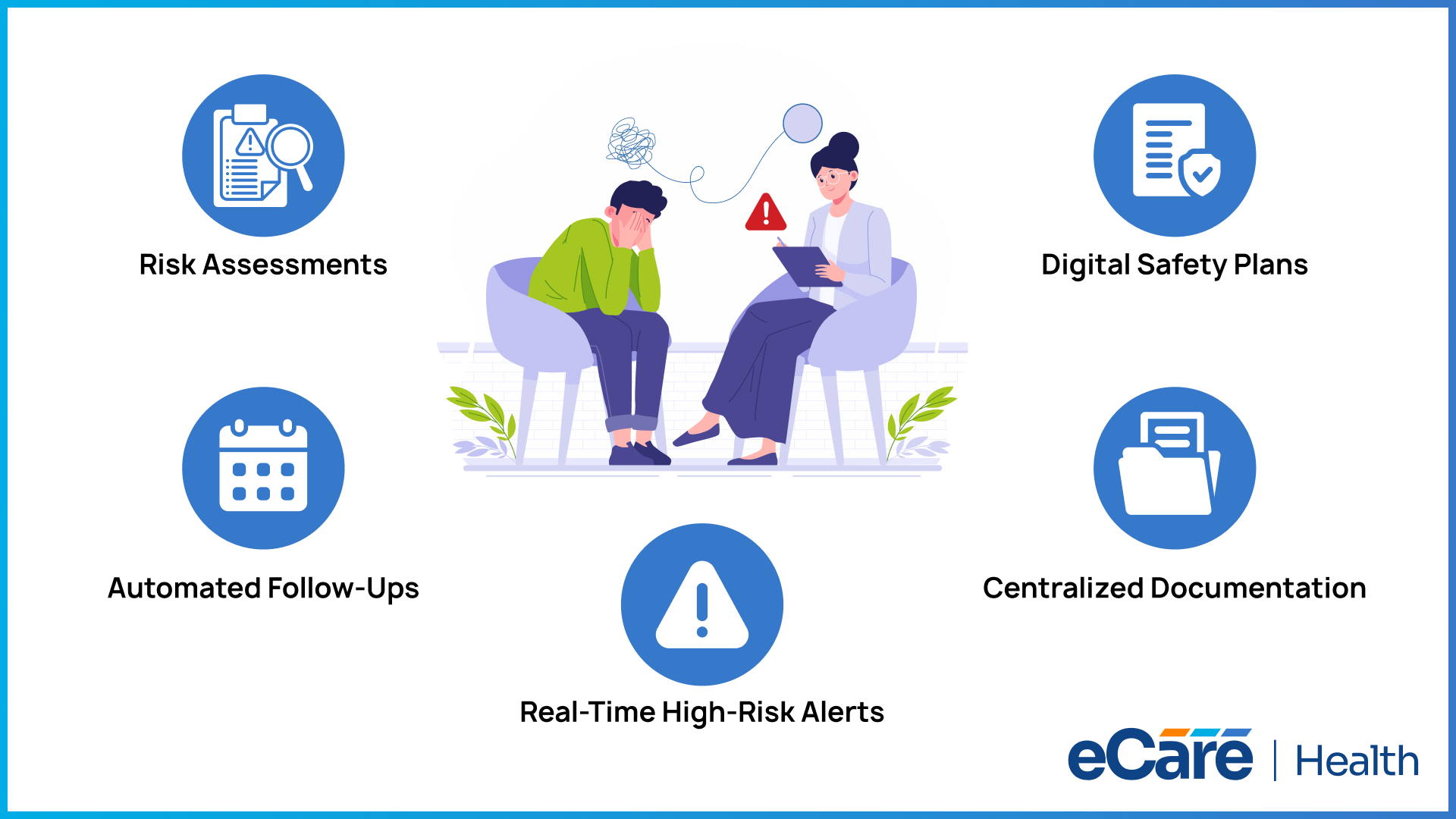
Clinical assessments help to measure progress and to help identify patients who may need immediate intervention. This makes crisis management tools a critical part of modern behavioral health EHR systems.
Furthermore, built-in suicide risk assessments like the C-SSRS and other validated screening tools help clinicians identify high-risk patients early. With digital safety plans, integrated crisis intervention workflows, automated follow-up reminders, and real-time high-risk alerts, you can make sure that important steps are not missed during moments when every second counts.
Keeping crisis documentation within your patient’s record also gives your care teams immediate access to risk assessments, safety plans, and intervention history. This further supports more coordinated, informed, and timely care.
4. HIPAA-Compliant Telehealth
It is a fact that supporting patients does not always require an in-person visit. HIPAA-compliant telehealth integration for behavioral health practices is no longer optional, as virtual care becomes a standard part of behavioral healthcare.
To eliminate the requirement of switching between multiple platforms, the best behavioral health EHR software includes secure virtual therapy sessions within the EHR. Virtual waiting rooms, encrypted messaging, and support for individual, family, and group therapy are some of the features that help to create a seamless experience for not only providers but also for patients.
By integrating telehealth fully into your daily workflows, your practice can expand access to care, minimize missed appointments, and maintain continuity of treatment.
5. Electronic Prescribing & Medication Management
No matter if care is delivered in person or virtually, prescribing medications should be just as seamless. Because of this, electronic prescribing has become an essential feature of modern behavioral health EHR software.
With built-in ePrescribing like Electronic Prescribing of Controlled Substances (EPCS) and Prescription Drug Monitoring Program (PDMP) integration, clinicians can prescribe psychiatric medications safely while meeting regulatory requirements.
Furthermore, access to medication history, refill management, and real-time drug interaction alerts supports informed prescribing decisions, while reducing the risk of medication errors. With everything managed from a single platform, you can spend less time navigating systems and more time on delivering safe and coordinated care.
6. Integrated Billing & Revenue Cycle Support
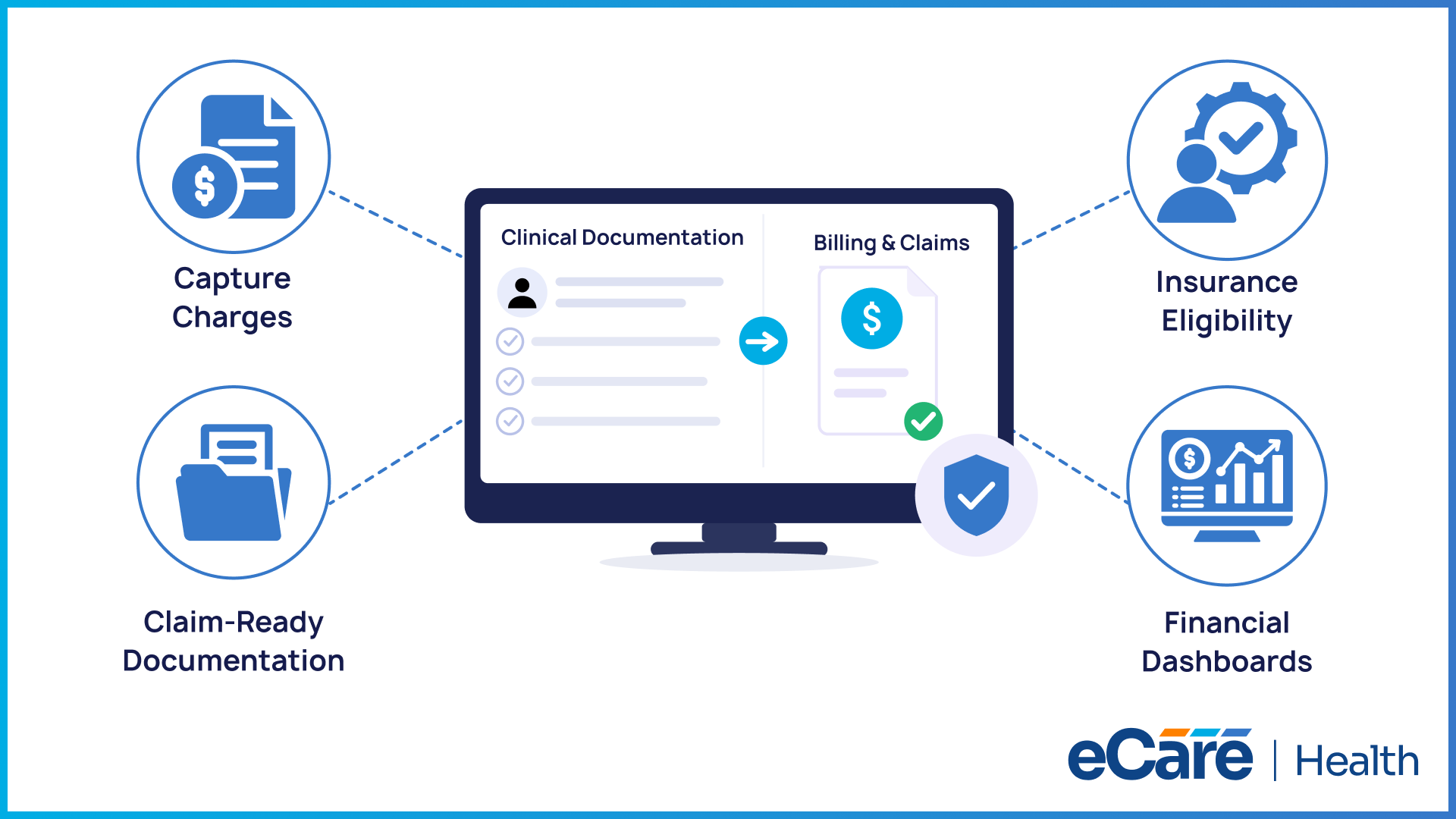
Delivering quality care is only half the battle; practices also need a more efficient billing process to maintain financial stability. This is exactly where integrated billing and revenue cycle tools become an essential behavioral health software feature.
Capturing charges directly from clinical documentation helps practices reduce manual data entry and enhance billing accuracy. Moreover, built-in insurance eligibility verification, claim-ready documentation, and financial reporting dashboards help streamline reimbursement, minimize claim denials, and provide greater visibility into practice performance.
When clinical and financial workflows work together, practices can spend less time resolving billing issues and more time focusing on patient care. For example, eCareHealth integrates clinical documentation with billing workflows, helping behavioral health practices improve charge capture, streamline claims processing, and simplify revenue cycle management from a single platform.
7. Practice Management Features
Along with strong clinical and billing tools, equally important are seamless day-to-day operations to keep a behavioral health practice running efficiently. This is exactly where mental health practice management software adds real value.
Appointment scheduling, provider calendar management, secure client portals, and digital intake forms are some of the features that help to simplify everyday tasks for both staff and patients.
Automated appointment reminders, digital consent forms, secure messaging, and workflow automation further help to reduce administrative work and enhance communication and patient engagement.
When routine tasks run on autopilot, it becomes easy for your care teams to stay organized, reduce no-shows, and focus more on delivering quality behavioral healthcare instead of managing paperwork.
8. Reporting & Clinical Analytics
Efficient practice management is one of the critical factors, and what’s equally important is understanding what is working and what isn’t. And this is exactly where reporting and clinical analytics come into play.
Clinical outcome dashboards, provider productivity reports, and operational insights help practices get a clear picture of patient care and overall performance. Furthermore, built-in compliance monitoring and quality improvement metrics also help organizations to stay audit-ready and identify opportunities to enhance workflows.
By tracking population health trends and key performance indicators, behavioral health practices can make more informed decisions, enhance care delivery, and plan for long-term growth with greater confidence.
9. Interoperability & Connected Care
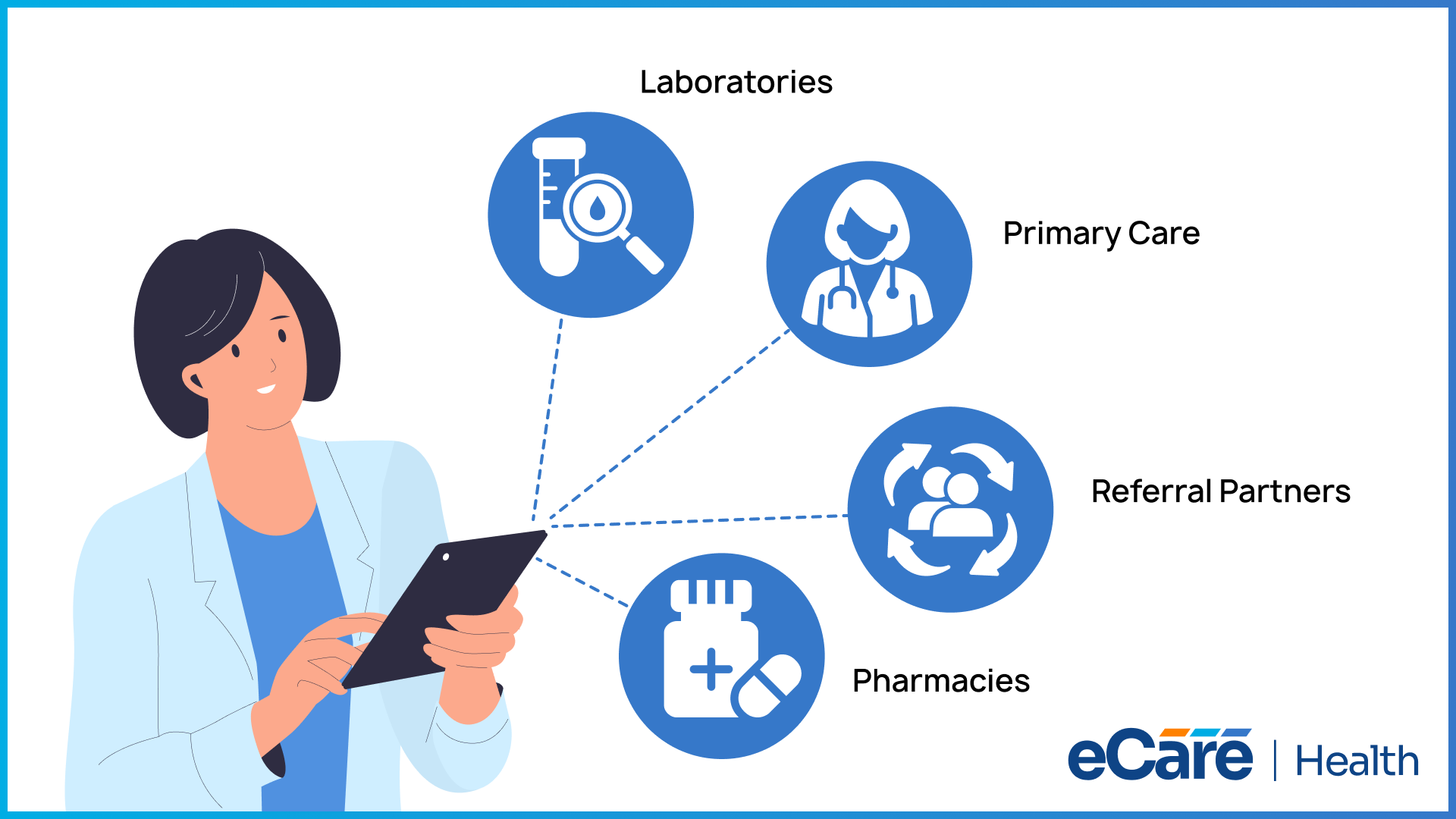
Great care never happens in isolation. Behavioral health providers collaborate frequently with primary care physicians, specialists, laboratories, pharmacies, and referral partners. This makes seamless data sharing more essential.
As modern behavioral health EHR systems support standards-based interoperability, they enable secure healthcare data exchange across connected systems. By integrating with laboratories, pharmacies, and referral providers, manual data entry can be reduced while improving care coordination across multidisciplinary teams.
When everyone has access to the right information at the right time, practices are more likely to reduce administrative effort, minimize communication gaps, and deliver more coordinated and patient-centered care.
10. Security & Regulatory Compliance
Every day, behavioral health providers handle highly sensitive patient information. This makes security and compliance an essential thing, and not an option. With modern behavioral health EHR systems, practices can protect patient data and meet evolving regulatory requirements.
Some of the key security capabilities include:
- HIPAA-compliant encryption to protect patient data during storage and transmission.
- 42 CFR Part 2 supports securely managing substance use disorder records.
- Role-based access controls and comprehensive audit logs to ensure only authorized users can access sensitive information.
- Continuous privacy and compliance monitoring to identify potential risks and keep practices audit-ready.
These safeguards help behavioral health organizations to strengthen patient trust, reduce compliance risks, and focus on delivering high-quality care with confidence.
Choosing the Right Mental Health EHR Features
Until here, you might understand that not every behavioral health EHR software solution is a perfect fit for every practice. Before making a decision, you should build a feature checklist that can align well with your clinical and operational needs. Consider the following:
- Identify the must-have electronic health record features for mental health practices based on your specialty and patient population.
- Prioritize features that support your existing workflows, provider needs, and practice size.
- Evaluate usability, scalability, AI-powered clinical documentation, interoperability, and reporting capabilities.
- Assess vendor implementation, training, ongoing support, and future product updates before making a long-term investment.
Choosing the right platform is not just about checking every box; it’s all about selecting a solution that actually helps your practice deliver better care while growing with your organization.
For a complete overview of behavioral health EHR systems and what to consider before choosing one, read Behavioral Health EHR Systems: A Complete Overview and Buyer’s Guide for Mental Health Practices in 2026.
Conclusion
Choosing the right behavioral health software features is key to improving clinical outcomes, streamlining daily operations, and delivering a better patient experience.
As your practice grows, investing in a behavioral health EHR software that supports evolving workflows, regulatory compliance, and long-term scalability can make all the difference.
Want to learn more? Contact us to explore our complete guide to mental health EHR features and discover everything you need to know before choosing the right solution.
Frequently Asked Questions
1. What are the most important behavioral health software features in 2026?
The most important features include AI-powered clinical documentation, mental health charting, clinical assessments, telehealth, electronic prescribing, billing, practice management, reporting, interoperability, and strong security. Together, they improve patient care, streamline workflows, and reduce administrative burden.
2. Why is AI-powered clinical documentation important for behavioral health providers?
AI-powered clinical documentation automates note creation using ambient AI and voice-assisted technology. It reduces manual charting, improves documentation accuracy, and gives clinicians more time to focus on patient care.
3. What is mental health charting software, and why is it essential?
Mental health charting software is designed for behavioral health workflows. It provides customizable templates for therapy notes, treatment plans, and assessments, helping clinicians document efficiently while maintaining consistency and compliance.
4. How do automated clinical screeners improve behavioral health outcomes?
Automated clinical screeners simplify standardized assessments, identify symptoms early, track patient progress, and support evidence-based treatment decisions. They also help clinicians intervene sooner when patient needs change.
5. Why are PHQ-9, GAD-7, MDQ, and C-SSRS important in behavioral health care?
These validated assessment tools help clinicians screen for depression, anxiety, bipolar disorder, and suicide risk. They support accurate diagnoses, monitor treatment progress, and improve clinical decision-making.
6. What should a HIPAA-compliant telehealth solution include?
A HIPAA-compliant telehealth solution should include secure video visits, encrypted messaging, virtual waiting rooms, EHR integration, and support for individual, family, and group therapy sessions.
7. Why is electronic prescribing with PDMP integration important for psychiatric care?
PDMP integration allows clinicians to review a patient’s controlled substance prescription history before prescribing. This supports safer prescribing, improves compliance, and helps reduce medication misuse.
8. Does a behavioral health EHR support insurance billing and claims?
Yes. Most behavioral health EHRs include insurance eligibility verification, charge capture, claim-ready documentation, and billing tools to simplify claims processing and improve reimbursement accuracy.
9. What security and compliance features should every behavioral health EHR include?
A behavioral health EHR should include HIPAA-compliant encryption, role-based access controls, audit logs, 42 CFR Part 2 support, and continuous compliance monitoring to protect patient information and meet regulatory requirements.