7 Key Benefits of Mental Health EHR Software for Behavioral Health Practices in 2026
Do you know that clinicians spend almost 28 hours every week on administrative tasks?
Therapy notes, treatment plans, scheduling, billing, compliance, and countless routine responsibilities are behind those numbers, which keep behavioral health practices running. Even though each task is important, together they can put you in a situation where you start to spend more time managing workflows instead of supporting patients.
Because of this, behavioral health practices are changing the way they evaluate technology. Rather than asking whether an EHR can digitize records, practices are looking for a smarter solution that can enhance clinical outcomes, simplify day-to-day operations, and support long-term financial performance.
And this is exactly where the mental health EHR benefits start to become clear. By helping your practice to streamline workflows, strengthen care coordination, enhance patient experiences, and reduce administrative burden, a modern behavioral health EHR software solution goes far beyond digital documentation.
The benefits of EHR for behavioral health practices are not just about efficiency; they are about giving providers more time to focus on delivering quality care. But what makes a mental EHR so valuable for today’s behavioral health practices?
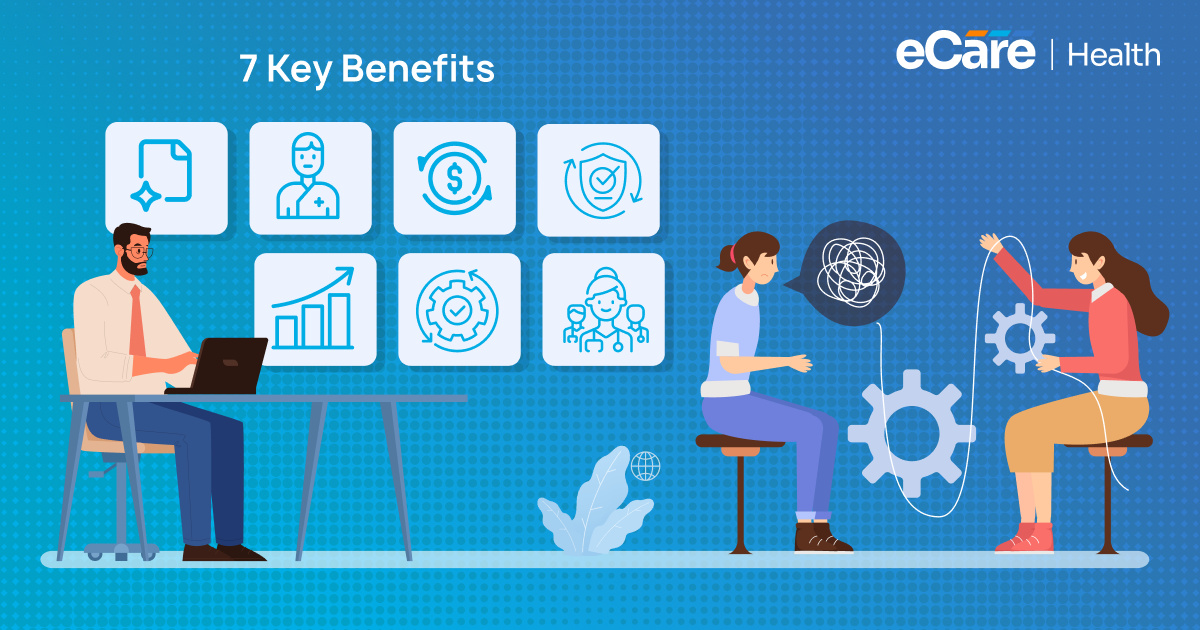
Let’s dive into the blog to explore the seven key mental health EHR benefits that are helping behavioral health EHR systems transform behavioral healthcare in 2026.
Benefit #1: Clinicians Reclaim Time & Reduce After-Hours Charting
Faster documentation is not just one mental health benefit; the major one is that it gives you your time back. As discussed earlier, behavioral health providers frequently spend their time outside of patient appointments completing therapy notes, updating treatment plans, and handling administrative work.
At first, it seems like minor tasks; however, over time, all these tasks can contribute more to stress, delayed documentation, and clinician burnout. By making documentation part of the clinical workflow rather than an after-hours responsibility, modern behavioral health EHR software can help to change the situation. Let’s see how a modern mental health EHR helps you to change the whole scenario:
- Less repetitive documentation: Customizable templates, AI-assisted note generation, auto-populated patient information, and smart clinical forms help reduce repetitive data entry. Rather than starting every note from scratch, you can document sessions more efficiently and maintain accuracy and consistency.
- Faster chart completion: When notes are completed during or immediately after appointments, you are more likely to close charts on time without carrying unfinished work into evenings or weekends. This further helps your practice maintain accurate records while supporting seamless billing workflows.
- More time where it matters: Every minute you save on administrative work is another minute you get to spend with your patients. Rather than being tied to paperwork, you can focus more on meaningful conversations, personalized treatment plans, and stronger therapeutic relationships — the heart of behavioral healthcare.
When documentation becomes simpler, the benefits do not stop with clinicians. With faster and more accurate records, your care teams also stay aligned and deliver coordinated treatment. Behavioral health EHR platforms like eCareHealth support this by combining AI-assisted documentation, specialty-specific charting templates, and streamlined clinical workflows, helping providers spend less time on paperwork and more time with patients.
Benefit #2: Better Treatment Decisions & Improved Patient Outcomes
Moving forward, accurate documentation is only half of the story. The real value of it actually comes from how that information is used to guide better clinical decisions. When you have access to complete, up-to-date patient records, you can easily identify patterns and monitor progress, while making informed treatment decisions with greater confidence. Here is how a modern behavioral health EHR software solution supports better patient outcomes:
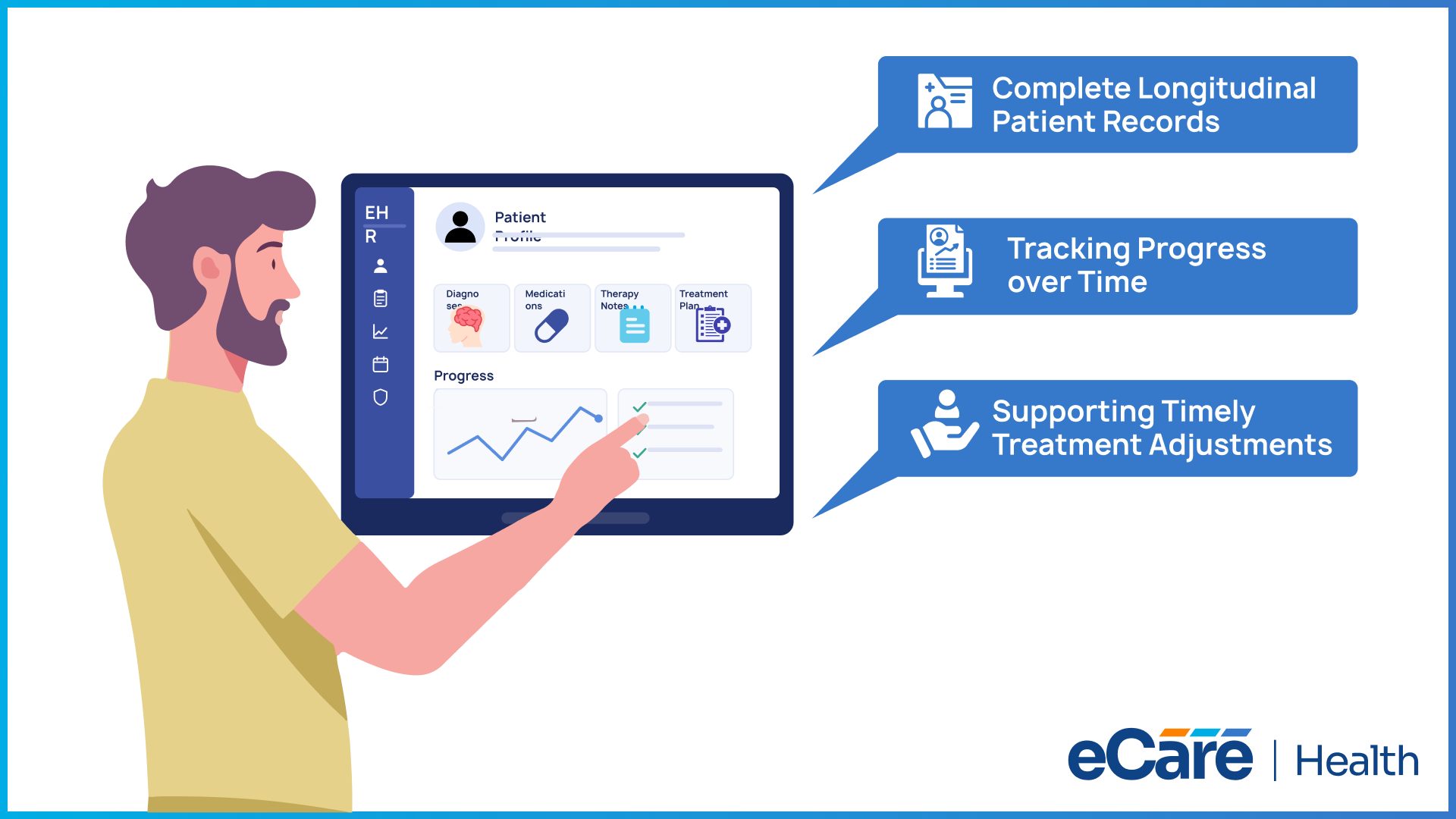
- Complete longitudinal patient records: With a comprehensive patient history, you get a full picture of your patient’s mental health journey. You can quickly review previous diagnoses, medications, therapy notes, assessments, and treatment plans in just one place, rather than piecing together information from multiple sources.
- Tracking progress over time: Behavioral health treatment rarely follows a straight path. Modern behavioral health EHR systems make it easy to monitor symptom changes, treatment responses, assessment scores, and care plan milestones over time — helping you recognize improvements and early warning signs before they fall through the cracks.
- Supporting timely treatment adjustments: If clinical trends and outcome data are readily available, you can evaluate what is working and what is not. Whether it is modifying a treatment plan, adjusting medications, or introducing new therapeutic interventions, timely decisions become easier when they are backed by valuable clinical insights instead of guesswork.
Benefit #3: Stronger Care Coordination & Continuity of Care
As you may already know, behavioral healthcare is a whole team effort. Whether a patient is seeing a therapist, psychiatrist, counselor, or case manager, everyone needs access to the same information to deliver continuous, high-quality care. This is exactly where a modern behavioral health EHR software solution starts to make a huge difference.
So, what actually changes with a modern behavioral health EHR? The first thing is that providers start to collaborate rather than working in silos. From therapists and psychiatrists to counselors and case managers, everyone can securely access the same patient records to coordinate treatment and make informed decisions.
Secondly, all important updates reach the right people at the right time. Shared treatment plans, progress notes, medication changes, and assessments help reduce communication gaps while preventing fragmented patient information.
Furthermore, patients experience seamless transitions in care. For example, if they are referred to another provider or move between behavioral health services, a complete treatment history follows them. This helps new providers continue care without starting from scratch — one of the key advantages of electronic health records in mental health.
Benefit #4: Lower Administrative Burden & Higher Staff Productivity
Imagine a busy behavioral health practice on a Monday morning. The front desk is managing appointments, clinicians are documenting sessions, billing teams are verifying claims, and administrators are coordinating schedules, all at the same time. Even a simple workflow can feel time-consuming when all these tasks depend on disconnected systems and manual handoffs. However, with modern mental health practice management software integrated into a behavioral health EHR software solution:
- Duplicate data entry is reduced, so your staff doesn’t have to enter the same patient information across multiple systems.
- It becomes easier for clinical and administrative teams to work from a shared workflow. This further makes scheduling, documentation, billing, and follow-ups faster and more organized.
- Routine processes also become more streamlined, enabling practices to handle growing patient and provider volumes without adding unnecessary administrative burden.
Finally, the result is a more productive team, seamless day-to-day operations, and a practice that is better equipped to grow without sacrificing efficiency.
Want to see what else a behavioral health EHR can offer your practice? Explore Behavioral Health EHR Systems: A Complete Overview and Buyer’s Guide for Mental Health Practices in 2026.
Benefit #5: Fewer Claim Denials & Faster Reimbursement
Behavioral health billing is not always straightforward. From psychotherapy coding and prior authorizations to payer-specific documentation requirements, even a small oversight can result in claim denials or delayed payments. Because of this, improving billing accuracy is as important as delivering quality care. Fortunately, a modern behavioral health EHR software solution helps to simplify the overall process by supporting cleaner and more accurate claims from the very beginning. But what does that look like in your practice?
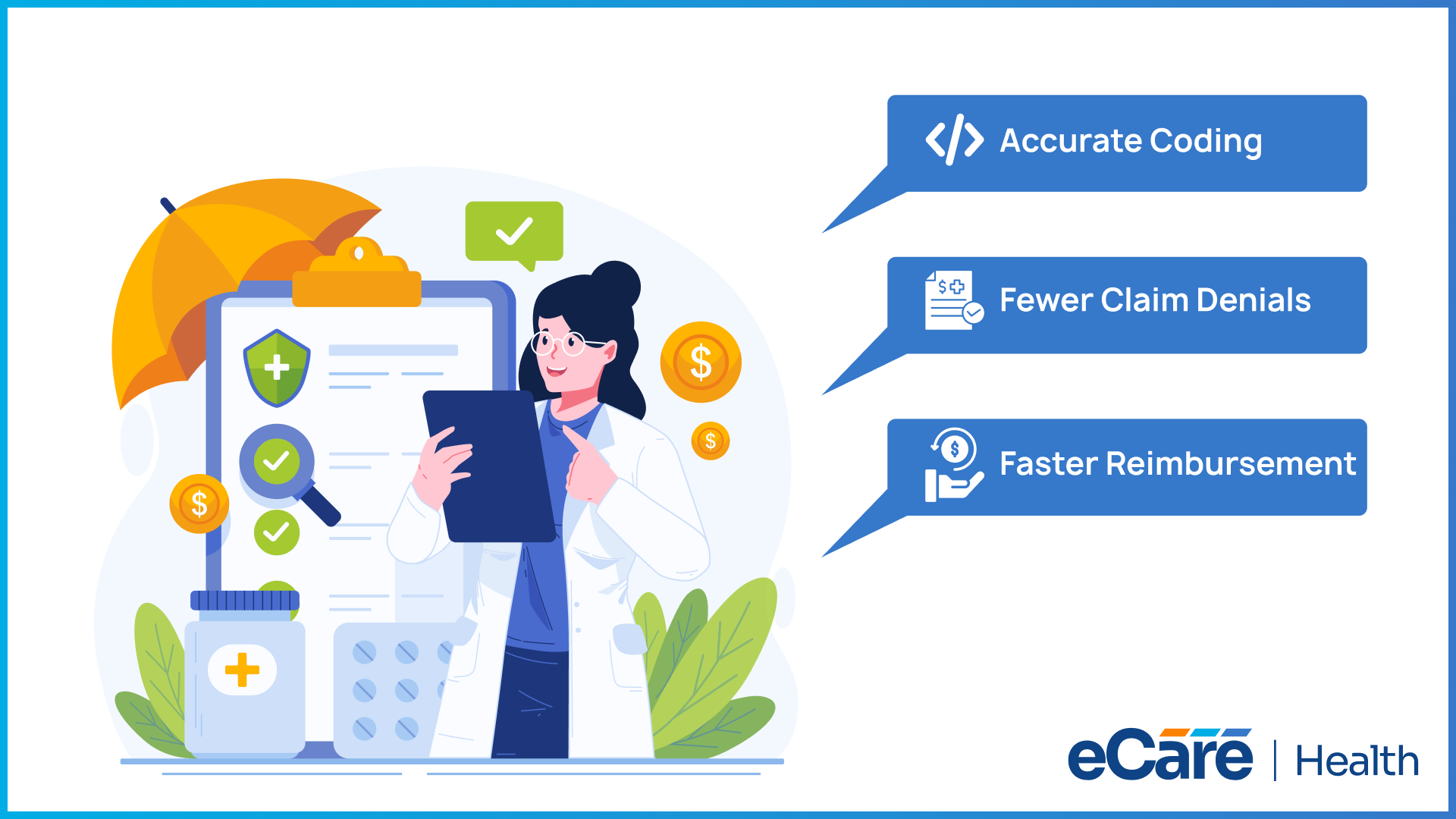
- Accurate coding and documentation: Built-in billing workflows help your practice capture the right psychotherapy codes, while supporting documentation. This further reduces errors that can lead to rejected claims.
- Fewer missing details: It becomes easy to track required authorizations, patient information, and clinical documentation even before claims are submitted. This helps your practice avoid preventable delays.
- A healthier revenue cycle: Cleaner claims mean fewer denials, faster reimbursements, and more predictable cash flow, allowing your practice to spend less time resolving billing issues and more time serving patients.
For example, eCareHealth integrates clinical documentation with billing workflows, helping behavioral health practices improve coding accuracy, simplify claims management, and support a more efficient revenue cycle.
Benefit #6: Stronger Privacy, Compliance & Practice Risk Control
Protecting your patient information has always been one of the top priorities in behavioral healthcare, but today’s regulatory environment demands even greater accountability. A modern behavioral health EHR software solution secures sensitive records, while helping your practice stay compliant and reducing organizational risk. Let’s see how:
| Focus Area | How a Modern Behavioral Health EHR Helps |
|---|---|
| Protecting sensitive records | Safeguards psychotherapy notes, behavioral health records, and other confidential patient information through role-based access controls, encryption, and secure authentication. |
| Supporting regulatory compliance | Helps practices meet HIPAA and 42 CFR Part 2 requirements by managing patient consent, protecting sensitive data, and supporting secure information sharing. |
| Reducing organizational risk | Maintains detailed audit trails, monitors user access, and improves audit readiness, giving organizations greater visibility and accountability over patient data. |
Strong privacy and compliance practices not only reduce legal and operational risks, but also strengthen patient trust. This allows behavioral health providers to deliver care with greater confidence.
Benefit #7: Scalable, Data-Driven Behavioral Health Practice Growth

Along with bringing new opportunities, growing practices also raise the stakes. More patients, more providers, and more locations mean more decisions that can affect not only care quality but also operational efficiency.
With modern behavioral health EHR systems, practice leaders get the insights they need to stay one step ahead. By tracking clinical and operational performance in real-time, they can easily spot trends and plan resources wisely while supporting sustainable growth without losing sight of patient care.
In the long run, the advantages of electronic health records in mental health are not just measured by efficiency; they are reflected in a practice’s ability to grow with confidence.
Conclusion
The mental health EHR benefits go far beyond digitizing patient records. From improving clinical decision-making and reducing administrative burden to strengthening financial performance and supporting practice growth, a modern behavioral health EHR software solution helps behavioral health practices deliver better care while operating more efficiently.
As behavioral healthcare continues to evolve, investing in the right technology isn’t just about keeping up; it’s about building a stronger, more connected, and future-ready practice.
Ready to transform your behavioral health practice? Contact us to learn how our mental health EHR software can help you improve patient care, streamline workflows, and support long-term growth.
Frequently Asked Questions
1. What are the main benefits of EHR for behavioral health practices?
Behavioral health EHR software helps practices improve clinical care, streamline documentation, strengthen care coordination, reduce administrative workload, improve billing accuracy, enhance regulatory compliance, and support long-term practice growth. It also enables providers to spend more time with patients by automating routine tasks.
2. How does mental health EHR improve patient care?
A mental health EHR gives clinicians access to complete patient histories, treatment plans, progress notes, and assessment results in one place. This helps providers monitor patient progress, make informed treatment decisions, and deliver more coordinated, personalized care.
3. Can behavioral health EHR software reduce clinician documentation burden?
Yes. Modern behavioral health EHR software simplifies documentation with customizable templates, automated workflows, and AI-assisted note-taking. This helps clinicians complete records faster, reduce after-hours charting, and spend more time focusing on patient care.
4. What are the advantages of electronic health records in mental health?
Electronic health records improve documentation accuracy, strengthen communication between care teams, support regulatory compliance, reduce billing errors, enhance patient outcomes, and provide valuable insights that help practices operate more efficiently and grow sustainably.
5. How do behavioral health EHR systems improve care coordination?
Behavioral health EHR systems provide a centralized patient record that authorized therapists, psychiatrists, counselors, and case managers can access securely. This improves information sharing, reduces communication gaps, and supports continuity of care as patients move between providers and services.
6. Can behavioral health EHR software reduce claim denials and speed up reimbursement?
Yes. By supporting accurate documentation, psychotherapy coding, authorization tracking, and payer-specific requirements, behavioral health EHR software helps practices submit cleaner claims, reduce denials, and receive reimbursements more quickly.
7. How does an EHR for behavioral health support HIPAA and 42 CFR Part 2 compliance?
An EHR for behavioral health helps protect sensitive patient information through role-based access controls, encryption, secure authentication, audit trails, and consent management. These features support compliance with HIPAA and 42 CFR Part 2 while strengthening data security.
8. Can behavioral health EHR systems help a mental health practice scale?
Yes. Behavioral health EHR systems support practice growth by streamlining workflows, managing larger patient volumes, providing real-time performance insights, and helping organizations maintain consistent operations as they expand providers or locations.
9. How can mental health EHR benefits improve long-term practice performance?
Mental health EHR benefits contribute to long-term success by improving patient outcomes, increasing staff productivity, strengthening financial performance, reducing compliance risks, and providing data-driven insights that support informed business and clinical decisions.