E-Prescribing for Psychiatry (EPCS): What Every Psychiatric Provider Needs to Know
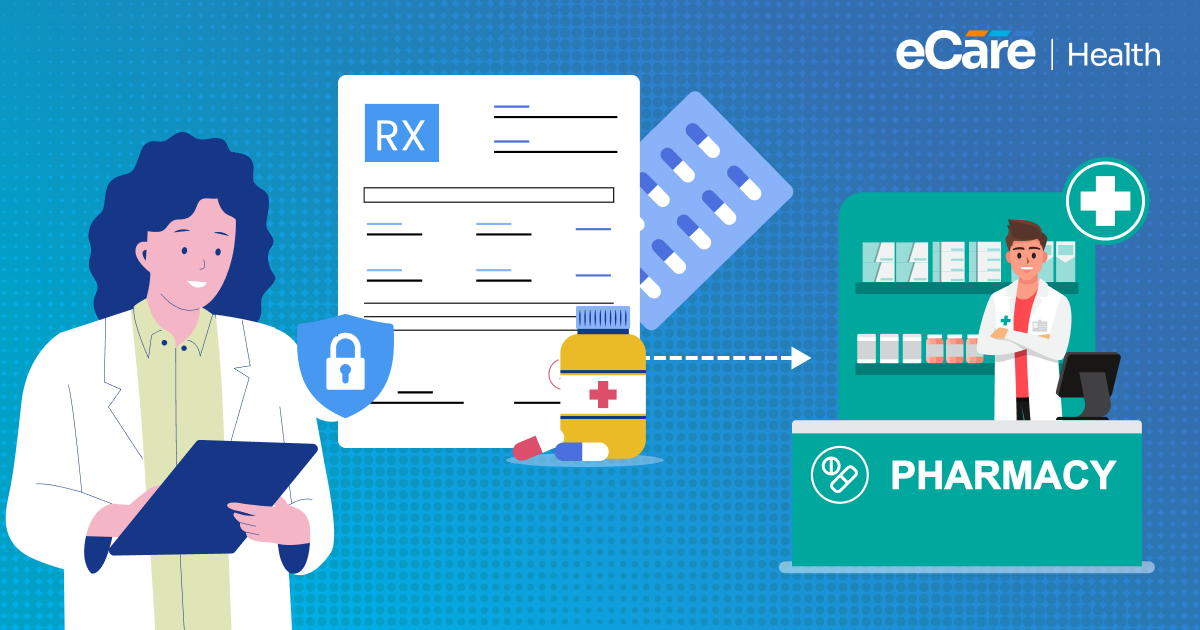
In the United States, the number of electronic prescriptions reached 1.91 billion, proving that digital prescribing is no longer the future; it’s actually the standard.
Even so, for psychiatric providers, prescribing controlled medications brings an added responsibility. It is not only about sending a prescription electronically, but it’s also about doing it more securely, accurately, and in compliance with federal regulations.
And because of this, EPCS psychiatry e-prescribing starts to become a key part of modern behavioral health practices. Furthermore, integration with a psychiatry EHR helps providers prescribe controlled substances more safely, reduce manual work, improve workflow efficiency, while staying compliant without disturbing patient care.
Adoption of the right EPCS software is becoming less of a competitive advantage and more of a necessity, as regulations evolve and patient expectations continue to grow.
In this blog, we’ll explore what EPCS psychiatry e-prescribing is, why it matters, and what every psychiatric provider should know before getting started.
What Is EPCS & Why Is It Essential for Psychiatric Practices?
Electronic Prescribing of Controlled Substances (EPCS) is a DEA-approved process that enables authorized healthcare providers to electronically prescribe Schedule II-V controlled medications.
As compared to standard e-prescribing, electronic prescribing of controlled substances in psychiatry needs additional security measures like identity verification and multifactor authentication, helping protect prescriptions from fraud, misuse, and unauthorized access.
All these safeguards are especially important for psychiatric providers, as medications like stimulants and certain anti-anxiety drugs are prescribed regularly and require closer regulatory oversight. Many states also have their own psychiatry prescribing requirements along with DEA regulations, making compliance an ongoing responsibility instead of a one-time task.
However, the right EPCS software can simplify this process by helping you to prescribe controlled medications securely, supporting EPCS compliance, reducing prescription errors, and creating a more efficient workflow without adding unnecessary administrative burden.
Simply put, it helps psychiatric practices stay compliant and keep the focus where it belongs on patient care.
Which Features Should Every Psychiatry EPCS Software Include?
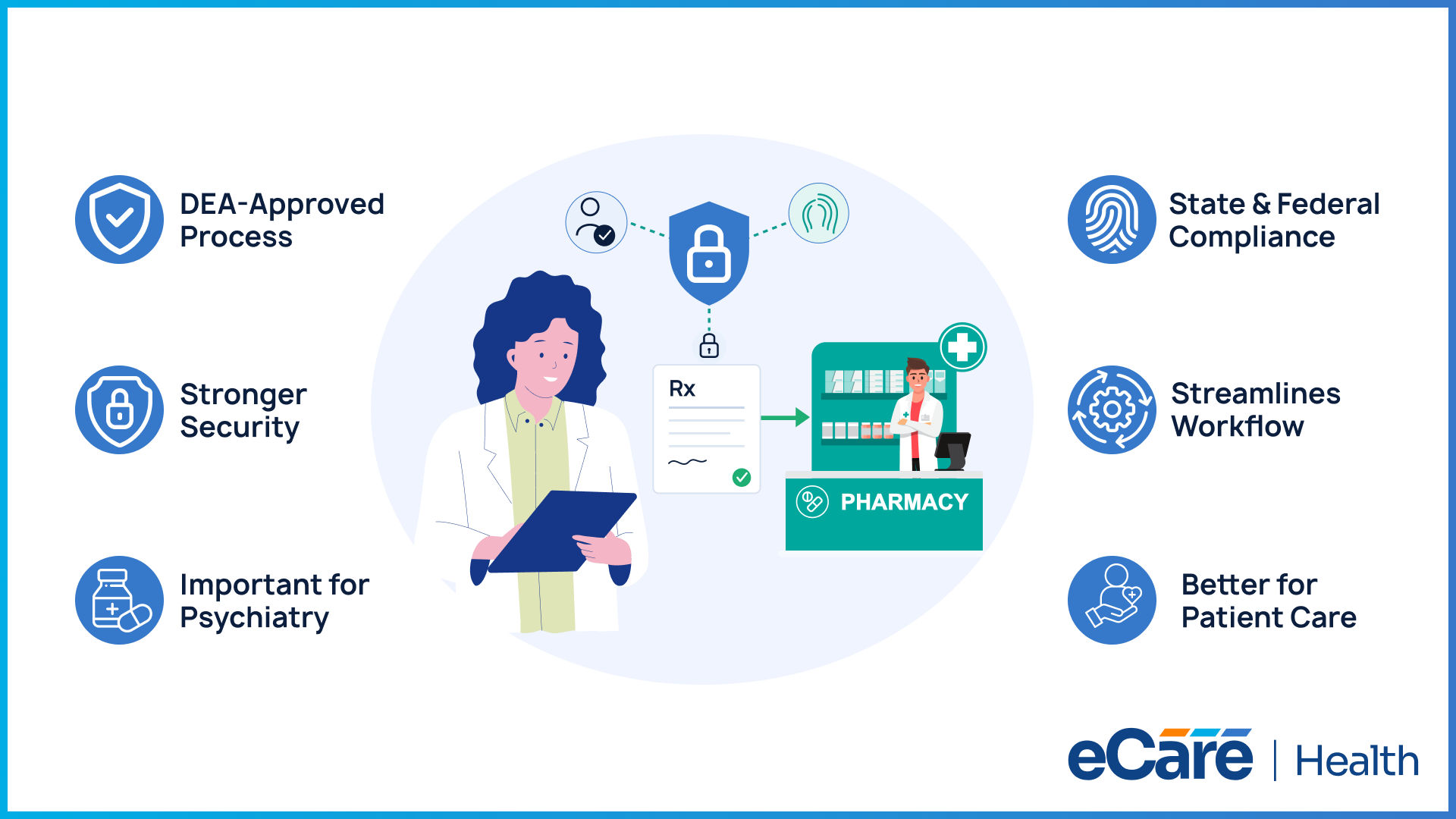
All EPCS software offers the same functionality level. Beyond meeting compliance requirements, the right solution must also simplify prescribing, reduce clinical risks, and fit naturally into a psychiatrist’s daily workflow.
Let’s see some of the key features that matter the most:
DEA-compliant identity proofing & 2FA:
Verify prescriber identity through identity proofing and two-factor authentication to ensure only authorized providers can prescribe controlled substances.
Real-time PDMP integration:
Access Prescription Drug Monitoring Program (PDMP) data without leaving the prescribing screen, helping providers identify potential misuse or duplicate controlled-substance prescriptions.
Built-in clinical safety checks:
Automatically flag medication interactions, allergies, duplicate therapies, dosage issues, and other prescribing risks before a prescription is sent.
Secure signatures & complete audit trails:
Support secure electronic signatures while maintaining prescription history and audit logs to strengthen EPCS compliance and simplify recordkeeping.
Streamlined controlled-substance workflows:
Make it easier to prescribe, renew eligible medications, and manage refill requests through a secure, organized workflow that saves time without compromising compliance.
How Does EPCS Improve Medication Safety & Clinical Workflows?
Safe prescribing is never limited to sending a prescription electronically. With the right EPCS software, providers can reduce risks and stay organized, while creating a seamless experience for not only clinicians, but also for patients.
Here is how it strengthens both medication safety and everyday clinical workflow:
| Area | How EPCS Helps |
|---|---|
| Reducing prescribing errors | Built-in clinical decision support alerts providers to potential drug interactions, allergies, duplicate therapies, and dosage concerns before a prescription is sent. |
| Supporting long-term treatment | Makes medication titration easier by providing access to prescription history, helping providers monitor changes over time and adjust treatment plans confidently. |
| Strengthening care coordination | Improves communication between psychiatrists, pharmacies, and other care team members, reducing delays and misunderstandings. |
| Connecting prescribing with documentation | Integrates prescribing with the patient's psychiatric records, giving providers a complete view of medication history during clinical decision-making. |
| Simplifying controlled-substance renewals | Streamlines renewal workflows while maintaining EPCS compliance, helping practices stay efficient without compromising regulatory requirements. |
How Do You Implement EPCS in a Psychiatric Practice?
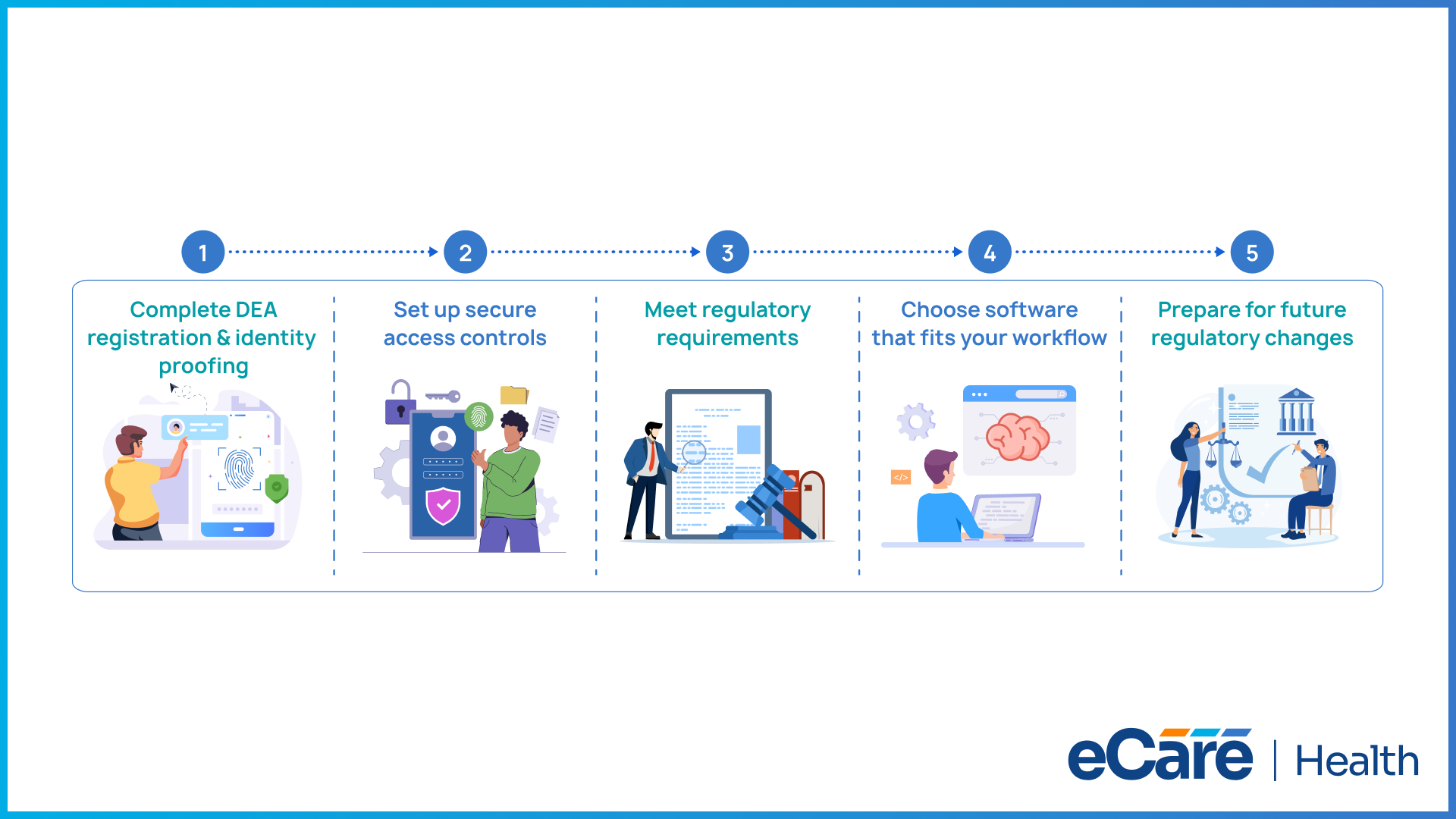
Implementing EPCS psychiatry e-prescribing doesn't have to be overwhelming. Breaking the process into a few essential steps can help psychiatric practices achieve compliance while creating a secure and efficient prescribing workflow.
Complete DEA registration & identity proofing:
Start by ensuring eligible prescribers complete DEA registration, identity proofing, and credentialing before prescribing controlled substances electronically.
Set up secure access controls:
Configure two-factor authentication (2FA), user permissions, and role-based access controls to ensure only authorized users can access EPCS functions.
Meet regulatory requirements:
Review both federal DEA regulations and state-specific EPCS requirements for psychiatric controlled-substance prescribing to ensure your practice remains compliant.
Choose software that fits your workflow:
Select EPCS software that integrates seamlessly with your Psychiatry EHR, allowing providers to prescribe, document, and review medication history from one platform.
If you're comparing EHR options for your psychiatric practice, our guide on Psychiatry EHR: The Complete Guide to Choosing Software for Psychiatric Practices in 2026 can help you evaluate the essential features and capabilities to look for.
Prepare for future regulatory changes:
Keep your system updated as federal and state regulations evolve, including changing telepsychiatry prescribing requirements, to maintain long-term EPCS compliance.
Conclusion
EPCS psychiatry e-prescribing has become an essential part of modern psychiatric care, helping providers prescribe controlled substances more securely while improving medication safety, workflow efficiency, and regulatory compliance.
With integrated EPCS, real-time PDMP connectivity, medication safety alerts, secure authentication, and end-to-end prescribing workflows, eCareHealth's psychiatric EHR enables providers to simplify DEA-compliant electronic prescribing for controlled substances and deliver safer, more efficient patient care.
Frequently Asked Questions (FAQs)
1. What is EPCS psychiatry e-prescribing?
EPCS (Electronic Prescribing of Controlled Substances) is a secure, DEA-approved process that allows authorized psychiatric providers to prescribe Schedule II–V controlled medications electronically. It uses identity verification, two-factor authentication, and encrypted transmission to help ensure prescriptions are safe and compliant.
2. Which psychiatric medications require DEA-compliant electronic prescribing?
Controlled medications commonly prescribed in psychiatry, such as stimulants for ADHD, certain benzodiazepines for anxiety, and some sleep medications, may require DEA-compliant electronic prescribing depending on federal and state regulations.
3. What are the current EPCS requirements for psychiatric controlled-substance prescribing?
Providers must complete DEA registration and identity proofing, use two-factor authentication, issue prescriptions through certified EPCS software, and comply with both DEA regulations and applicable state requirements.
4. How does PDMP integration improve psychiatric prescribing?
PDMP integration gives providers real-time access to a patient's controlled-substance prescription history. This helps identify potential misuse, duplicate therapies, or doctor shopping while supporting safer prescribing decisions.
5. What features should EPCS software include for psychiatric practices?
An effective EPCS solution should include DEA-compliant identity proofing, two-factor authentication, PDMP integration, medication safety alerts, secure electronic signatures, audit trails, prescription history, and controlled-substance prescribing workflows.
6. How do two-factor authentication and identity proofing support EPCS compliance?
Identity proofing verifies a prescriber's credentials, while two-factor authentication confirms their identity each time they prescribe a controlled substance. Together, these measures help prevent unauthorized prescribing and meet DEA security requirements.
7. How do I set up DEA-compliant electronic prescribing for controlled substances in a psychiatric practice?
Start by completing DEA registration and identity proofing, implement certified EPCS software, configure two-factor authentication and user access controls, integrate it with your Psychiatry EHR, and ensure your workflows comply with federal and state regulations.
8. Can EPCS software integrate with a Psychiatry EHR?
Yes. Most modern EPCS solutions integrate with Psychiatry EHR systems, allowing providers to prescribe medications, review medication history, access patient records, and document care from a single platform.
9. How does EPCS improve prescribing efficiency while maintaining regulatory compliance?
EPCS streamlines prescribing by reducing paperwork, automating safety checks, integrating with clinical workflows, and maintaining secure audit trails. This helps providers save time while meeting DEA and state compliance requirements.