EHR for Therapists: Why eCareHealth Is Built for Private Practice Success

Almost 77% of healthcare professionals said that they stay late or work after hours just to finish documentation and administrative tasks.
For many therapists who run private practices, that challenge feels even greater. Managing notes, scheduling, claims, and compliance becomes difficult without dedicated billing, administrative, or IT teams, leaving less time for client care.
The actual problem here is not the client numbers; it’s the number of disconnected systems therapists depend on every day. Switching between tools for documentation, scheduling, billing, and client communication can create extra work, while increasing the risk of errors and leaving little room to focus on what matters the most.
That’s why it becomes important to choose the right EHR for therapists rather than going paperless. Rather than forcing private practices to adapt to complex hospital-grade software, it can bring essential workflows together in one intuitive platform.
Everything from documentation and scheduling to billing and secure client communication works seamlessly, while helping therapists to stay organized and spend more time with their clients instead of paperwork.
Let’s explore the must-have features of an EHR for therapists in 2026 and how the right therapy practice management software can help private practices thrive.
What Makes an EHR Right for Therapists & Private Practices?
As compared to large behavioral health organizations, solo therapists and independent practices have very different needs. Every hour spent on paperwork without dedicated billing, administrative, or IT teams takes your time away from client care. Because of this, an EHR for therapists must simplify daily operations, rather than adding unnecessary complexity.
The best mental health software for private practice helps to bring documentation, scheduling, billing, and client communication all together in one place. Instead of juggling multiple systems, therapists can manage not only clinical workflows but also practice operations more effectively while creating a seamless experience for clients.
Simply put, with the right solution, therapists can spend less time on administration and more time on doing what they do best.
eCareHealth is designed specifically with these needs in mind, bringing therapist documentation, scheduling, billing, teletherapy, secure client communication, and practice management together in one intuitive platform for private practices.
If you're evaluating your options, Behavioral Health EHR Systems: A Complete Overview and Buyer’s Guide for Mental Health Practices in 2026 offers a helpful starting point for understanding what to look for in a behavioral health EHR.
Feature #1: Therapist Documentation Templates & AI-Assisted Charting
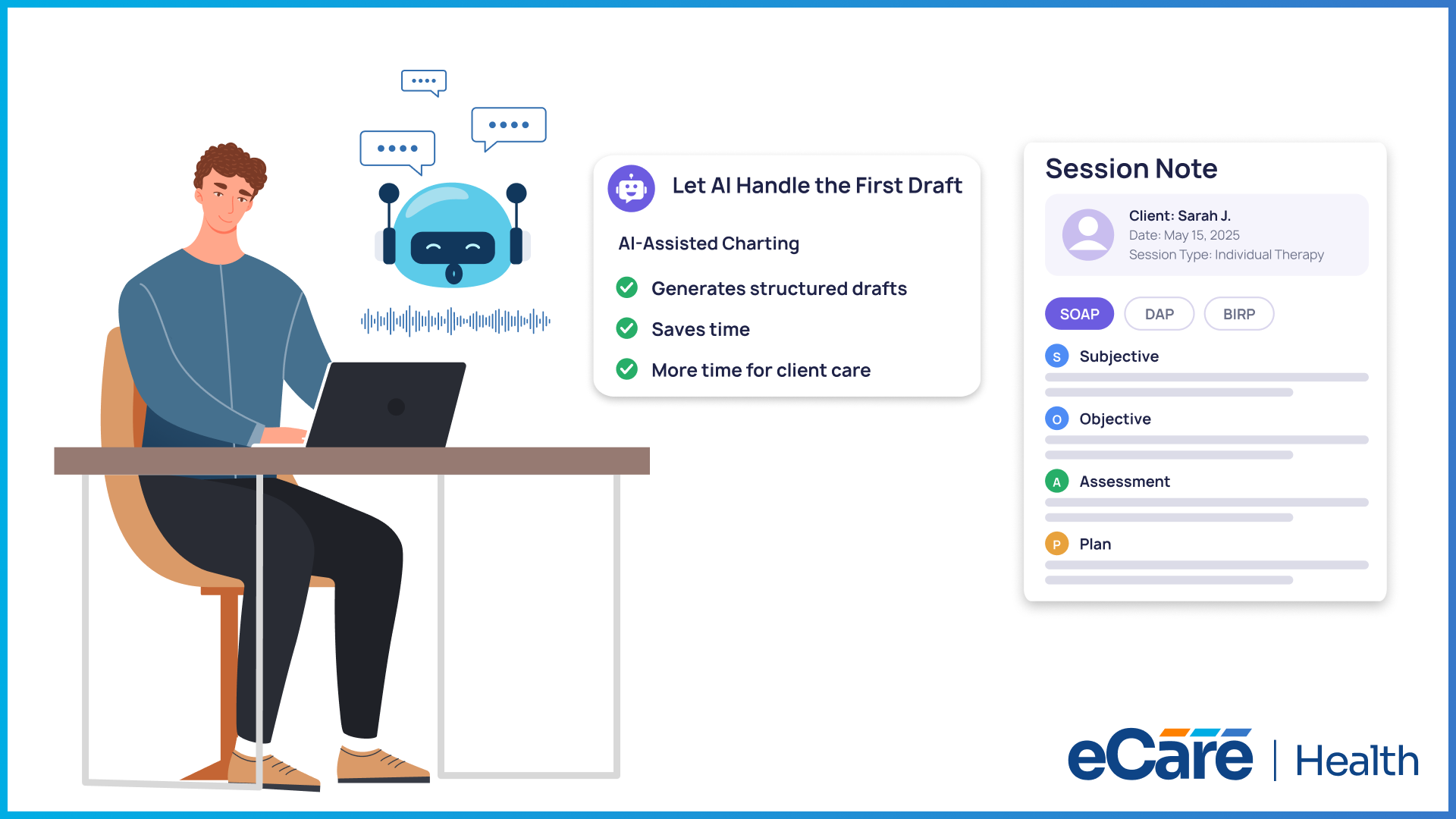
Even though documentation is one of the most important parts of therapy, it should not become the most time-consuming one. With a well-designed EHR for therapists, therapists can capture accurate clinical information and keep documentation faster, more consistent, and organized.
Let’s see what that looks like in your practice:
- Work with the Documentation Style You Already Use: It doesn’t matter if you prefer SOAP, DAP, or BIRP notes; flexible therapist documentation templates must adapt to your workflow, rather than forcing you to change it. By supporting DSM-5, ICD-10, and customizable treatment plans, practices can keep documentation more accurate, consistent, and clinically relevant.
- Track Progress with Confidence: If you rely on session notes, they tell just half of the story. However, with built-in assessments including PHQ-9 and GAD-7, it becomes easy to measure progress over time and evaluate treatment outcomes, while making informed clinical decisions without depending on separate tools.
- Let AI Handle the First Draft: Repetitive documentation does not have to become an after-hours task. From session details, AI-assisted charting can generate structured drafts. This further allows therapists to review, refine, and finalize records more quickly while staying focused on client care.
Feature #2: Simple Scheduling & Therapy Practice Management Software Workflows
The calendar is at the heart of many therapists. Every appointment affects documentation, billing, client communication, and the rest of the day’s workflow. When scheduling relies on manual coordination, even minor changes can create unnecessary back-and-forth.
With a well-designed therapy practice management software, private practices can take control of scheduling without needing front-desk support. It becomes far easier for therapists to manage recurring appointments, update availability, and keep their calendars organized while reducing the time spent coordinating sessions with clients.
By keeping clients informed before appointments and helping reduce missed sessions, automated SMS and email reminders add another layer of convenience. Rather than spending time sending individual follow-ups, therapists can depend on automated communication that keeps everyone on the same page.
These small workflow improvements make a huge difference, especially for independent practices. EHR for therapists helps your practice stay organized by connecting scheduling, client communication, and daily operations.
With eCareHealth, therapists can manage appointments, automate reminders, coordinate client communication, and keep everyday practice management workflows connected from a single platform.
Feature #3: Secure Client Portal & Digital Intake
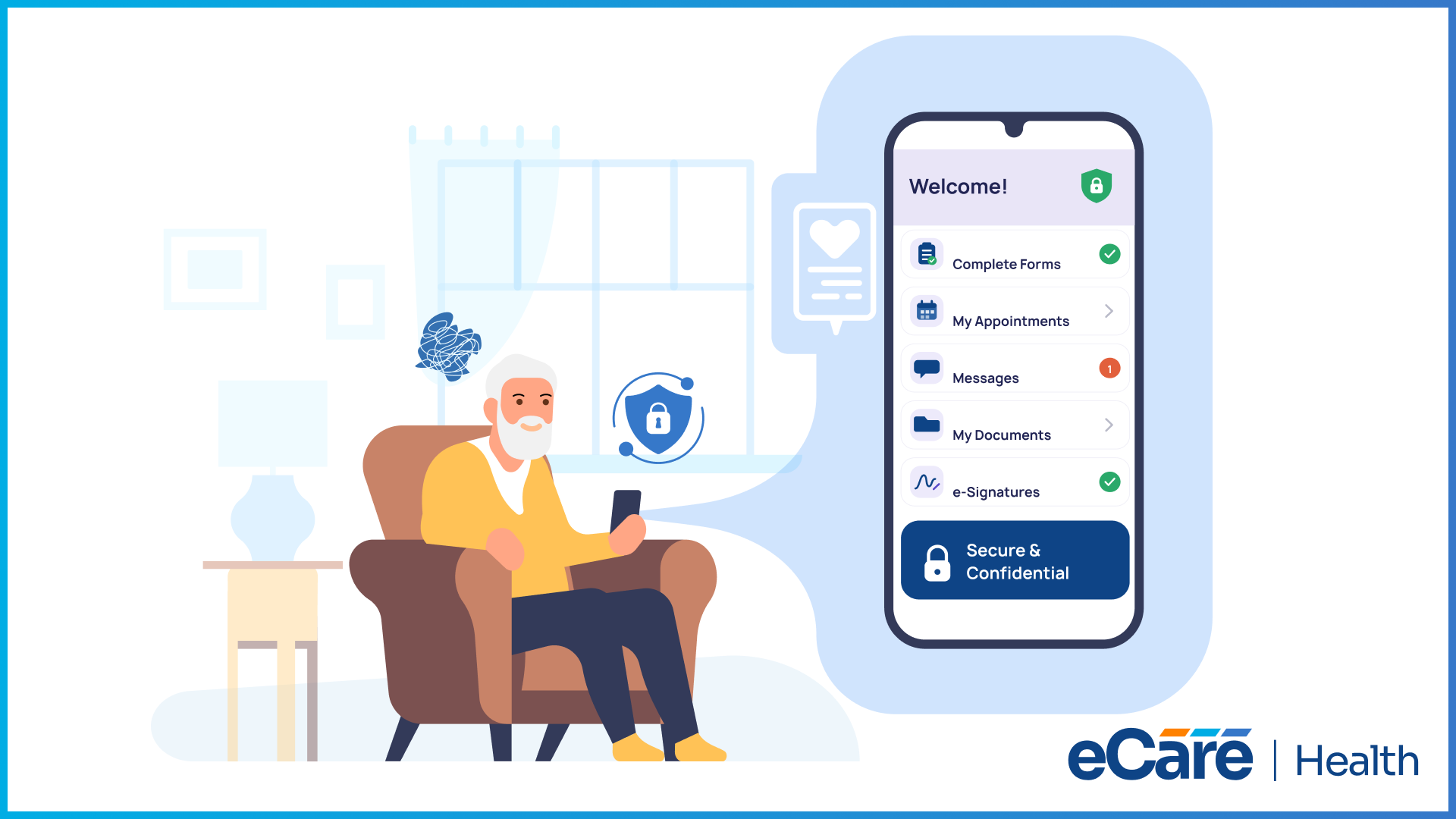
First impressions usually begin long before the first therapy session. With a secure client portal, therapists can create a seamless intake experience and reduce the administrative work that typically comes with onboarding new clients.
Let’s see where it makes the major impact:
- Go Paperless from Day One: Rather than printing and scanning paperwork, clients can complete intake forms, consent documents, questionnaires, and e-signatures online before their appointment. Without chasing missing information, therapists can receive complete and organized records.
- Give Clients More Control: By using a secure portal, clients can schedule or request appointments, complete required forms, and communicate safely with their therapists through one platform. Fewer phone calls and emails mean less time spent coordinating routine tasks.
- Make Independent Intake Easier: Every completed form saves measurable time for many solo therapists. Digital intake assists you in removing repetitive administrative work, shortens check-in, and helps therapists start each session with the information they need already in the system.
- Why Client Portals Matter for Private Practices: The best affordable EHR platforms with client portals for counselors not only digitize paperwork but also simplify the entire client journey. Combining secure communication, self-service scheduling, and paperless intake in one place helps private practices deliver a better experience without adding administrative workload.
Feature #4: Integrated Teletherapy for Flexible Care Delivery
Today, therapy is no longer limited to the four walls of a clinic. Now, many private practices offer a mix of in-person, hybrid, or virtual sessions, which makes flexibility a key factor of everyday care. An EHR for therapists must support all three models without requiring separate tools or complicated workflows.
- One Platform for Every Type of Session: Whether your client wants to visit the office or connect remotely, you should be able to manage appointments and deliver care from the same system. This creates a consistent experience for not only therapists but also for clients.
- Secure Virtual Care: Built-in teletherapy with HIPAA-aligned security helps to protect sensitive client information and gives you a reliable space to conduct virtual sessions. There is no need to worry about switching between different applications during the workday.
- Less Switching, More Therapy: Separate video platforms can lead you to struggle with multiple logins, calendars, and workflows. On the other hand, integrated teletherapy keeps scheduling, documentation, and virtual sessions all connected by making it easier for therapists to emphasize care rather than technology.
Feature #5: Simple Private Practice Billing Tools & Payment Workflows
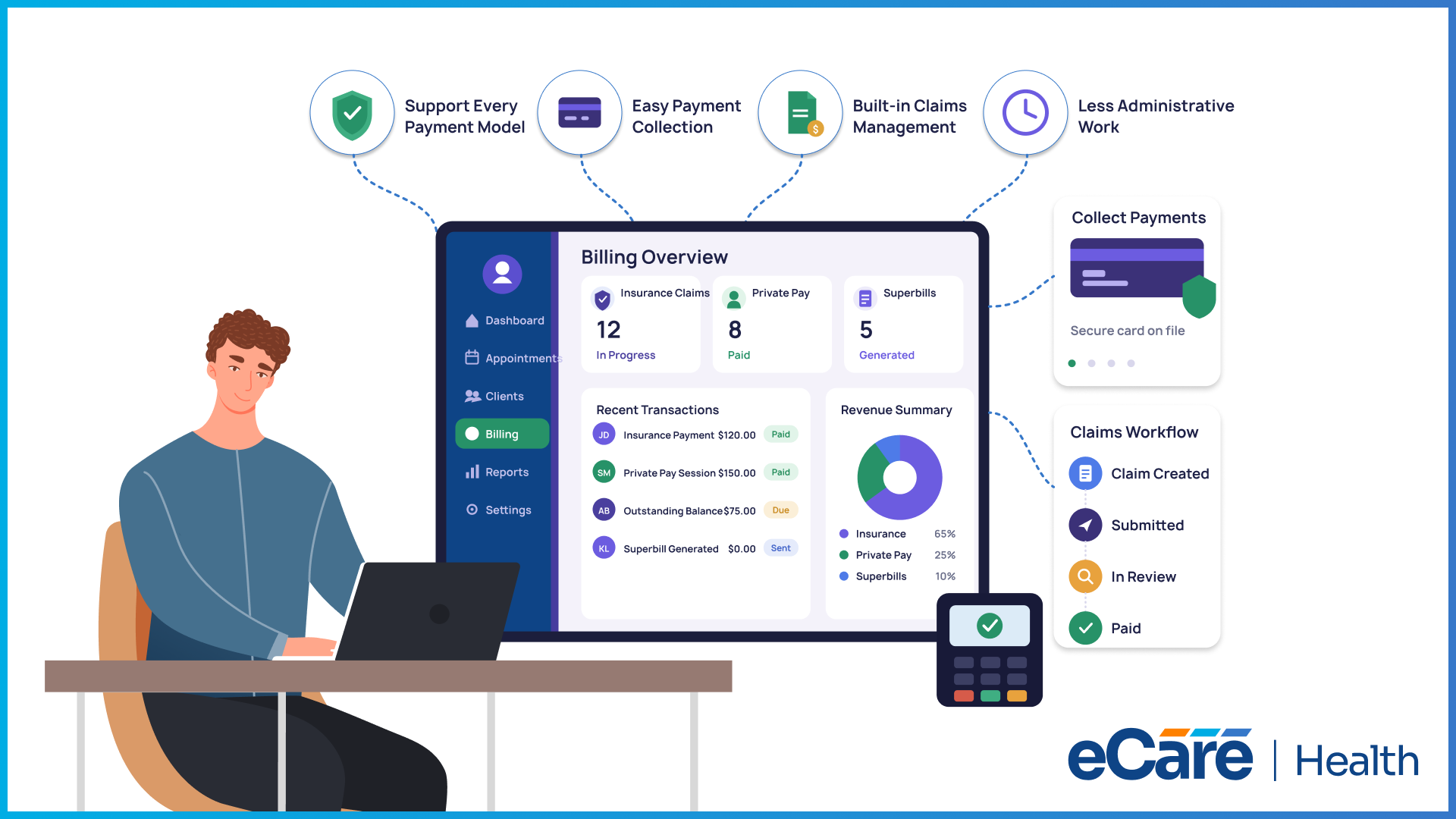
For private practices, billing is one of the major operational challenges. Without dedicated billing staff, even routine payment tasks can become time-consuming and delay reimbursements.
An ideal billing should include:
- Support for every payment model: Manage insurance claims, private-pay sessions, and superbills without switching between different systems.
- Easy payment collection: Store cards securely, collect outstanding balances, and simplify the payment process for both therapists and clients.
- Built-in claims management: Submit electronic claims and monitor reimbursement workflows from the same platform to reduce manual effort.
- Less administrative work: Keep billing connected with scheduling and documentation, so therapists spend less time on paperwork and more time with clients.
Feature #6: Privacy & Security for Sensitive Therapy Records
Trust is the foundation of every therapeutic relationship, and protecting client information is a key part of that trust. The right EHR for therapists must make security simple, while allowing therapists to focus more on care rather than worrying about compliance.
Let’s see some of the key protections to look for:
- Protect Confidential Records: Therapy and psychotherapy notes contain highly sensitive information. A secure system helps keep client records protected from unauthorized access.
- Support Secure, HIPAA-Aligned Workflows: Role-based access, secure logins, and encrypted data help therapists manage records safely while meeting HIPAA requirements.
- Maintain Accountability: Audit logs track who accessed or updated records, creating greater transparency and helping practices maintain accurate documentation.
- Simplify Compliance: Private practices rarely have dedicated IT or compliance teams. Built-in security features reduce the complexity of managing compliance, so therapists can spend less time worrying about regulations and more time supporting clients.
Feature #7: Affordable, Easy-to-Manage EHR Technology That Grows with Your Practice
Choosing an EHR is not just about finding the lowest monthly price. It’s actually about investing in a system that can save time today, while supporting your practice tomorrow.
Before making a decision, compare these common assumptions with the reality of choosing an EHR:
| Common Assumption | What to Consider Instead |
|---|---|
| The cheapest EHR is always the best option. | Look beyond the subscription fee. An affordable system should also reduce administrative work, helping you save valuable time every week. |
| Every practice needs enterprise-level software. | Solo therapists and independent practices often benefit more from a simple, intuitive platform than one packed with features they’ll never use. |
| Billing needs don’t affect software costs. | If your practice handles insurance claims, private-pay clients, or both, choose a platform that supports those workflows without requiring multiple add-on tools. |
| Switching EHRs is only necessary when the practice grows. | The right EHR for therapists should grow with your practice, making it easy to add providers, locations, or new services as your business expands. |
The goal is not to buy the most advanced platform; it is to choose one that fits your practice today while giving you room to grow tomorrow.
Conclusion
The right EHR for therapists should make running a private practice easier, not more complicated. From documentation and scheduling to billing, teletherapy, and secure client communication, every feature should help reduce administrative work and improve day-to-day efficiency.
The best electronic health records for solo therapy practices combine simplicity, affordability, and the capabilities of mental health practice management software to support high-quality care and long-term practice growth.
Ready to simplify your private practice? Contact us to explore eCareHealth.
Frequently Asked Questions
1. What is the best EHR for therapists in private practice?
The best EHR for therapists is one that simplifies documentation, scheduling, billing, teletherapy, and client communication in a single platform. For private practices, it’s important to choose software that is easy to use, affordable, and designed to support everyday clinical and administrative workflows without unnecessary complexity.
2. What features should an EHR for therapists include?
An EHR for therapists should include therapist documentation templates, scheduling, secure client portals, digital intake forms, integrated teletherapy, billing and claims management, treatment planning, progress tracking, and HIPAA-compliant security. AI-assisted documentation and customizable workflows are also valuable features for improving efficiency.
3. How do I choose a mental health EMR for an independent practice?
When choosing a mental health EMR, consider your practice size, documentation needs, billing requirements, and future growth plans. Look for a platform that is intuitive, supports your preferred clinical workflows, integrates essential practice management tools, and can scale as your practice expands.
4. What therapist documentation templates should an EHR support?
A quality EHR should support commonly used documentation formats such as SOAP, DAP, and BIRP notes. It should also offer customizable treatment plans, DSM-5 and ICD-10 support, and standardized assessments like PHQ-9 and GAD-7 to help track client progress.
5. Are there affordable EHR platforms with client portals for counselors?
Yes. Many EHR platforms designed for private practices include secure client portals at affordable pricing. These portals typically allow clients to complete digital intake forms, sign consent documents, manage appointments, and communicate securely with their therapist.
6. How much does an EHR for therapists cost?
EHR pricing varies depending on the features, number of providers, and billing capabilities. Solo therapists often pay a monthly subscription fee, while larger practices may require more advanced plans. When comparing costs, consider the time saved through automation and integrated workflows, not just the subscription price.
7. Do therapists need integrated teletherapy in their EHR?
Integrated teletherapy is highly beneficial for practices that offer virtual or hybrid care. It allows therapists to conduct secure online sessions, manage appointments, and document visits within the same platform, reducing the need for separate telehealth software.
8. What private practice billing tools should therapists look for?
Therapists should look for billing tools that support insurance claims, private-pay workflows, superbills, electronic claims submission, secure payment processing, and balance collection. Having these features integrated with the EHR helps reduce administrative work and improve reimbursement efficiency.
9. How does therapy practice management software help solo therapists?
Therapy practice management software helps solo therapists streamline daily operations by combining scheduling, documentation, billing, client communication, teletherapy, and reporting in one system. This reduces manual work, improves organization, and allows therapists to spend more time focusing on client care.