EHR for Psychiatrists: Essential Features for Managing Complex Psychiatric Care
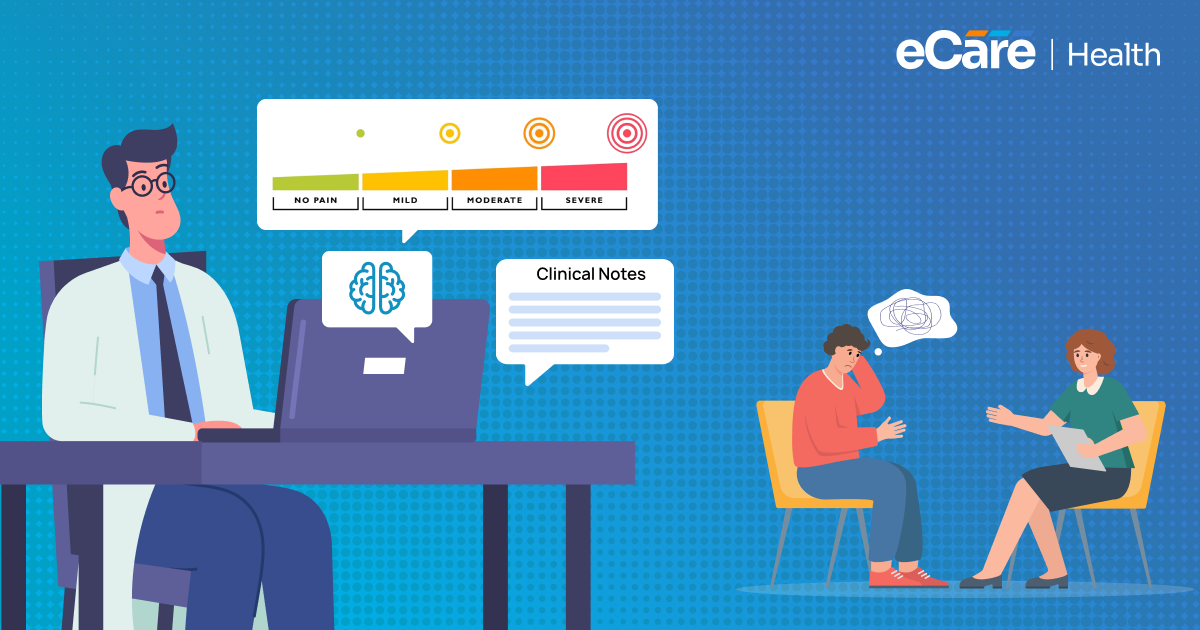
The average psychiatrist writes thousands of words every day, but only a fraction of them are spoken.
Every patient encounter adds progress notes, medication adjustments, therapy documentation, risk assessments, and treatment plans that must be tracked over time. As compared to other specialties, psychiatric care relies on detailed documentation for connecting the dots between past visits and future treatment decisions.
And this is exactly where generic EHRs start to fall short. Even though they capture patient records, they are rarely built to support the unique workflows of psychiatric care. As patient histories grow longer and documentation becomes more complex, providers start to spend more time on managing records instead of focusing on patients.
However, by combining psychiatric clinical documentation software, medication management, scheduling, and behavioral health EHR features into one connected platform, a specialized EHR for Psychiatrists is designed to change that. This further helps to streamline daily workflows while supporting better continuity of care.
Here you might be wondering about: Exactly what separates a standard EHR from the best EHR for psychiatry?
Well, to know more about this, let's dive into the blog to explore the essential electronic health record features for complex psychiatric care and the capabilities every psychiatric practice should consider before choosing an EHR.
Which Clinical Features Should Every EHR for Psychiatrists Include?
Psychiatric care management requires much more than storing patient records. The right EHR for psychiatrists must simplify documentation, support safer prescribing, and help providers make informed clinical decisions across the patient’s care journey.
It usually starts with comprehensive documentation. With built-in DSM-5-TR diagnostic tools in psychiatric EHR systems, structured Mental Status Exam (MSE) templates, and customizable psychiatric notes, clinicians can document evaluations consistently and reduce repetitive work.
Furthermore, equally important is medication management, with features like medication titration tracking workflows for psychiatric providers, polypharmacy monitoring, and drug interaction alerts supporting safer treatment decisions.
Along with all these, modern psychiatric EHRs should also involve suicide and violence risk assessment documentation, enabling providers to record screenings and safety plans within the patient’s chart.
Now, many platforms start to enhance these workflows with AI-assisted documentation and clinical decision support, helping reduce administrative burden without replacing clinical judgment.
If you're comparing these capabilities while choosing an EHR, our guide on Psychiatry EHR: The Complete Guide to Choosing Software for Psychiatric Practices in 2026 provides a broader look at what psychiatric practices should consider before selecting a solution.
A well-designed psychiatric EHR should include:
- DSM-5-TR diagnostic support and structured MSE templates
- Medication titration tracking and drug interaction alerts
- Polypharmacy management
- Suicide and violence risk assessment documentation
- AI-assisted psychiatric clinical documentation software
- Essential behavioral health EHR features for streamlined care.
How Does Psychiatric Clinical Documentation Software Improve Patient Care?
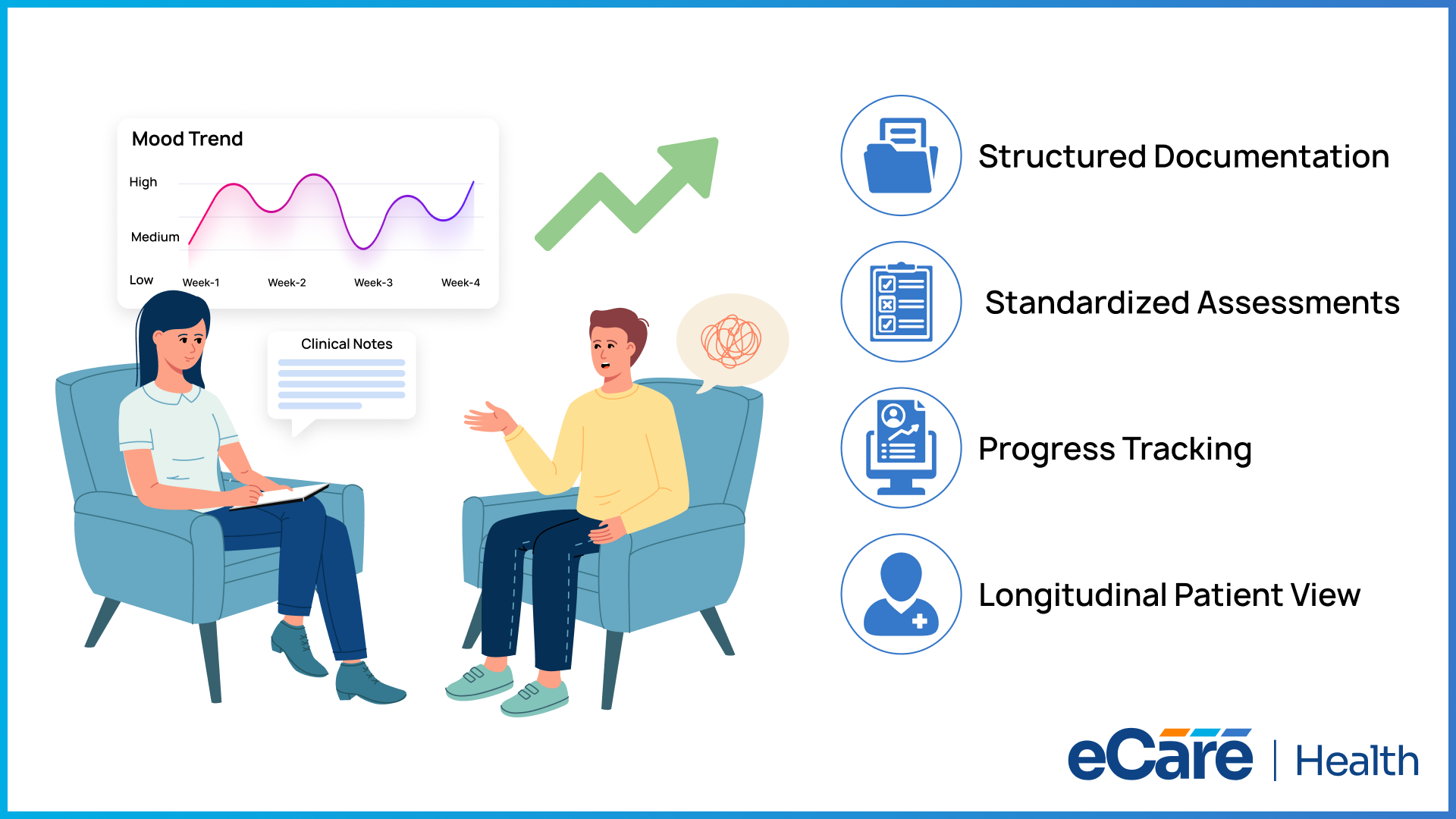
Quality psychiatric care depends not only on accurate documentation, but also on documentation that helps clinicians see the bigger picture. With a specialized EHR for psychiatrists, providers can organize structured progress notes, treatment plans, and patient history in just one place. This can further make it easier to track changes and make informed care decisions over time.
Furthermore, it also supports standardized assessments involving PHQ-9, GAD-7, C-SSRS, AIMS, and Vanderbilt. This allows you to measure symptoms continuously, rather than depending totally on subjective observations. By pairing with patient progress dashboards, all these assessments make measurement-based care even more practical, highlighting trends, treatment response, and areas that actually require attention.
Rather than reviewing scattered records from multiple visits, you can view your patient’s progress through longitudinal documentation. With a connected view, you can identify patterns, refine treatment plans, and deliver more personalized care while improving clinical decision-making.
How Do Medication Management Workflows Improve Psychiatric Care?
Psychiatric medications frequently need continuous monitoring instead of one-time prescribing. A specialized EHR for Psychiatrists helps clinicians manage every stage of the medication journey and reduce the risk of missed details.
Medication reconciliation and titration tracking:
To support informed treatment decisions at every follow-up, you must view complete medication histories, monitor dose adjustments, and track adherence.
Advanced medication safety:
Built-in support for Clozapine (Clozaril) monitoring, laboratory tracking, polypharmacy management, and drug interaction alerts helps providers prescribe with greater confidence.
Controlled medication oversight:
Integrated monitoring tools improve documentation, simplify follow-ups, and support safer management of controlled medications throughout the treatment cycle.
If all these workflows are connected within a single system, providers can spend less time piecing together medication records and more time focusing on patient outcomes. This makes integrated medication management one of the key features of the best EHR for psychiatry.
How Does an EHR Support Complex and Long-Term Psychiatric Care?
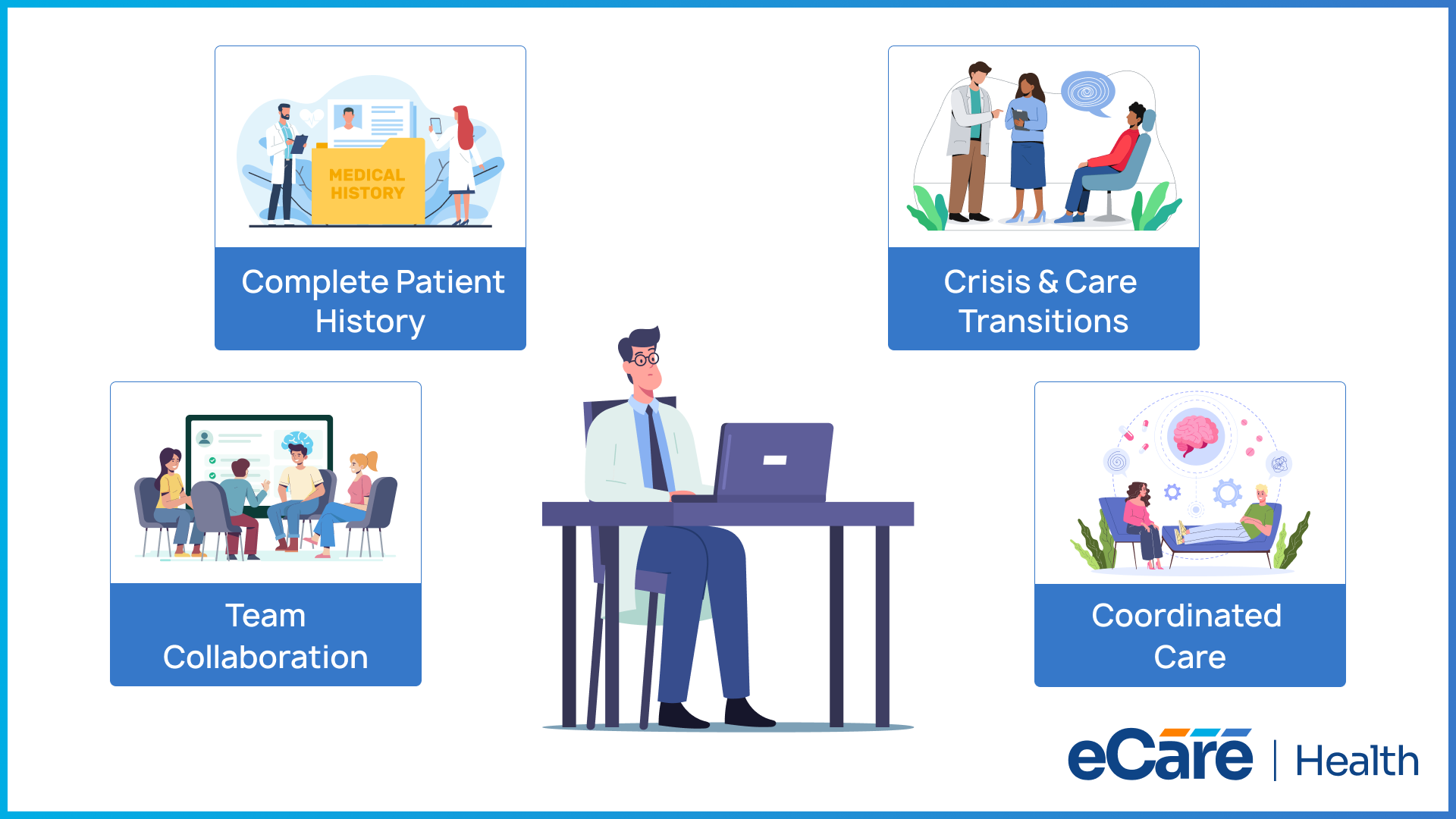
Mental health treatment is rarely linear. For treatment-resistant conditions or co-occurring disorders, patients often need ongoing medication adjustments, coordinated care, and frequent follow-ups over months or even years.
By maintaining complete medication histories, chronic treatment plans, and longitudinal patient records in one place, a specialized EHR for Psychiatrists keeps this journey connected. For example, when your patient experiences a crisis, requires hospitalization, or transitions between care settings, you can quickly access the information needed to make timely and informed decisions.
Moving forward, it also enhances collaboration across psychiatrists, therapists, primary care providers, and behavioral health teams. Care becomes even more coordinated when everyone works from the same up-to-date patient record, reducing communication gaps and supporting better long-term outcomes.
Conclusion
Managing psychiatric care requires more than a standard EHR. The right EHR for Psychiatrists should simplify clinical documentation, strengthen medication safety, and support long-term treatment with tools designed specifically for behavioral health.
With an integrated psychiatry EHR, eCareHealth brings together specialty-specific documentation, medication management, and practice workflows in one platform, helping psychiatrists deliver more coordinated, efficient, and patient-centered care.
Frequently Asked Questions
1. Why do psychiatrists need a specialty-specific EHR instead of a general medical EHR?
A specialty-specific EHR is designed around psychiatric workflows, including DSM-5-TR documentation, Mental Status Exams (MSE), medication management, risk assessments, and long-term treatment planning. Unlike a general medical EHR, it helps psychiatrists document complex clinical information more efficiently while improving continuity of care.
2. What clinical features should an EHR for psychiatrists include?
An EHR for psychiatrists should include DSM-5-TR diagnostic support, structured MSE templates, customizable documentation, medication titration tracking, polypharmacy management, drug interaction alerts, suicide risk assessment tools, AI-assisted documentation, and integrated practice management capabilities.
3. How does a psychiatric EMR support DSM-5-TR documentation?
A psychiatric EMR streamlines DSM-5-TR documentation with structured diagnostic templates, standardized clinical workflows, and organized progress notes. This helps providers document diagnoses consistently while reducing administrative burden.
4. How do medication titration tracking workflows improve psychiatric care?
Medication titration tracking allows psychiatrists to monitor dose changes, treatment response, medication adherence, and side effects over time. It also supports safer prescribing by maintaining a complete medication history and identifying potential drug interactions.
5. Which psychiatric assessment tools should an EHR support for measurement-based care?
A psychiatric EHR should support standardized assessment tools such as PHQ-9, GAD-7, C-SSRS, AIMS, and Vanderbilt scales. These tools help clinicians measure symptom severity, monitor patient progress, and make more informed treatment decisions.
6. How does AI improve psychiatric clinical documentation?
AI reduces repetitive documentation by assisting with note creation, organizing clinical information, and generating structured summaries. This allows psychiatrists to spend less time on administrative tasks while maintaining accurate and comprehensive patient records.
7. How does an EHR help manage treatment-resistant and long-term psychiatric conditions?
A specialized EHR keeps longitudinal patient records, medication histories, treatment plans, and clinical documentation in one place. This gives providers a complete view of the patient's journey, making it easier to adjust treatment strategies and coordinate ongoing care.
8. Can a psychiatric EHR improve collaboration between psychiatrists and other behavioral health providers?
Yes. A psychiatric EHR enables psychiatrists, therapists, primary care providers, and other behavioral health professionals to access shared patient information, improving communication, care coordination, and continuity of treatment.
9. What role does medication monitoring play in managing complex psychiatric care?
Medication monitoring helps providers track adherence, identify adverse drug interactions, manage polypharmacy, monitor controlled medications, and support treatments that require ongoing laboratory testing, such as clozapine therapy. This improves medication safety and supports better long-term patient outcomes.