Behavioral Health Revenue Cycle Management: How to Optimize Cash Flow and Cut Claim Denials

In behavioral health, seeing a full appointment calendar but an empty bank account is more common.
Even though patients receive the care they need, denied claims, coding errors, missing authorizations, and inefficient billing workflows can result in delayed payments while putting unnecessary pressure on cash flow.
Quality of care is not only the common thread behind these challenges, but it’s also an inefficient revenue cycle. When every step from patient intake to reimbursement is not properly connected, even one small mistake can lead to payment delays and lost revenue.
This is exactly where behavioral health management becomes so important. With behavioral health revenue cycle management practices, you can streamline patient registration, insurance verification, behavioral health claims management, billing, and reimbursement. This can further result in error reduction and keeping cash flow moving.
If combined with the right mental health practice management software, it becomes easy for your practice to simplify medical claims processing, automate routine tasks, and spend less time chasing payments. Furthermore, when every stage of the revenue cycle works together, providers can focus less on paperwork and more on delivering quality behavioral healthcare.
This blog will walk you through each stage of behavioral health revenue cycle management, highlight the common causes of delayed payments and claim denials, and share practical strategies to build a stronger, more predictable revenue cycle.
What Is Behavioral Health Revenue Cycle Management?
Behavioral health revenue cycle management is the process of managing every financial step of your patient’s journey. For example, from verifying insurance eligibility before an appointment to receiving the final reimbursement after services are provided. The core goals behind this are submitting accurate claims, reducing payment delays, minimizing denials, and maintaining a healthy and steady cash flow.
Let’s have a quick look at the behavioral health revenue cycle workflow:
Patient Registration → Eligibility Verification → Prior Authorization → Clinical Documentation & Coding → Claims Submission → Payment Posting → Denial Management → Final Reimbursement
To keep the revenue cycle on track, each stage plays a key role. Small mistakes like incorrect patient information, missing documentation, or coding errors can snowball into delayed payments and impact behavioral health reimbursement.
To make this process more seamless, eCareHealth can help your practice manage the entire workflow from a single platform. For instance, every stage from eligibility verification and behavioral health claims management to medical claims processing and behavioral health payment posting is streamlined to enhance efficiency and reduce administrative burden.
Which Revenue Cycle Metrics Should Behavioral Health Practices Monitor?
It is a fact that you can’t improve what you don’t measure. By tracking the right revenue cycle KPIs, your practice can spot financial bottlenecks earlier, minimize claim denials, while maintaining a healthier cash flow.
Let’s see some of the key metrics every behavioral health practice should monitor:
| KPI | Industry Benchmark | Why It Matters |
|---|---|---|
| Clean Claim Rate | 95% or higher | Measures the percentage of claims submitted without errors. |
| First-Pass Claim Acceptance Rate | 90–95% | Indicates how many claims are accepted on the first submission. |
| Days in Accounts Receivable (A/R) | Below 40 days | Shows how quickly payments are collected from payers. |
| Denial Rate | Below 5% | Tracks the percentage of claims denied by insurance companies. |
| Net Collection Rate | 95% or higher | Measures how much of the collectible revenue is actually received. |
| Average Days to Payment | 30–40 days | Reflects the average time taken to receive reimbursement after claim submission. |
All these metrics act as early warning signs. For example, an increasing denial rate can highlight coding errors, while long A/R days can indicate delays in behavioral health claims management or follow-up. If you regularly monitor all these KPIs, it becomes easier to identify revenue leaks and improve cash flow before small issues become costly problems.
With eCareHealth, your practice can gain access to real-time revenue cycle dashboards and analytics that track performance across every stage of the billing process. Rather than depending on spreadsheets or manual reports, teams can monitor trends, identify bottlenecks, and make data-driven decisions that strengthen behavioral health reimbursement and overall financial performance.
How Can Behavioral Health Practices Reduce Claim Denials?
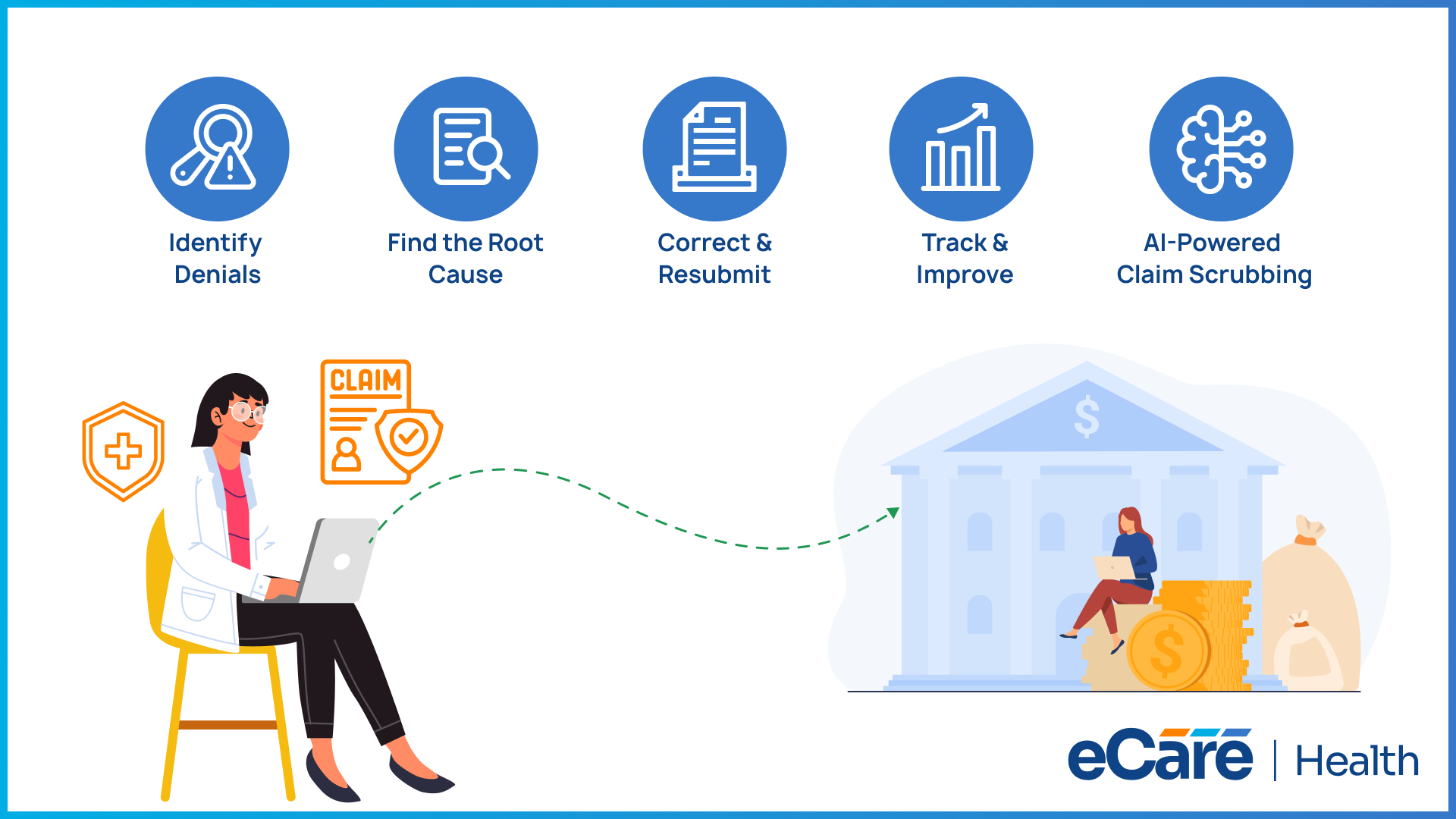
Claim denial reduction starts long before a claim reaches the payer. An effective behavioral health denial management process emphasizes early issue identification and quick correction, while preventing the same errors from happening again.
A simple denial management workflow includes:
- Identify the denial and review the payer's explanation.
- Find the root cause, whether it's related to eligibility, authorization, documentation, coding, or payer policies.
- Correct and resubmit the claim with the required changes.
- Track denial trends to identify recurring issues and improve future claim accuracy.
The common reasons behind most behavioral health claim denials are inactive insurance coverage, missing prior authorizations, incomplete clinical documentation, coding errors, and failure to meet payer-specific billing requirements. By addressing these problems early, you can further improve first-pass claim acceptance and speed up behavioral health reimbursement.
For more practical strategies to reduce these issues and improve reimbursement, explore our guide to Behavioral Health Billing in 2026: How to Reduce Denials and Get Paid Faster.
eCareHealth uses AI-powered claim scrubbing to stay one step ahead in detecting missing information, coding inconsistencies, and potential billing errors before claims are even submitted. This further helps your practice strengthen behavioral health claims management, reduce preventable denials, and keep the revenue cycle moving seamlessly.
How Does Payment Posting Improve Revenue Cycle Performance?
Claim submission is only half of the journey. Accurate behavioral health payment posting helps you make sure that every payment is recorded correctly, balances are updated, and revenue is accounted for without any delays or discrepancies.
Here is a list of some of the key components of an efficient payment posting process:
- ERA (Electronic Remittance Advice): Automatically captures payer payment details and claim decisions.
- EFT (Electronic Funds Transfer): Speeds up reimbursements by depositing payments directly into the practice's account.
- Reconciliation: Matches payments with submitted claims to identify discrepancies quickly.
- Adjustments & Write-offs: Accurately records contractual adjustments, patient balances, and approved write-offs.
- Underpayment Tracking: Flags payments that don't match the expected reimbursement, allowing staff to investigate and recover lost revenue.
eCareHealth automates payment posting and financial reconciliation, reduces manual data entry, and improves accuracy. This platform also allows practices to close the payment cycle faster, identify revenue gaps sooner, and maintain a healthier cash flow.
What Are the Best Practices for Optimizing Behavioral Health Revenue Cycle Management?
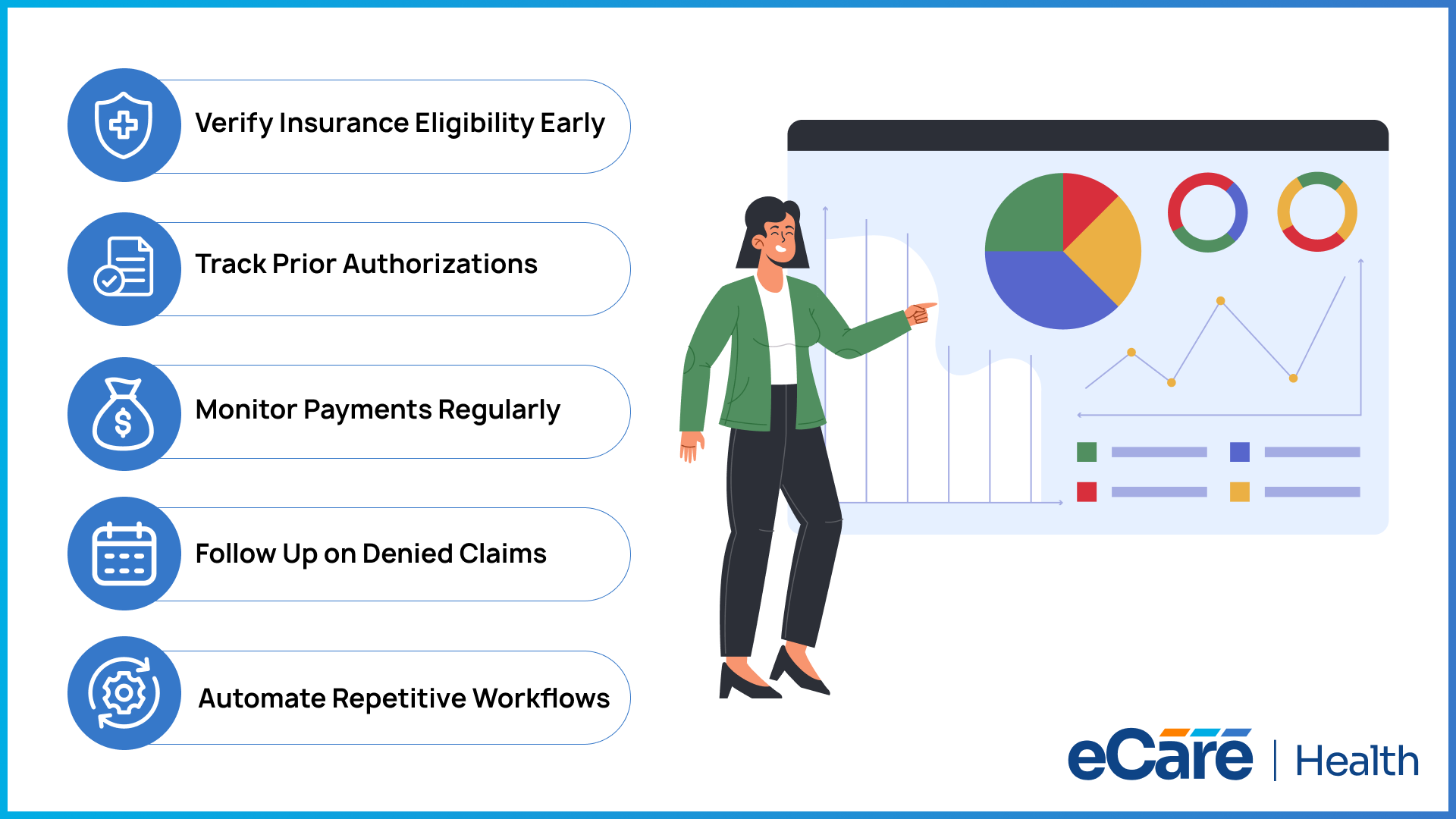
Behavioral health revenue cycle management optimization is not about making one big change; it’s about enhancing each step of the revenue cycle. By following these best practices, your practice can reduce administrative burden, enhance cash flow, and maximize reimbursements.
No matter if you are running a small clinic or a multi-provider practice, following these practices can help you strengthen your revenue cycle and improve financial performance:
- Verify insurance eligibility early to avoid claim rejections caused by inactive coverage or incorrect patient information.
- Track prior authorizations to ensure approvals are obtained before services are delivered.
- Monitor payments regularly and reconcile them promptly to identify underpayments or outstanding balances.
- Follow up on denied claims quickly by identifying the root cause and resubmitting corrected claims within payer deadlines.
- Automate repetitive workflows such as eligibility verification, claims processing, payment posting, and reporting to improve efficiency and reduce manual errors.
eCareHealth allows practices to automate these critical revenue cycle tasks through a single platform. This can further help staff work more efficiently, improve behavioral health reimbursement, reduce administrative workload, and strengthen overall financial performance.
How Can Revenue Cycle Management Software Improve Cash Flow?
A modern revenue cycle management solution not only automates billing, but also helps practices to enhance accuracy, reduce delays, and gain better control over their financial performance.
Let’s see how:
- AI-assisted eligibility verification confirms patient coverage before services are delivered, helping prevent avoidable claim rejections.
- Intelligent claim scrubbing identifies coding errors, missing information, and billing inconsistencies before claims are submitted.
- Denial prediction highlights high-risk claims early, allowing staff to resolve issues before they become denials.
- Automated payment posting speeds up reconciliation, reduces manual work, and improves payment accuracy.
- Real-time reporting and analytics provide greater financial visibility, helping practices monitor revenue trends, identify bottlenecks, and make informed decisions.
eCareHealth helps behavioral health organizations automate every stage of behavioral health claims management, streamline behavioral health reimbursement, and gain the financial insights needed to improve cash flow and reduce administrative effort.
Conclusion
An efficient behavioral health revenue cycle management process does more than reduce claim denials, it creates a stronger financial foundation for your practice.
By combining workflow automation, regular KPI monitoring, accurate behavioral health payment posting, and standardized processes, behavioral health organizations can improve behavioral health reimbursement, maintain healthier cash flow, and spend more time focusing on patient care.
With behavioral health EHR software like eCareHealth, practices can streamline every stage of the revenue cycle from eligibility verification and behavioral health claims management to payment posting and reporting, all within a single platform.
The result is fewer administrative hurdles, faster reimbursements, and a more efficient, financially resilient practice.
Frequently Asked Questions
1. What is behavioral health revenue cycle management?
Behavioral health revenue cycle management is the process of managing the financial side of patient care, from insurance eligibility verification and prior authorization to claims submission, payment posting, and final reimbursement. Its primary goal is to reduce billing errors, minimize claim denials, and improve cash flow.
2. What are the key stages of the behavioral health revenue cycle?
The key stages include patient registration, insurance eligibility verification, prior authorization, clinical documentation and coding, claims submission, payment posting, denial management, and final reimbursement. Each stage plays an important role in ensuring accurate billing and timely payments.
3. Which KPIs should behavioral health practices monitor?
Behavioral health practices should monitor KPIs such as Clean Claim Rate, First-Pass Claim Acceptance Rate, Days in Accounts Receivable (A/R), Denial Rate, Net Collection Rate, and Average Days to Payment. Tracking these metrics helps identify financial bottlenecks and improve overall revenue cycle performance.
4. How can behavioral health practices reduce claim denials?
Practices can reduce claim denials by verifying insurance eligibility, obtaining prior authorizations, maintaining accurate clinical documentation, using correct diagnosis and procedure codes, and regularly reviewing denial trends to address recurring issues before claims are submitted.
5. What is behavioral health denial management?
Behavioral health denial management is the process of identifying, analyzing, correcting, and resubmitting denied insurance claims. It also involves tracking denial patterns to prevent similar issues and improve future claim acceptance rates.
6. Why is payment posting important in behavioral health billing?
Payment posting ensures that payer and patient payments are accurately recorded, accounts are reconciled, and outstanding balances are identified. It also helps detect underpayments, monitor write-offs, and maintain accurate financial records.
7. What are the best practices for behavioral health revenue cycle management?
Some of the best practices include verifying insurance eligibility before appointments, tracking prior authorizations, monitoring key revenue cycle KPIs, following up on denied claims promptly, automating repetitive workflows, and regularly reviewing financial performance to improve reimbursement and cash flow.
8. How does revenue cycle management software improve behavioral health reimbursement?
Revenue cycle management software automates tasks such as eligibility verification, claim scrubbing, payment posting, and reporting. This reduces manual errors, improves claim accuracy, speeds up reimbursement, and provides better visibility into financial performance.
9. How can behavioral health practices improve cash flow while reducing claim denials?
Behavioral health practices can improve cash flow by submitting clean claims, monitoring revenue cycle KPIs, following up on denials quickly, automating billing workflows, and using technology to identify and resolve issues before claims reach the payer. These strategies help accelerate reimbursements while minimizing preventable denials.