Telehealth Mental Health Billing: A Complete Guide to CPT Codes and Reimbursement
Think of a scenario where you, as a therapist, finish a virtual therapy session, close the window, and move on to the next patient. Clinically, the visit went smoothly, but over time you realized that on the billing side, there is still a lot of work to be done.
The session should be documented correctly, the right CPT code needs to be selected, and the claim must meet the payer’s telehealth and reimbursement requirements. If you miss even just one piece, a clean clinical encounter can result in a delayed or denied claim.
This has become even more important as virtual care has moved from an occasional service to a regular part of healthcare. In fact, the American Medical Association reported that 71.4% of physicians reported using telehealth in their practices weekly.
These stats show how swiftly virtual care is becoming more common, and the billing process also has to keep up. And for mental health providers, where a large part of care can take place via video or phone visits, getting those details right is particularly important.
This is exactly where telehealth mental health billing can get complicated. Even though a claim looks straightforward, several pieces need to line up behind the scenes. For example, the clinical notes should support the service, the right telehealth CPT codes for mental health must be selected, and the claim may also require the correct modifier, place of service code, and payer-specific requirements.
However, all of these steps do not have to feel like separate pieces of a puzzle. With a mental health EHR with telehealth, it becomes easy to connect virtual visits, clinical documentation, coding, and billing workflows, which further helps your practice keep the right information together from the start.
Let’s dive into the blog to break down the key parts of telehealth mental health billing, including CPT codes, modifiers, place of service codes, reimbursement, and ways to prevent common billing denials, so practices can make the process more accurate and easier to manage.
Which CPT Codes Are Used for Telehealth Mental Health Services?
Selecting the right CPT code is the first step in accurate telehealth mental health billing. No matter whether it is a psychiatric evaluation, individual psychotherapy, or group therapy, the code you select must match the service provided. Along with this, session length, provider type, and payer rules can also affect which code is appropriate.
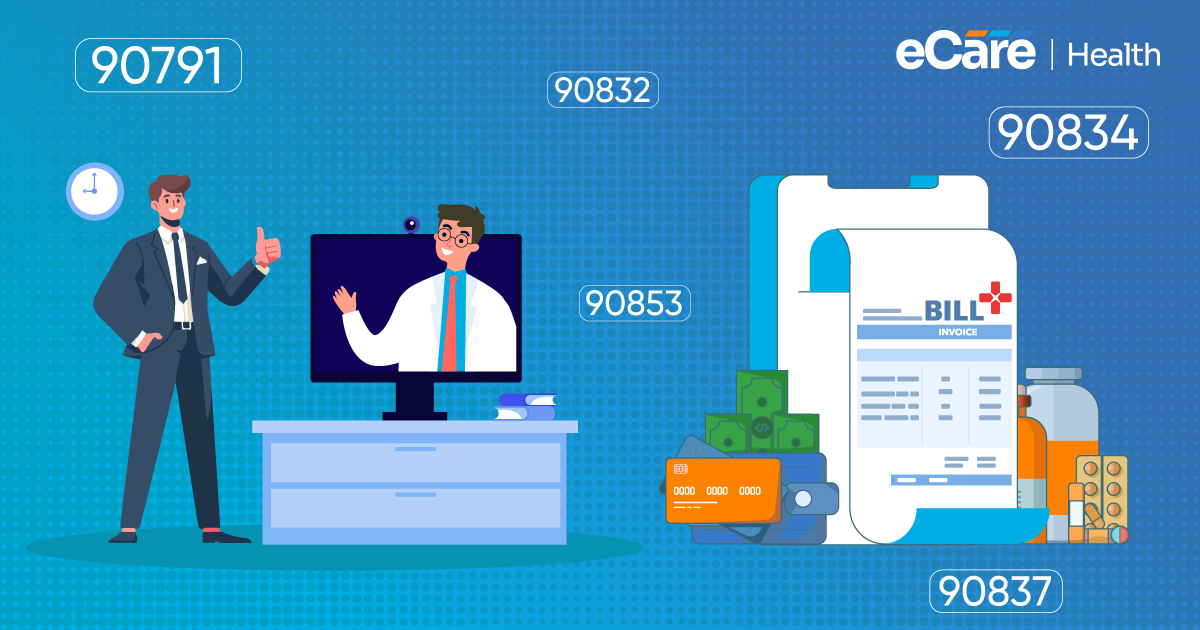
For example, 90791 is used for a psychiatric diagnostic evaluation; on the other hand, 90832, 90834, and 90837 are commonly used for individual psychotherapy based on the length of the session. 90853 is used for group psychotherapy.
When you provide these services virtually, your practice still needs to check the payer’s telehealth requirements before submitting the claim. Let’s see some of the commonly used telehealth CPT codes mental health practices may encounter:
| CPT Code | Commonly Used For | What to Check Before Billing |
|---|---|---|
| 90791 | Psychiatric diagnostic evaluation | Confirm that the payer covers the evaluation through telehealth and that the provider is eligible to bill for it. |
| 90832 | Individual psychotherapy | Make sure the documented session supports the code and verify the payer's telehealth billing requirements. |
| 90834 | Individual psychotherapy | Check that the session documentation supports the code and confirm the payer's telehealth requirements. |
| 90837 | Individual psychotherapy | Ensure the session length and documentation support the code, then verify the payer's billing rules for telehealth. |
| 90853 | Group psychotherapy | Confirm that the payer allows the service to be provided through telehealth and check any group-specific billing requirements. |
All these codes just provide a starting point, as they are not the only details that matter on a telehealth claim. Along with this, the applicable modifier and place of service code also need to be reported accurately. Furthermore, as all these requirements can vary by payer, your practice should verify them before even submitting claims.
Which Modifiers and Place of Service Codes Apply to Telehealth?
After identifying the mental health service by CPT code, the next step helps to explain how that service was delivered. And this is where telehealth modifiers and place of service (POS) codes come into the spotlight. Telehealth modifiers and POS codes help payers gain more context about the virtual encounter and can affect how the claim is processed.
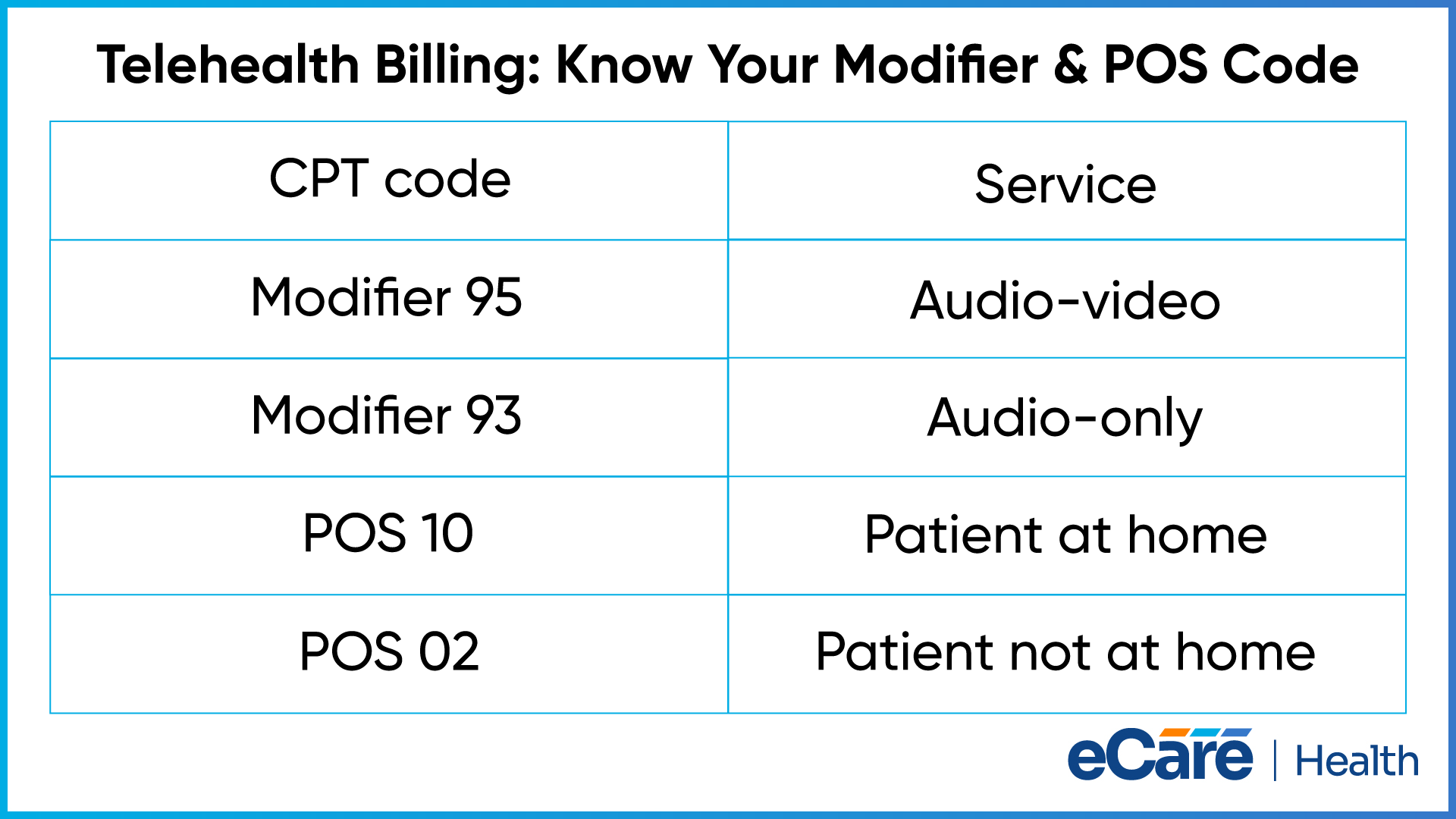
The first detail that you must check is how the patient and provider connected. For eligible audio-video services, modifier 95 may be used to indicate synchronous telehealth. If the service was provided through audio-only communication, modifier 93 may apply when allowed.
As audio-only and audio-video services can have different coverage rules, the practice should confirm that the selected modifier matches both the service and the payer’s requirements.
The patient’s location is another piece of the claim. That is where POS codes come into play:
| POS Code | Patient Location |
|---|---|
| 02 | Telehealth service provided when the patient is not at home |
| 10 | Telehealth service provided when the patient is at home |
For example, if your patient attends a therapy session from their home, POS 10 may apply. If the same patient joins a virtual session from another location like a workplace or school, POS 02 may be a perfect match, based on the applicable billing rules.
Simply put, a telehealth claim brings several details together. The code helps to identify the service, the modifier can indicate how it was delivered, and the POS code can identify the patient’s location.
Furthermore, as CMS and commercial payers can have different or changing requirements, your practice must verify the current rules for the specific service and payer before submitting the claim. This can further help to reduce avoidable errors while keeping reimbursement from getting stuck over a coding detail.
How to Bill for Virtual Mental Health Services
It’s fair enough to say that up to here, the main coding pieces are in place. The next key step is to bring all of them together when a virtual mental health service is actually billed. A simple workflow can help to prevent small details from turning into claim issues.
Start with the patient and the payer:
Before the visit, you should always check your patient’s eligibility, whether their plan covers telehealth, and where the patient will be located during their encounter. The last detail always matters, as your patient’s location can affect the applicable POS code.
Build the claim around the actual service:
After the visit, it’s also necessary for you to ensure that the clinical documentation supports the provided service. After this, you should match the documentation with the appropriate CPT code, telehealth modifier, and POS code. Keeping all these details consistent is important for billing for virtual mental health services without creating unnecessary claim issues.
Don't stop when the claim is submitted:
Your billing teams should also track claim responses, payments, and denials to understand where problems are recurring. If the same payer keeps rejecting claims for a modifier or POS issue, that pattern can point to a workflow problem that needs to be addressed.
A continuous process helps to turn billing from a one-time submission into a cycle of verify, code, submit, and monitor. This further makes it easier to catch problems and enhance the accuracy of future claims.
How Does Telehealth Insurance Reimbursement Work for Mental Health?
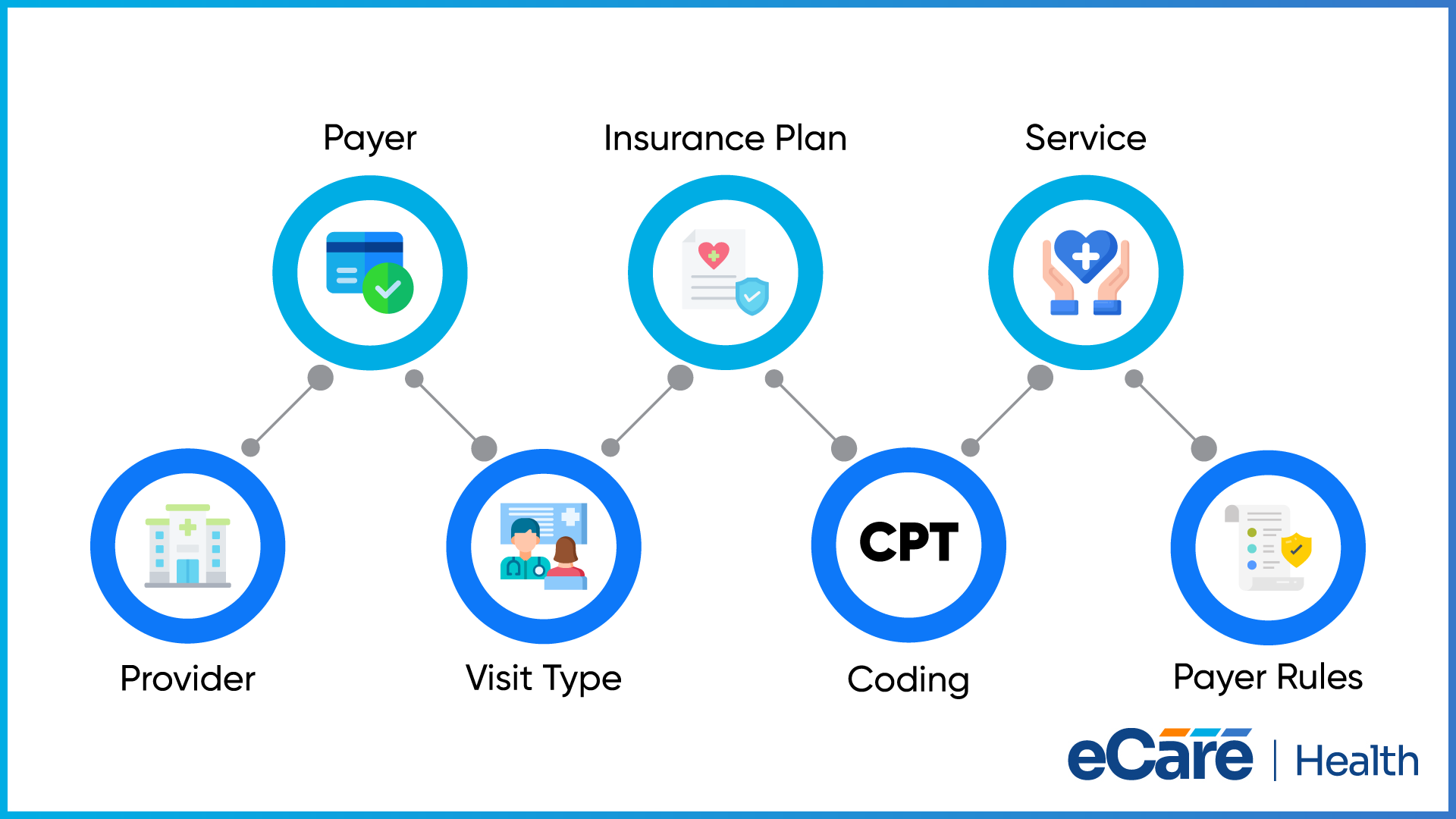
Getting the claim right does not always mean getting the same payment as an in-person visit. Telehealth insurance reimbursement for mental health services can vary on the basis of the payer, the patient’s plan, the provided service, and how the visit was delivered.
The difference becomes clearer when looking at the major payer groups:
- Medicare: Covered services, provider eligibility, modality, coding, and current Medicare telehealth rules
- Medicaid: State-specific coverage rules, eligible providers, covered services, and telehealth requirements
- Commercial payers: Individual plan benefits, contracted rates, covered services, modality, and payer-specific policies
Furthermore, reimbursement can also rely on how the visit is delivered. Video and audio-only services have different coverage rules. The provider type and the payer’s telehealth policy can matter too. Payment rates may also differ, so practices should not assume that a virtual visit will always be reimbursed the same way as an in-person visit.
That’s why checking your patient’s current benefits and the payer’s telehealth policy is a key part of online therapy billing. Rules can change, and coverage that applies to one payer or plan may not apply to another. Verifying the requirements before billing can help practices avoid surprises when the payment comes back.
How Can Practices Prevent Billing Denials for Telehealth Therapy Claims?
Many times, telehealth claim denials do not happen because the therapy session was unnecessary. They actually happen because one part of the claim does not match another. For example, a documented video visit with the wrong modifier, an incorrect POS code, or missing eligibility verification can slow down reimbursement even when the service itself was appropriate.
Catch mismatches before the claim goes out:
Before submitting a claim, you must ensure that the documentation, CPT code, telehealth modifiers, POS code, and the actual virtual service are telling the same story. When all these details stay aligned, it becomes easier to prevent billing denials for telehealth therapy claims.
Don't skip pre-visit verification:
If you take a few minutes for verification before the appointment, it can save you time later. Always confirm your patient’s eligibility, telehealth coverage, and any payer-specific requirements before the visit starts rather than fixing claim issues after they appear.
Learn from recurring denials:
Every denied claim can point to a pattern. If the same payer repeatedly rejects claims for a modifier, POS code, or telehealth requirement, update the billing workflow so the same mistake does not happen again. As telehealth policies continue to evolve, reviewing these patterns regularly helps practices stay one step ahead.
How eCareHealth Supports Telehealth Mental Health Billing
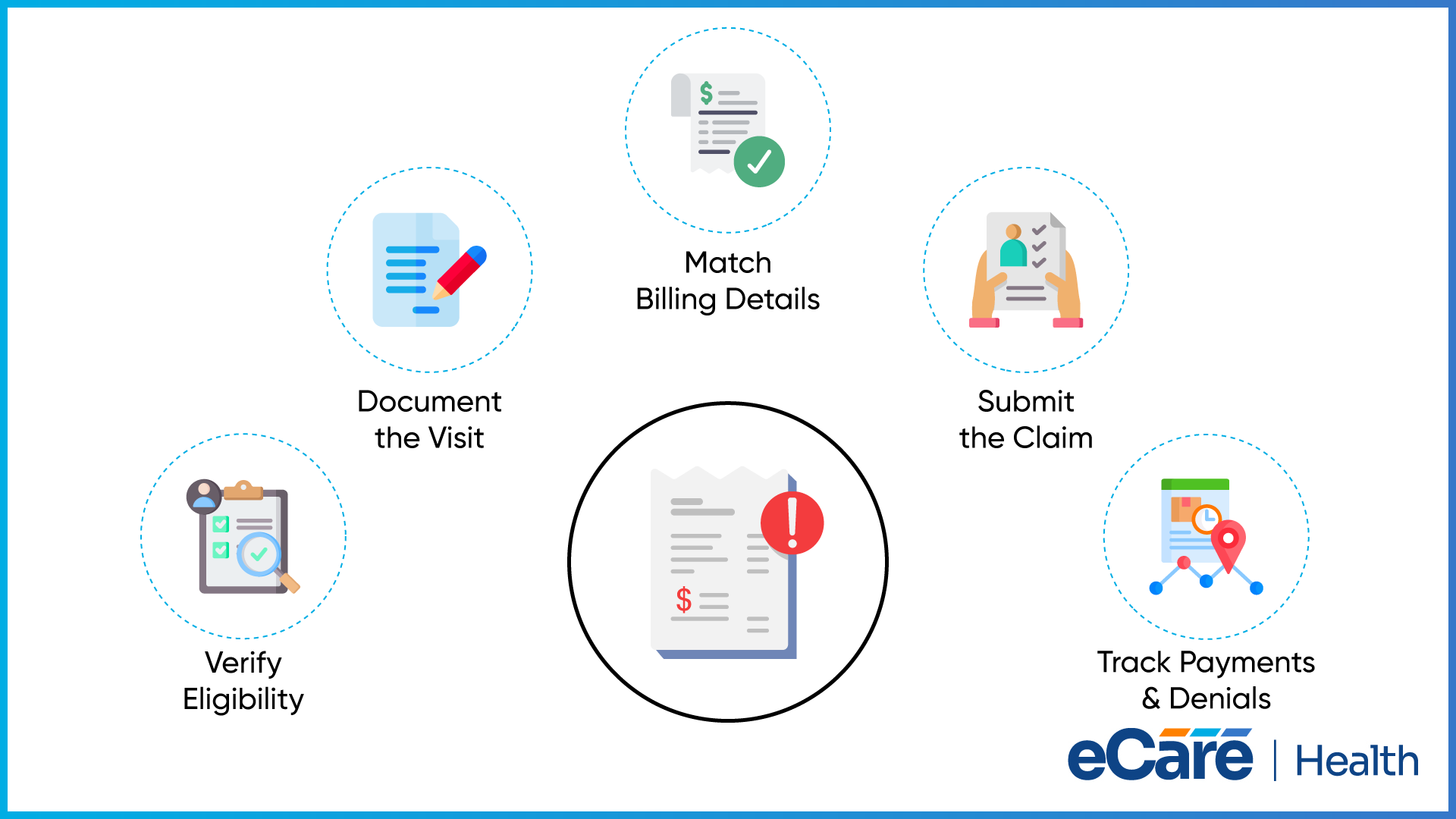
Even a small gap can create extra work when clinical and billing workflows sit in separate systems. Even though virtual visits can be documented in one place, eligibility, claims, and payment information live somewhere else.
eCareHealth brings all these workflows together to give mental health practices a more connected way to manage telehealth services. With a mental health EHR with telehealth, your practice can connect virtual encounters with clinical documentation and patient records.
This can keep the details from the visit available within the same workflow rather than making staff switch between disconnected systems. The connection also extends beyond the clinical side. Eligibility, claims, and payment workflows can work alongside patient and clinical information, which helps billing teams move from verification to claim submission and payment tracking with fewer gaps.
For practices managing psychiatric services, Psychiatry Billing Software can further support billing workflows by bringing psychiatric services and revenue processes into the same platform. Instead of piecing together information after a claim issue appears, teams can work with connected data throughout the billing cycle.
Conclusion
Telehealth billing becomes much easier when every part of the claim tells the same story. The virtual service, clinical documentation, CPT code, modifier, POS code, and payer requirements all need to line up. A mismatch in any one of these areas can lead to a denied claim or delayed reimbursement.
Because telehealth rules and payer policies can change, practices should regularly verify the latest requirements before submitting claims. Staying current can help prevent small billing errors from turning into bigger revenue problems.
A connected workflow can make this process easier to manage. eCareHealth brings virtual care, clinical documentation, eligibility, claims, and payments together, helping mental health practices keep their billing process connected from the visit to reimbursement. With psychiatry billing software supporting the billing workflow, practices can spend less time sorting through disconnected information and more time focusing on patient care.
Frequently Asked Questions (FAQs)
1. What CPT codes are commonly used for telehealth mental health services?
Several CPT codes are commonly used for virtual mental health services. CPT 90791 is used for a psychiatric diagnostic evaluation, while 90832, 90834, and 90837 are used for individual psychotherapy based on the length of the session. CPT 90853 is used for group psychotherapy. The right code should reflect the service actually provided and be supported by the clinical documentation. Practices should also confirm that the selected service is eligible for telehealth and meets the payer’s current coding and coverage requirements.
2. What modifiers are used for telehealth mental health billing?
Modifier 95 is commonly used for eligible synchronous audio-video telehealth services, while modifier 93 may apply to eligible synchronous audio-only services. The modifier helps communicate how the service was delivered, but it should not be selected based on the visit type alone. The payer, service, and applicable telehealth rules also matter. Practices should verify which modifier is required for the specific claim and make sure the documentation supports the method of communication reported.
3. What is the difference between POS 02 and POS 10 for behavioral health telehealth?
The main difference is the patient’s location during the telehealth encounter. POS 02 indicates that the patient received the service through telehealth while located somewhere other than their home. POS 10 is used when the patient is located at home during the telehealth service. For example, a patient attending a therapy appointment from their living room may require POS 10. If that patient connects from another location, POS 02 may apply, depending on the payer and service.
4. Can you bill audio-only telehealth for mental health services?
Yes, certain mental health services may be eligible for audio-only telehealth billing. However, eligibility depends on the specific service, payer, provider, patient coverage, and current telehealth rules. Audio-only visits may also have different documentation, modifier, or coverage requirements than audio-video visits. Before submitting a claim, practices should confirm that the service qualifies for audio-only reimbursement and use the coding requirements specified by the applicable payer.
5. Do telehealth therapy sessions reimburse the same as in-person services?
Not always. Telehealth reimbursement can depend on the payer, insurance plan, service, provider type, and whether the appointment was delivered through video or audio-only communication. Some payers may reimburse eligible telehealth services at rates similar to in-person care, while others may apply different policies or rates. This means practices should not assume that a virtual therapy session will automatically receive the same reimbursement as an office visit. Checking the current payer policy can provide a clearer picture of expected payment.
6. Does Medicare cover telehealth mental health services in 2026?
Yes. Medicare covers many eligible mental health services provided through telehealth in 2026, but coverage is subject to specific requirements. Eligibility can depend on the service, provider, communication method, and other Medicare rules that apply to the encounter. Because federal telehealth policies can change, practices should review the latest CMS guidance before submitting claims. This helps ensure that the service is covered and that the claim follows the current Medicare billing requirements rather than relying on outdated telehealth rules.
7. How can practices prevent billing denials for telehealth therapy claims?
The best place to start is by making sure every part of the claim matches the actual visit. The clinical note should support the service provided, and the CPT code, modifier, and POS code should accurately reflect that encounter. Practices should also verify patient eligibility, telehealth coverage, and payer-specific requirements before the appointment. After claims are submitted, tracking denial reasons can reveal recurring problems. If the same issue appears repeatedly, updating the billing workflow can help prevent future denials.
8. How can a Mental Health EHR with Telehealth simplify virtual mental health billing?
A Mental Health EHR with Telehealth can bring virtual encounters, patient records, clinical documentation, eligibility, and billing workflows into one connected system. This can reduce the need for staff to move information between separate platforms or enter the same details multiple times. When clinical and billing information stays connected, it becomes easier to verify that the documentation supports the billed service. Practices can also track claims and payments within the same workflow, making virtual billing easier to manage from the appointment through reimbursement.
9. What should practices look for in Psychiatry Billing Software for telehealth reimbursement?
Practices should look for Psychiatry Billing Software that supports the full billing workflow rather than focusing only on claim submission. Useful capabilities include eligibility verification, coding support, claim management, payment tracking, denial management, and connections with clinical workflows. For telehealth, the software should also make it easier to manage details such as CPT codes, modifiers, POS codes, and payer requirements. A connected billing workflow can help practices identify claim issues sooner, monitor reimbursement, and adjust processes as telehealth policies change.