Mental Health Insurance Billing: How to Maximize Reimbursement and Reduce Claim Denials

Do you know that a claim does not always fail when it reaches payers? Sometimes the loss starts much earlier. And the reasons behind it are unverified benefits, a missing authorization, or a payer requirement that was overlooked.
And for mental health practices, these small gaps can snowball into delayed payments, unexpected patient balances, and loss of mental health insurance reimbursement. The core challenge here is that mental health billing reaches beyond submitting a clean claim.
All factors, including eligibility, coverage limits, prior authorization, provider credentials, payer rules, and ongoing insurance tracking, must line up before service is billed. Even if one piece falls through the cracks, patients can end up spending hours fixing issues.
This makes the front end of the billing process equally important as the claim itself. By verifying coverage before an appointment, confirming whether authorization is needed, and keeping track of changing payer requirements, your practice can avoid problems before reaching the claims stage.
Rather than treating all these tasks just as separate administrative steps, your practice should connect this process by keeping insurance information accurate from verification through payment.
This is exactly where psychiatry billing software can make a real difference by bringing key billing and insurance workflows into one place. Factors like better visibility into eligibility, authorizations, and claim-related details help your teams catch issues earlier and spend less time addressing avoidable issues.
Without further ado, let’s explore how to strengthen mental health insurance billing through insurance verification, authorization, insurance tracking, and denial prevention, and how these steps can help practices protect revenue while keeping billing operations on track.
How Does Mental Health Insurance Billing Start Before the Claim?
There is a series of checks that always happen behind the scenes before a therapy session or psychiatry service is billed. The process usually begins with eligibility verification, which involves questions like:
- Is your patient's insurance active?
- Does the plan cover the service?
- What are the deductible, copay, coinsurance, and visit limits?
After this, the spotlight falls on authorization and service coverage. Some behavioral health services may need prior authorization; on the other hand, others can have specific limits or payer conditions. By confirming all these details before care is provided, your practice gets a clearer picture of whether the service is covered and what needs to be documented for the claim.
The claim is truly ready to move forward only after these pieces are confirmed. A small error in the member ID, coverage details, authorization status, or provider information can weaken that claim.
Furthermore, insurance credentialing for mental health is one more piece that comes even earlier. Providers are usually required to be properly credentialed and enrolled with participating payers before they can bill those insurers as in-network providers. While credentialing is a process of its own, keeping provider enrollment information accurate is a key part of keeping the billing cycle on track.
Simply put, mental health insurance billing begins well before the claim form is created. Getting the front-end details right gives the claim a much stronger chance of reaching the payer without avoidable roadblocks.
How Can Practices Maximize Mental Health Insurance Reimbursement?
Maximizing reimbursement usually starts far before a claim is submitted. With proactive front-end checks, your practice can catch coverage gaps, authorization issues, and payer requirements early when they are easier to address.
Key Front-End Checks for Maximizing Mental Health Insurance Reimbursement
| Front-End Check | What to Verify | Reimbursement Benefit |
|---|---|---|
| Eligibility | Active coverage and behavioral health benefits | Confirms the patient is covered for the planned service and helps prevent coverage-related denials. |
| Benefits | Copay, deductible, coinsurance, and visit limits | Clarifies payer coverage and helps establish accurate patient responsibility. |
| Authorization | Required services, approved visits, and authorization period | Confirms services are authorized and reduces the risk of non-authorized service denials. |
| Provider/Payer Status | Provider participation and payer requirements | Helps prevent network-related payment issues and payer-specific billing problems. |
| Insurance Tracking | Coverage changes and authorization usage | Keeps billing information current and reduces avoidable interruptions in reimbursement. |
Eligibility verification can further help your practice catch situations where authorizations are needed but have not been obtained. Missing authorizations can result in denials like CO-197, which makes it necessary to confirm payer requirements before services are provided.
Authorization must not stop at the initial approval, either. Your team must approve visits as they are used so additional authorization can be requested before the patient reaches the limit. These front-end controls can help practices maximize mental health insurance reimbursement while supporting reducing mental health insurance claim denials.
How Can Practices Reduce Mental Health Insurance Claim Denials?
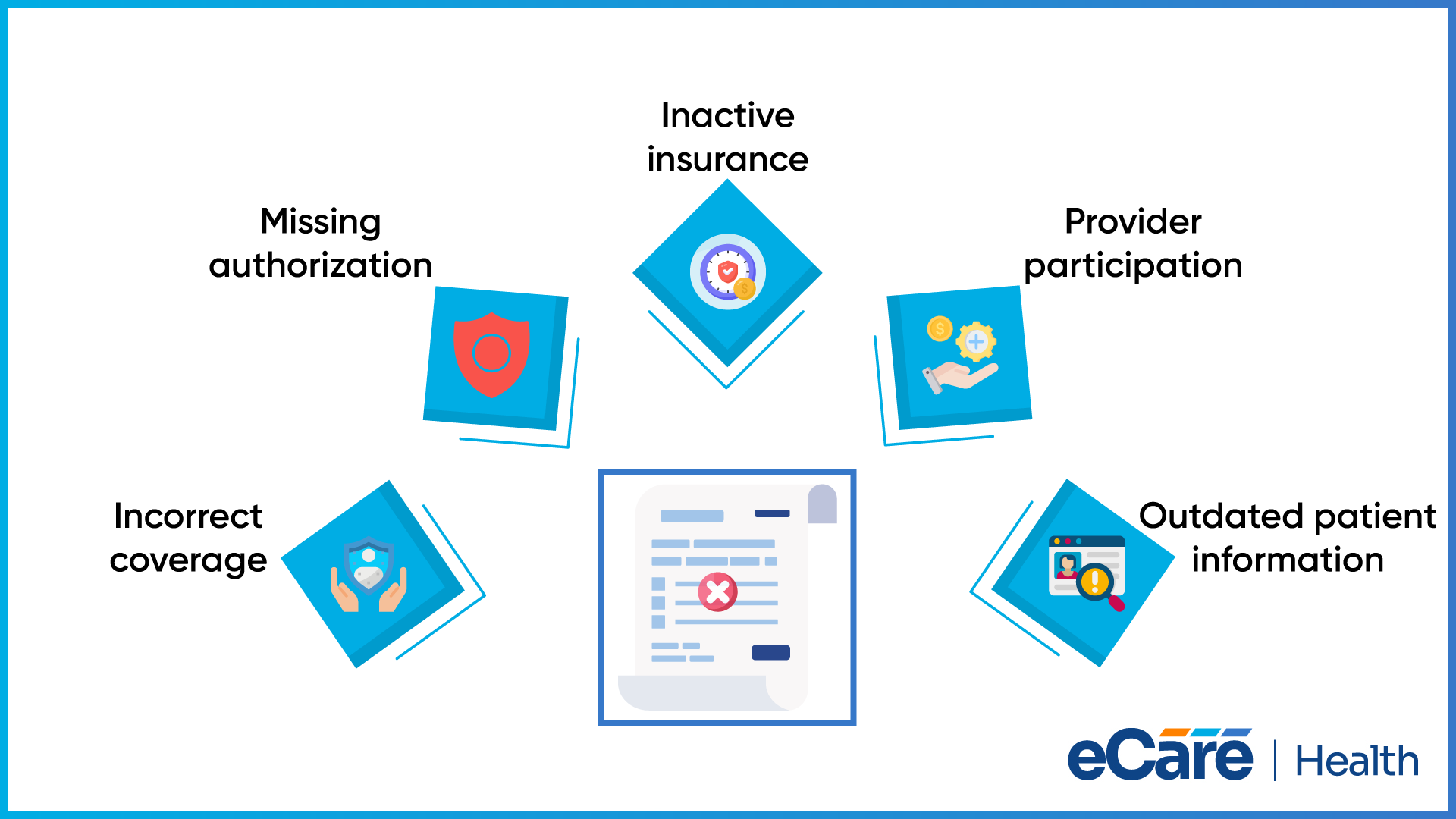
Most avoidable denials leave a lot of clues before they happen. The reasons behind putting a claim at risk before it reaches the payer are an inactive policy, incorrect patient information, missing authorization, or an out-of-network provider. That’s why reducing mental health insurance claim denials begins with keeping the front end of the billing workflow accurate.
Practices should pay close attention to a few common trouble spots:
- Incorrect coverage: The patient's plan may not cover the service or behavioral health benefit being billed.
- Missing authorization: A required authorization was never obtained, or the approved visits have already been exhausted.
- Inactive insurance: Coverage ended or changed before the date of service.
- Provider participation: The provider's network or enrollment status does not match the payer requirements.
- Outdated patient information: Changes to insurance, member IDs, demographics, or subscriber details were not updated.
Beyond these, there is also an important difference between a clearinghouse rejection and a payer-level denial. If your claim failed an initial electronic or data validation check, it is usually a clearinghouse rejection, which further needs to be corrected before it can move forward.
On the other hand, a payer-level denial usually happens after the claim reaches the insurer and is adjudicated based on coverage, authorization, medical necessity, coding, or other payer rules. If you treat both the same way, it can waste your time and make it harder to identify the real issue.
Moving forward, repeated denials can point to something bigger. If your practice repeatedly receives denials associated with inactive coverage, it may point to a weakness in the eligibility verification workflow. Along the same lines, repeated authorization denials can signal that your practice needs better authorization tracking or earlier follow-up.
Your practice must use these patterns to strengthen the process that happens before the claim is submitted, rather than just fixing each denial as it appears. Reacting to denials to prevent them helps to make mental health insurance billing more continuous and protect reimbursement over time.
What Are the Best Practices for Therapy Billing and Insurance Tracking?
Good insurance tracking is not just about checking one detail at a time; it’s more about keeping the entire billing picture visible. If eligibility, authorization, claims, and payer responses are scattered across spreadsheets, emails, and separate systems, it’s obvious that your important follow-ups can go unnoticed.
A more reliable workflow should keep these details together:
- Eligibility: Record when coverage was verified and flag changes that may affect upcoming services.
- Authorization: Track approved services, visit limits, authorization periods, and remaining visits.
- Claim status: Monitor whether claims are submitted, accepted, rejected, denied, or awaiting payment.
- Payer responses: Keep denial reasons, requests for additional information, and other payer communications tied to the relevant claim.
- Follow-up deadlines: Set clear dates for resubmissions, appeals, additional authorization, and payer follow-ups.
Whenever your patient changes plans, coverage ends, or treatment circumstances affect authorization requirements, insurance information must be updated. If you depend on information collected months ago, it can create problems when your patient’s coverage has changed in the meantime.
However, proactive alerts can make this easier. With notifications for expiring authorizations, nearly exhausted visits, unresolved payer responses, or pending follow-ups, your billing team gets time to act rather than discovering the issue after reimbursement is affected.
These practices further help your practice turn insurance tracking from a reactive task to an ongoing workflow. For mental health practices, it means fewer missed deadlines, better visibility into outstanding claims, and also stronger best practices for therapy billing and insurance tracking from the first verification through final payment.
How eCareHealth Supports Mental Health Insurance Workflows
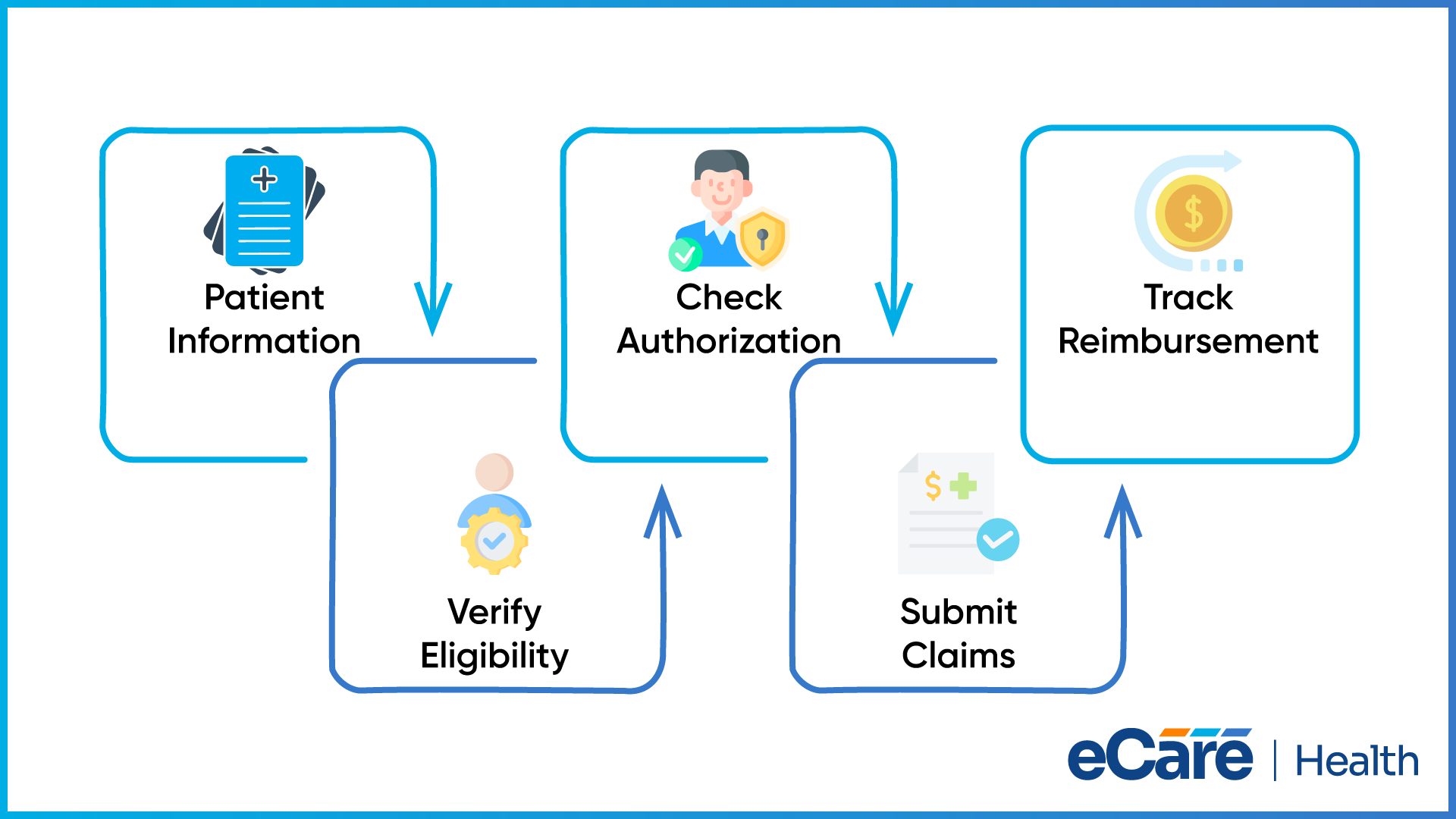
As your behavioral health practice grows, it becomes harder to keep eligibility, authorization, patient information, and billing details connected. For example, when all these workflows are spread across different systems, your teams may need to switch between records for confirming coverage, checking authorization status, or following up on reimbursement issues.
With platforms like eCareHealth, you can bring all these workflows together through psychiatry billing software, which gives your practice a more connected way to manage insurance and billing information. By keeping all key patient and payer details accessible within the workflow, it becomes easier for your team to identify potential coverage or authorization issues earlier rather than discovering them when a claim is already at risk.
The broader Mental Health Practice Management Software also provides centralized visibility into insurance and reimbursement activities. This can help practices keep track of important details as patient volume grows without relying as heavily on disconnected spreadsheets or manual follow-ups.
For growing behavioral health practices, the goal is not simply to process claims faster. It is to build a consistent insurance workflow that keeps coverage, authorization, and reimbursement information visible throughout the patient journey. eCareHealth supports that approach by helping teams stay ahead of insurance-related issues and keep billing workflows on track.
Conclusion
Strong mental health insurance billing does not begin when a claim is submitted. It starts earlier with accurate eligibility checks, confirmed authorization, up-to-date patient information, and consistent insurance tracking. When these front-end details are handled proactively, practices have a better chance of preventing avoidable denials and protecting reimbursement.
Rather than waiting for claims to come back with problems, behavioral health practices can use denial patterns, authorization tracking, and payer responses to strengthen the workflows that happen before submission. This proactive approach can save staff time while keeping reimbursement more predictable.
eCareHealth brings these processes together to help practices manage insurance and billing workflows with greater visibility. With mental health practice management software, behavioral health teams can keep essential insurance information connected, identify issues earlier, and maintain a more consistent path from patient coverage verification to reimbursement.
Frequently Asked Questions (FAQs)
1. What is mental health insurance billing?
Mental health insurance billing is the process of submitting claims to insurers for covered behavioral health services, including therapy, counseling, and psychiatric care. It involves verifying eligibility, confirming benefits, obtaining required authorization, submitting accurate claims, tracking payer responses, and following up on unpaid or denied claims. Effective billing helps practices receive appropriate reimbursement while giving patients a clearer understanding of their insurance coverage and financial responsibility.
2. How can mental health practices maximize insurance reimbursement?
Practices can maximize insurance reimbursement by verifying eligibility and benefits before services are provided, confirming authorization requirements, maintaining accurate patient and provider information, and tracking claims through payment. Monitoring authorization usage is also important because approved visits can expire or become exhausted. Reviewing recurring denial patterns can reveal weaknesses in billing workflows. These proactive steps help practices prevent avoidable errors and improve the likelihood of receiving timely, accurate reimbursement.
3. What should therapists verify before providing an insurance-covered service?
Before providing an insurance-covered service, therapists should verify that the patient’s coverage is active and includes behavioral health benefits. They should also confirm copays, deductibles, coinsurance, visit limits, and whether prior authorization is required. The provider’s participation status should be checked when relevant. Patient details, insurance information, and authorization records should be current. These checks help prevent coverage issues, unexpected patient balances, and avoidable claim denials.
4. How does insurance authorization affect mental health billing?
Insurance authorization determines whether certain mental health services have received the payer’s required approval before treatment. If authorization is required but missing, claims may be denied even when the patient has active coverage. Practices should verify approved services, visit limits, and authorization periods before treatment begins. They should also monitor remaining visits and request additional authorization when necessary to avoid interruptions in both care and reimbursement.
5. What is CO-197 and how can practices prevent it?
CO-197 is a claim adjustment code indicating that payment was adjusted because the service was not authorized as required. Mental health practices can help prevent this issue by checking payer authorization requirements before providing services and confirming that the authorization covers the specific service and date of treatment. Teams should also monitor approved visit counts and authorization expiration dates so additional approval can be obtained before the existing authorization is exhausted.
6. How can practices reduce mental health insurance claim denials?
Practices can reduce claim denials by addressing common front-end issues before claims are submitted. This includes verifying active coverage, confirming behavioral health benefits, obtaining required authorization, maintaining accurate patient information, and checking provider participation. It is also useful to distinguish clearinghouse rejections from payer-level denials because each requires a different response. Reviewing recurring denial patterns can further help practices identify weaknesses in eligibility, authorization, or billing workflows.
7. How can practices track therapy billing and insurance changes efficiently?
Practices can track therapy billing more efficiently by maintaining eligibility, authorization status, claim progress, payer responses, and follow-up deadlines within one connected workflow. Insurance information should be updated whenever patients change plans or treatment circumstances affect coverage. Automated alerts can also flag expiring authorizations, exhausted visits, unresolved payer responses, and pending follow-ups. This gives billing teams better visibility and reduces the chance of missed deadlines or outdated information.
8. How can Psychiatry Billing Software improve mental health insurance workflows?
Psychiatry Billing Software can connect important insurance and billing activities within a centralized workflow. Depending on its capabilities, it can help teams manage patient insurance information, monitor authorization details, track claims, and identify issues earlier in the billing cycle. Having these details accessible in one workflow can reduce manual tracking across disconnected systems. This supports more consistent billing processes and helps practices respond to potential reimbursement issues before they become larger problems.
9. How can Mental Health Practice Management Software support insurance tracking?
Mental Health Practice Management Software can provide centralized visibility into insurance information, authorizations, claims, payer responses, and reimbursement activities. By keeping these details connected, practices can monitor coverage changes, track authorization usage, and follow up on unresolved billing issues more consistently. This becomes particularly useful as behavioral health practices grow and manage larger patient volumes. A connected system can reduce reliance on spreadsheets and help teams maintain more organized insurance workflows.