HIPAA-Compliant Mental Health Notes: What Every Provider Must Know About Record Security

Imagine your patient opens up during a therapy session about something deeply personal. You document it, save the records, and move on to the next appointment.
However, for your patient, that information does not just become another file in the system. It remains a sensitive part of their health history, something that they expect to stay private.
Suppose that record is being accessed by the wrong person, or shared without proper authorization, or stored in a system without adequate safeguards. It can quickly snowball into a compliance issue. This privacy lapse can damage your patients’ trust, while making someone think twice before seeking care again.
Here, it becomes necessary to understand HIPAA mental health records requirements. Mental health documentation involves a lot of things like diagnoses, treatment details, personal disclosures, and therapy notes that need careful handling at every step. You should know how these records can be created, stored, accessed, and disclosed, along with where special protections apply to psychotherapy notes.
This is where things can start to get tricky. Not every piece of mental health documentation is handled in exactly the same way under HIPAA. For example, psychotherapy notes have specific protections, while other information in your patient’s medical record may follow different access and disclosure rules. If you know this difference, it becomes easy to avoid unnecessary risks and keep care moving seamlessly.
This guide breaks down the essentials of mental health record privacy, access and disclosure rules, relevant HIPAA exceptions, practical ways to protect sensitive documentation, and how a mental health EHR can support secure record management. By the end, you’ll know how to:
- Distinguish psychotherapy notes from other mental health records.
- Limit access to authorized individuals.
- Handle authorization and disclosure requirements appropriately.
- Protect records during sharing and transfer.
- Maintain accurate documentation and follow proper retention and disposal practices.
- Train staff to handle sensitive mental health information securely.
- Review access and disclosure practices regularly.
- Choose appropriate systems for managing sensitive records.
What Should You Look for in Telepsychiatry Software?
A mental health record does not capture just your patient’s diagnosis. It can bring together the information you need to understand your patient’s condition, plan treatment, and track progress over time. It is based on the care you provided, including assessments, diagnoses, treatment plans, progress notes, medications, referrals, and other clinical details.
Some records also contain deeply personal information that is shared during therapy or counseling. For example, a patient may discuss their thoughts, relationships, past experiences, or personal circumstances. They may not want to share these details beyond the people involved in the care, which makes mental health information particularly sensitive.
Providers protecting these records should get the following three things right: confidentiality, accuracy, and access. Information must be kept private, documented correctly, and available only to authorized individuals who have a legitimate reason to access it. The reality is your patients are more likely to be open with you when they know their information is in safe hands.
This is the foundation of mental health record privacy and a key part of responsible mental healthcare. From here, the focus shifts to the HIPAA rules that help you protect this sensitive information.
HIPAA Requirements for Mental Health Records
HIPAA protects mental health information only when it qualifies as protected health information (PHI). For you, compliance is not just limited to keeping records behind a secure login. It also covers how information is used, who can access it, when it can be shared, and how records are handled across their lifecycle.
Let’s see some of the key areas you should keep in mind:
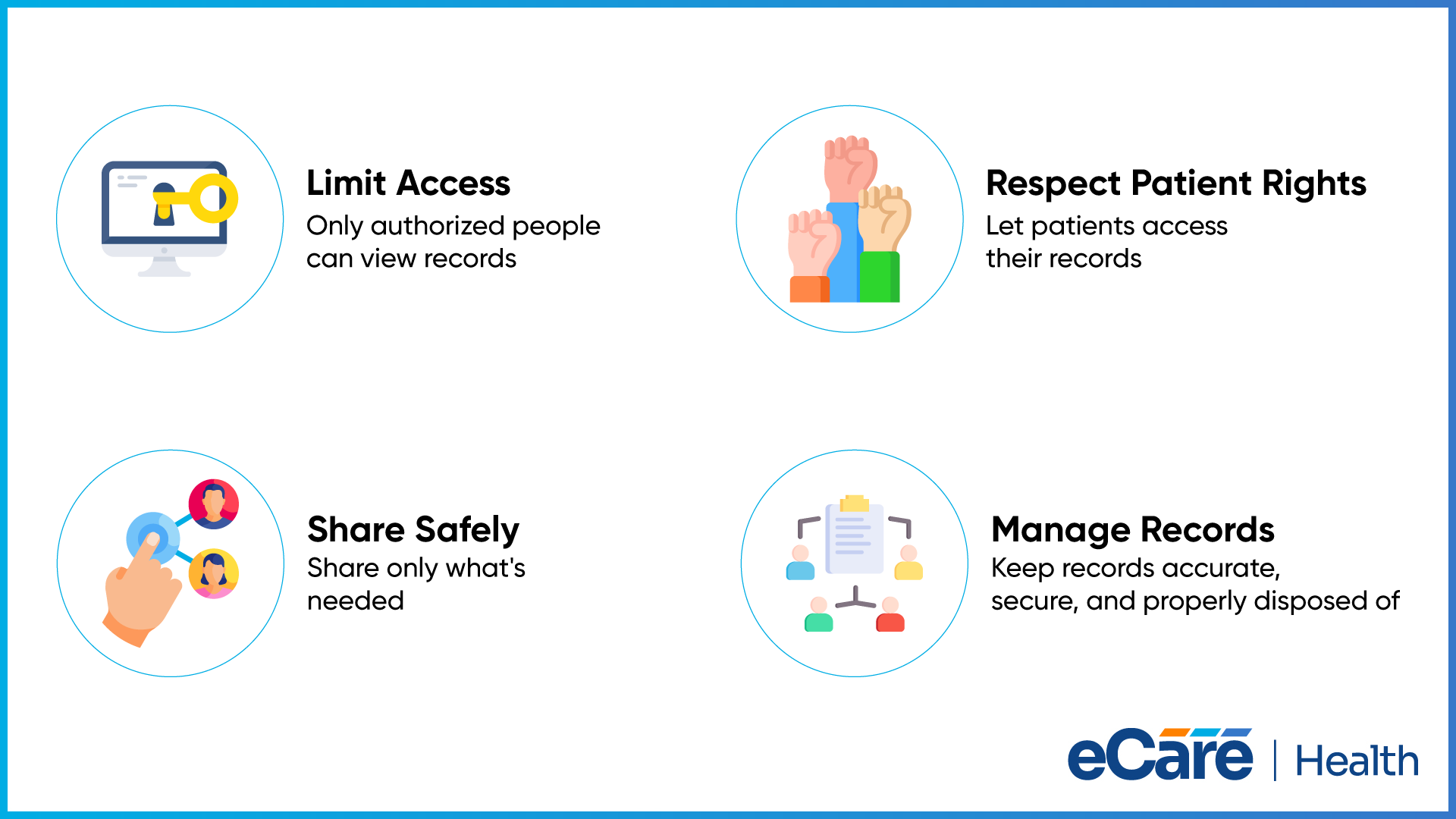
Protect privacy and limit access
Mental health information must be accessed only by authorized individuals who require it for their role or another permitted purpose. With access controls, user permissions, and secure systems, it becomes easy to prevent sensitive information from falling into the wrong hands.
Use and disclose information appropriately
Furthermore, you should also understand when PHI can be used or disclosed without additional authorization and when your patient authorization may be needed. When information is shared, only the appropriate amount of information should be disclosed for the intended purpose.
Respect patient rights
Patients generally have rights to access their health records and request copies or corrections when appropriate. Providers should have clear processes for responding to these requests while continuing to protect the information from unauthorized access.
Maintain and handle records properly
Accurate documentation is essential for both patient care and compliance. Records should be securely stored, updated when necessary, retained according to applicable requirements, and disposed of safely when they are no longer needed.
Following all these practices helps you meet HIPAA requirements for mental health records and create a more consistent approach to privacy and record security.
Psychotherapy Notes vs. Other Mental Health Records
It is a fact that not every note written during a mental health session can receive the same protection level under HIPAA. This distinction is important, as psychotherapy notes HIPAA rules can be more restrictive than the rules that apply to other information in your patient’s medical record.
What Counts as Psychotherapy Notes?
Under HIPAA, psychotherapy notes are notes recorded by a mental health professional that document or analyze the contents of a private counseling session. They are kept separate from the patient’s medical record and are intended to capture the therapist’s personal observations or thoughts about the session.
However, not every mental health note is a psychotherapy note. Progress notes, treatment plans, diagnoses, medication information, and other information needed to manage a patient’s care are generally part of the medical record and are handled differently.
How Psychotherapy Notes Are Treated Differently
| Psychotherapy Notes | Other Mental Health Records |
|---|---|
| Kept separately from the medical record | May be included in the designated medical record |
| Contain the therapist’s private notes or analysis | Contain information used to support diagnosis and treatment |
| Receive additional privacy protections under HIPAA | Subject to the general HIPAA rules for PHI |
| Usually require specific patient authorization for disclosure | May be used or disclosed without separate authorization in certain permitted circumstances |
While handling access requests or sharing information with others, this distinction matters the most. A provider may be able to use or disclose information from a patient’s medical record for certain permitted purposes, while psychotherapy notes generally require a separate authorization before disclosure.
Knowing which type of documentation a note falls into helps providers avoid treating every mental health record the same way. It also makes it easier to apply the right privacy and access controls when managing sensitive information.
Who Can Access and Receive Mental Health Records?
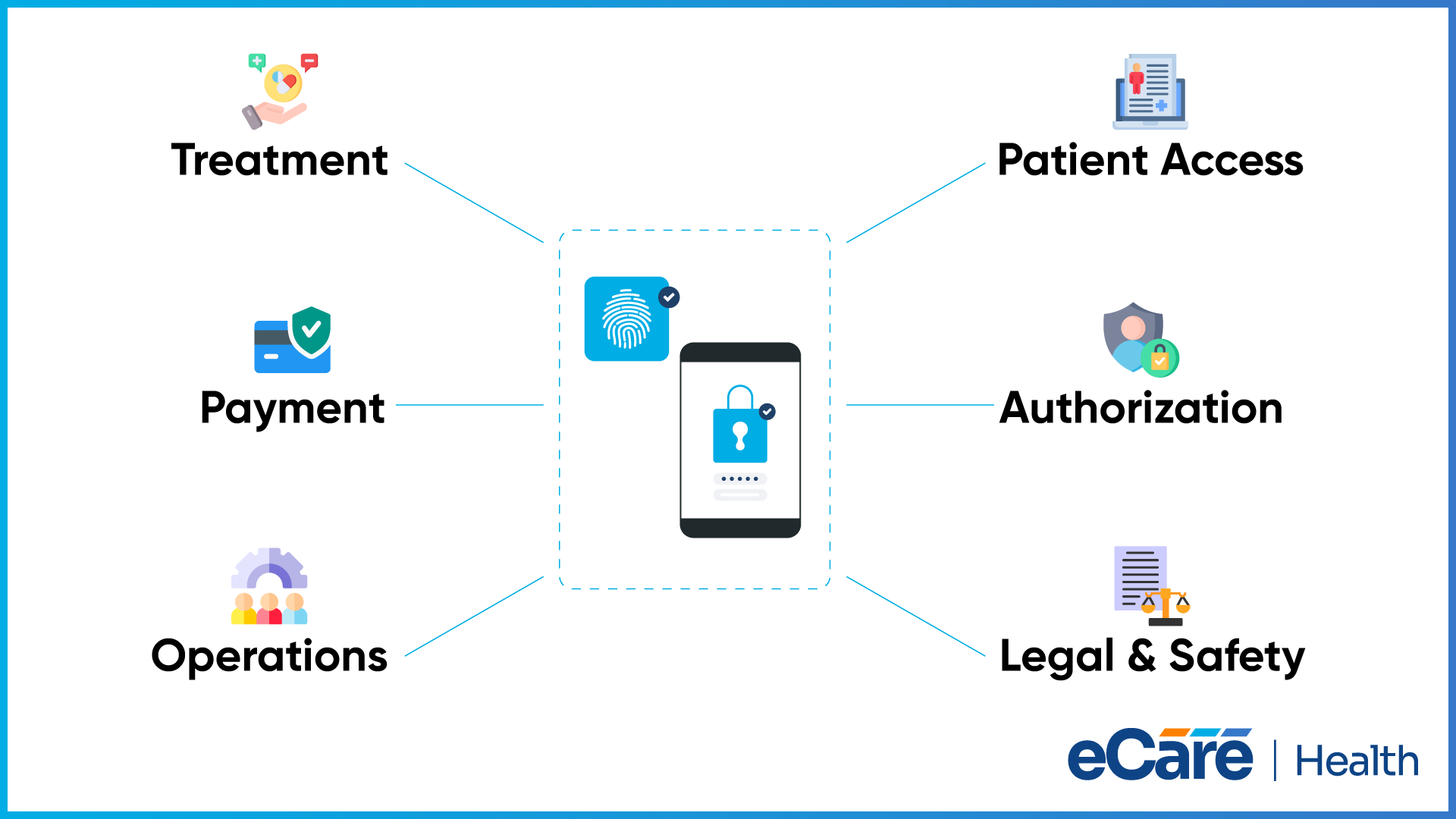
Mental health records should never be treated as an open book. Even though HIPAA allows access and disclosure in specific situations, the right person, purpose, and circumstances matter the most.
Who May Access Mental Health Records?
In general, mental health information may be accessed or shared for:
- Treatment: Information can be shared with other providers involved in a patient’s care when it is needed to support treatment.
- Payment: Relevant information may be disclosed to health plans or other parties involved in obtaining payment for healthcare services.
- Healthcare operations: Providers may use or share PHI for activities such as quality assessment, care coordination, or other permitted healthcare operations.
Furthermore, patients also have rights to access their own health records in most circumstances. Alongside this, access must not go beyond what is permitted or necessary for the situation.
When Can Mental Health Information Be Disclosed?
What requires more careful consideration is sharing information with family members, caregivers, or other people. Based on the circumstances, when your patient agrees or does not object, you can share relevant information with someone involved in your patient’s care. On the other hand, if a disclosure does not fall under a permitted HIPAA purpose, patient authorization may be required.
There can also be situations where HIPAA permits disclosure because of a legal requirement or a serious safety concern. These exceptions are limited and should not be treated as a blanket permission to share information.
The key here is to avoid a one-size-fits-all approach. Before releasing mental health information, you must consider who is requesting it, why it is required, what information is appropriate to share, and whether authorization is needed. This careful approach helps to protect your patient’s privacy and allow necessary information to reach the right people.
HIPAA Exceptions and Special Considerations for Mental Health Records
Even though HIPAA protects mental health information, it doesn’t mean that information can never be shared without your patient’s authorization. There are specific situations where disclosure may be permitted or required, and understanding these exceptions can help providers avoid both over-sharing and unnecessary delays in care.
Serious or imminent threats
In certain circumstances, providers may disclose relevant information when they have a good-faith belief that the disclosure is necessary to prevent or lessen a serious and imminent threat to the health or safety of a person or the public. The disclosure should be limited to those who can help address the threat.
Other legally permitted disclosures
HIPAA may allow disclosures without authorization for specific purposes, such as when required by law or in certain public health, judicial, or law enforcement situations. The requirements can vary depending on the circumstances, so providers should not assume that every request from an outside party permits access.
State privacy laws
HIPAA is not always the final word. State laws may provide additional protections for mental health information, impose stricter confidentiality requirements, or set different rules for certain disclosures. When state and federal requirements overlap, providers need to understand which rules apply to their situation.
These HIPAA mental health exceptions are important, but they should be handled carefully. The fact that an exception exists does not mean providers can share an entire patient record. The disclosure should still follow the applicable legal requirements and be limited to appropriate information.
That is why mental health privacy requires more than knowing when disclosure is allowed. Providers also need to understand the other laws that may apply to their patients and practice, rather than treating HIPAA as the only rulebook.
How to Protect Mental Health Records Under HIPAA
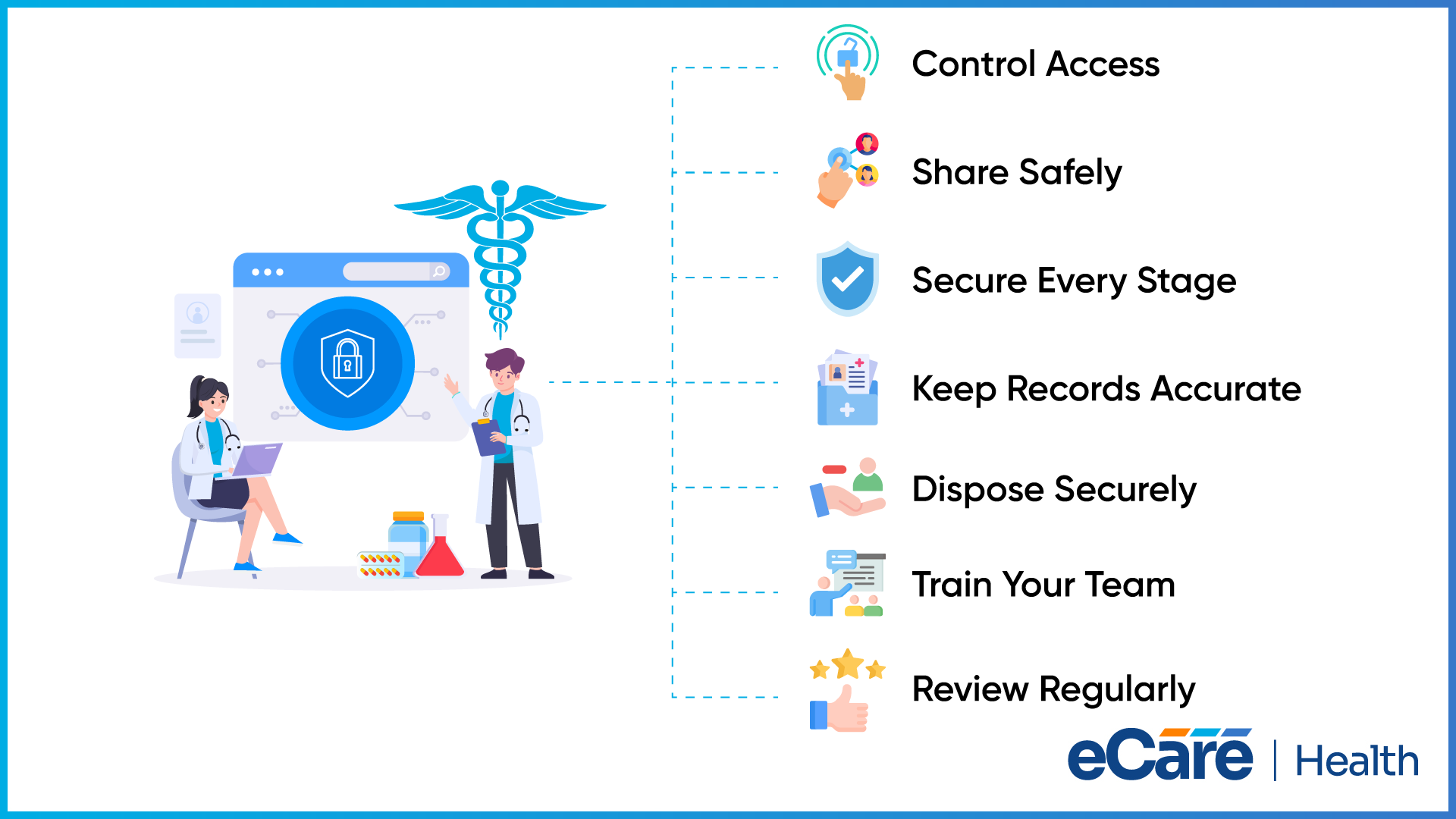
Having clear procedures for how information is accessed, shared, and disclosed is the first step to protect mental health records under HIPAA. Before you release any records, always look for who is requesting the information, why it is required, and whether patient authorization is needed. The same care must continue when information moves between providers, organizations, or other authorized parties.
Along with this, security also matters across the record’s lifecycle. Mental health information must be protected while it is being stored, transferred, shared, and eventually disposed of. Equally important is to keep documentation accurate, as incomplete or incorrect records can create problems not only for patient care but also for compliance. Furthermore, you should also follow applicable retention requirements and have a clear process for securely disposing of records when they are no longer needed.
The people handling all these records are as important as policies themselves. With regular staff training, it becomes easy for everyone to understand their responsibilities around privacy as well as disclosure. It is also worth reviewing access and disclosure practices periodically to catch gaps before they turn into bigger problems.
How a Mental Health EHR Supports HIPAA-Compliant Record Management
Managing sensitive mental health records becomes easier when the right technology supports the work behind the scenes. A HIPAA-compliant mental health EHR can help providers organize documentation while building privacy and accountability into everyday record management.
A well-designed EHR can give authorized users access to the information they need while limiting unnecessary access. Role-based permissions can help ensure that staff see only the records or functions appropriate to their responsibilities. Keeping documentation organized in one place can also make it easier to locate the right information without creating unnecessary copies or scattered records.
Activity tracking adds another layer of accountability. By keeping a record of actions taken within the system, an EHR can help practices understand who accessed or changed information and when. This can make it easier to review unusual activity and identify potential gaps in record handling.
Still, technology is only one piece of the puzzle. An EHR cannot replace clear privacy policies, proper authorization procedures, staff training, or regular compliance reviews. Providers still need to make sound decisions about when information can be accessed or disclosed.
When technology and good privacy practices work hand in hand, a HIPAA-compliant mental health EHR can support safer documentation without making secure record management harder than it needs to be.
Conclusion
Mental health records deserve careful handling because they hold some of the most personal information a patient shares. Protecting them means getting the basics right, like accurate documentation, appropriate access, careful disclosure, and extra attention to psychotherapy notes.
HIPAA provides the framework, but strong privacy practices and the right technology make those requirements easier to follow every day. A mental health EHR can help providers keep records organized, support appropriate access, and strengthen accountability without adding unnecessary complexity.
For practices looking to bring secure documentation and better workflows together, a behavioral health EHR can provide the foundation needed to protect sensitive information while keeping patient care at the center.
Frequently Asked Questions (FAQs)
1. Does HIPAA apply to mental health records?
Yes. HIPAA applies to mental health records when they contain protected health information (PHI) held by a HIPAA-covered entity or business associate. This means providers must follow HIPAA rules for protecting, using, accessing, and disclosing the information. However, not every type of mental health information is treated exactly the same way. For example, psychotherapy notes have additional protections and may require a specific patient authorization before disclosure.
2. Are mental health records protected under HIPAA?
Yes. Mental health records are generally protected under HIPAA when they qualify as PHI. This can include diagnoses, treatment plans, progress notes, medications, assessments, and other information related to a patient’s mental healthcare. Providers must take appropriate steps to protect these records from unauthorized access, use, or disclosure. They also need procedures for handling patient access requests and sharing information for permitted purposes such as treatment, payment, and healthcare operations.
3. Are psychotherapy notes treated differently under HIPAA?
Yes. HIPAA provides additional protections for psychotherapy notes because they are different from information maintained as part of a patient’s medical record. These notes generally contain a therapist’s notes about the contents of a private counseling session and are kept separately from the medical record. In many circumstances, providers need the patient’s specific written authorization before disclosing psychotherapy notes. The rules for accessing or sharing them therefore differ from those for ordinary clinical documentation.
4. Can a patient access their mental health records?
Generally, yes. Under HIPAA, patients have a right to access and obtain copies of much of the protected health information maintained in their designated record set, including many mental health records. However, this right has certain limitations. Psychotherapy notes, for example, are generally excluded from the HIPAA right of access. Providers should also follow the required process and timelines when responding to a patient’s request while protecting the information from unauthorized disclosure.
5. When can mental health information be disclosed without authorization?
HIPAA permits certain disclosures of mental health information without obtaining separate patient authorization. Common examples include disclosures for treatment, payment, and healthcare operations, when the applicable HIPAA requirements are met. Other permitted situations may include disclosures required by law or certain disclosures related to serious and imminent threats to health or safety. Providers should evaluate the purpose and circumstances before sharing information and avoid disclosing more information than the situation permits.
6. What are the HIPAA exceptions for mental health records?
HIPAA mental health exceptions allow certain information to be disclosed without patient authorization in specific circumstances. These may include disclosures required by law, certain public health or legal proceedings, and situations where disclosure is permitted to prevent or lessen a serious and imminent threat to a person or the public. These exceptions are not a blanket permission to release an entire record. Providers should determine whether the exception applies and limit the disclosure appropriately.
7. How should providers protect mental health records?
Providers should protect mental health records throughout their entire lifecycle, from documentation and storage to access, sharing, retention, and disposal. Clear authorization and disclosure procedures should be in place, and staff should understand when information can be shared and with whom. Regular training and reviews can also help identify gaps in privacy practices. Using a secure Mental Health EHR can further support organized documentation, appropriate access, and accountability, but technology should complement, not replace, sound privacy policies and staff practices.
8. What is the difference between psychotherapy notes and mental health records?
Psychotherapy notes are a specific category of notes maintained separately from the patient’s medical record and generally contain a mental health professional’s notes about the contents of a private counseling session. Mental health records are broader and can include diagnoses, assessments, treatment plans, progress notes, medications, and other information used to provide care. The distinction matters because psychotherapy notes receive additional HIPAA protections and are generally subject to different access and disclosure rules.
9. Does HIPAA protect all mental health information?
No. HIPAA does not automatically protect every piece of information related to mental health. It generally applies when the information qualifies as PHI and is created, received, maintained, or transmitted by a covered entity or business associate. Certain information may also be subject to additional federal or state privacy laws. Providers therefore need to consider both HIPAA and any other applicable requirements when determining how mental health information should be accessed, used, or disclosed.