HIPAA-Compliant Mental Health EHR: What to Look For in 2026 to Protect Patient Data and Stay Compliant
USD 10.22 million. That’s the average cost of a data breach in the US in 2025.
For mental health practices, the damage from a breach can go far beyond the financial impact. A compromised record could put therapy notes, diagnoses, medications, treatment plans, or deeply personal details at risk that patients shared in confidence.
This makes it necessary to protect mental health data in 2026. As more places where sensitive information must be protected, practices are managing more electronic records, digital communication, patient portals, telehealth, and connected systems.
Along with this, mental health providers also need to balance strict privacy requirements with the need for clinicians and staff to access the right information at the right time. And this is exactly where selecting an EHR becomes more than just a technology decision.
Even though a platform may advertise itself as “HIPAA compliant,” this label alone is not enough to tell a practice how well it can protect patient information, control access, support secure communication, or fit behavioral health workflows.
HIPAA’s security rules require appropriate administrative, physical, and technical safeguards for electronic protected health information, which makes security a key part of the EHR evaluation process.
A well-designed behavioral health EHR must bring strong security, privacy controls, efficient documentation, and workflows together.
So, what exactly will you look for before choosing one?
Well, this guide will cover the key considerations for selecting a HIPAA-compliant mental health EHR in 2026, from HIPAA compliance and data security to privacy, clinical workflows, specialized behavioral health capabilities, and vendor evaluation.
What Is a HIPAA-Compliant Mental Health EHR?
Picture a mental health EHR as the digital workspace behind a behavioral health practice. It can bring patient records, therapy documentation, treatment plans, diagnoses, medications, scheduling, and other clinical information into just one place.
With HIPAA compliance, the focus expands from managing records to protecting them through appropriate safeguards for electronic protected health information (ePHI).
General EHR vs. Mental Health EHR
The difference is mainly in the workflow.
A general EHR is built for supporting a wide range of medical specialties. On the other hand, a mental health EHR is designed around behavioral health requirements, including therapy documentation, assessments, treatment planning, and handling sensitive clinical information.
Simply put, the first helps in managing healthcare records, while the second is built around how behavioral health care is actually delivered.
However, you should never overlook that a HIPAA-compliant EHR does not make the entire practice HIPAA-compliant. The EHR vendor is only responsible for protecting the information it handles, while your practice is responsible for using the systems securely. When an EHR vendor handles PHI on behalf of a practice, the two should also have a Business Associate Agreement (BAA) in place.
Because of this, when you evaluate HIPAA mental health software, you should not stop at the compliance label. You must look for a platform that combines HIPAA safeguards with behavioral-health-specific functionality, as protecting patient data and supporting quality care need to go hand in hand.
Why HIPAA Compliance Matters for Mental Health Practices?
It is a fact that mental health care runs on trust, and the reason behind this is that mental health records contain deeply personal information. This may include everything from diagnoses and medications to therapy notes and family concerns.
Patients trust providers to keep all this information private. That’s why protecting it goes beyond following HIPAA rules; it also means protecting patient trust. The risk never ends with a major data breach.
Unauthorized access, accidental disclosure, weak permissions, or sending information to the wrong person can put sensitive information at risk while damaging trust. With HIPAA’s privacy and security rules, it becomes easy to limit inappropriate uses and disclosures while requiring safeguards for protecting patients’ health information.
Along with this, there is also a patient side to privacy. Under HIPAA, patients usually have the right to access their health records, request corrections, and understand how their information may be used or disclosed. Psychotherapy notes are treated differently and receive special protections under the privacy rule.
For mental health practice, HIPAA compliance is not simply another box to check. It helps to create a safer environment where sensitive information is protected, access is handled appropriately, and patients can feel confident that what they share is in the right hands.
Essential HIPAA-Compliant Features of a Mental Health EHR
A strong HIPAA-compliant mental health EHR must make security part of the everyday workflow, not just something that gets in the way of it. Providers and staff must be able to document care, communicate with patients, manage appointments, and access records while the system works to keep PHI protected.
Role-Based Access Controls and User Permissions
Not everyone in a practice needs access to every patient record. Role-based access allows practices to give providers, administrators, and billing staff the permission they require for their specific responsibilities.
If roles change, those permissions can be updated as well, helping limit unnecessary exposure to sensitive information.
Encryption and Multi-Factor Authentication
Encryption can protect your patient information not only when it is stored, but also when it is being transmitted between systems or devices. Furthermore, MFA adds another layer of protection by requiring users to verify their identity beyond just entering a password. This is especially useful when providers and staff access records remotely.
Audit Logs and Activity Monitoring
Moving forward, your practice also needs visibility into what happens inside the EHR. With audits, it becomes easy to know who accessed or changed a record and when, which further helps to create accountability and make it easier to investigate unusual activity.
Secure Backup and Disaster Recovery
Simply put, security means being prepared when something goes wrong. Regular backups and disaster-recovery processes allow you to restore patient records after system failures, data loss, or other disruptions. This further helps to keep critical information available when providers need it.
Secure Clinical Documentation and Treatment Planning
For behavioral health teams, security should fit naturally into clinical work. The EHR must provide a secure way for managing assessments, treatment plans, progress notes, and other clinical documentation while keeping records organized and accessible to authorized users.
Secure Communication and Everyday Care Workflows
Along with all this, patient communication, telehealth, e-prescribing, and scheduling also require privacy safeguards. With a secure patient portal, patients and providers can gain a safer way to exchange appropriate messages and documents.
On the other hand, secure telehealth and e-prescribing help protect information during remote care and medication workflows. Even appointment reminders should also be designed carefully so that they do not reveal more patient information than necessary.
Protecting Mental Health Notes and Sensitive Clinical Records
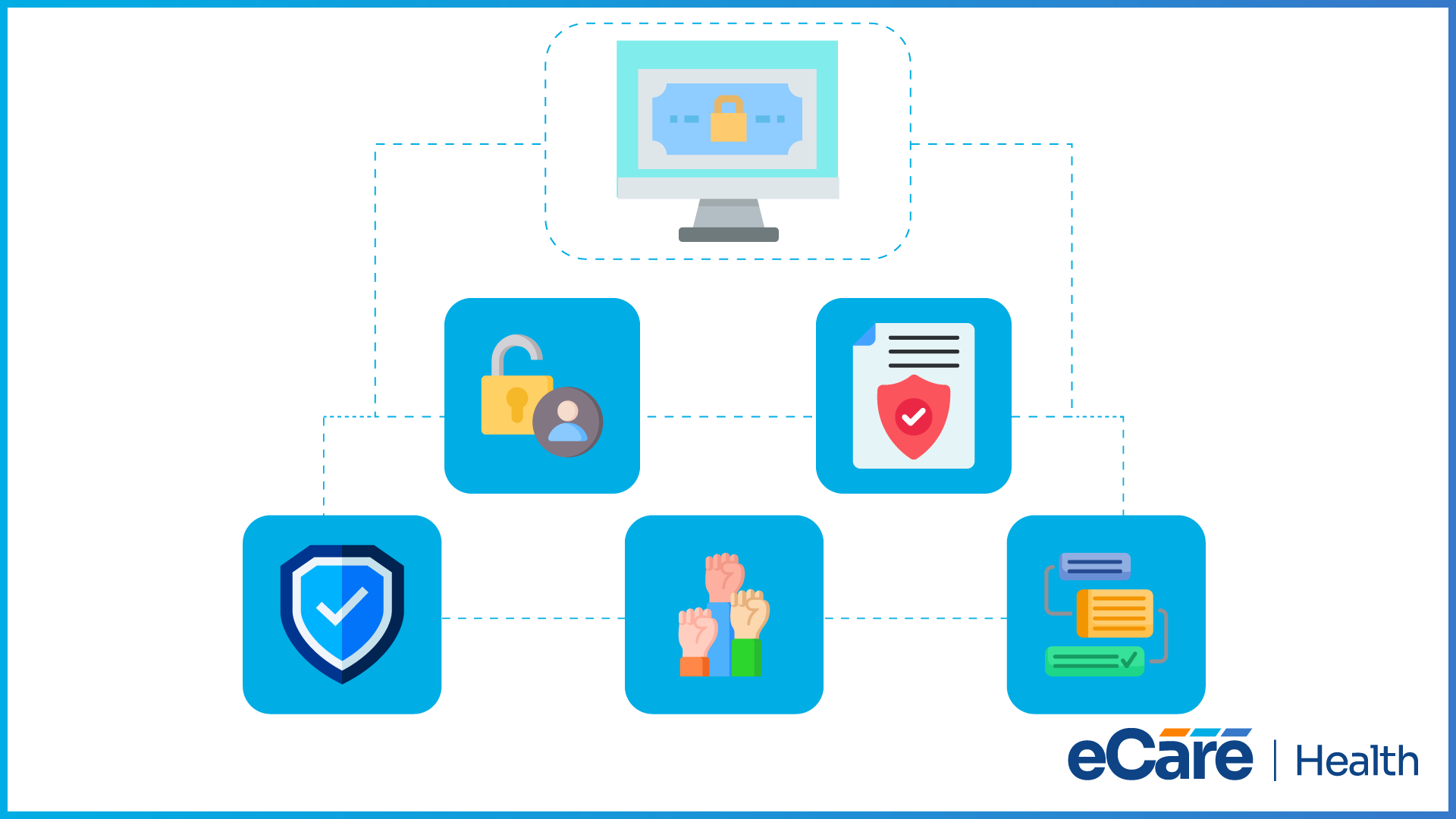
Not every mental health note carries the same privacy protection level. Even though a patient’s progress notes, treatment plans, and other clinical records are sensitive, psychotherapy notes receive special protection under HIPAA when they are kept separately from the rest of the medical record.
This difference matters the most when setting up access. Without opening the door to every sensitive note in a patient’s chart, providers must be able to give staff access to the information they need. A well-designed EHR can support this through appropriate permissions and controlled access to sensitive documentation.
Patient access also needs careful handling. Under HIPAA, patients generally have a right to access health information maintained in their designated record set, while separately maintained psychotherapy notes are treated differently. Certain disclosures may also require patient authorization.
The right HIPAA-compliant mental health EHR should make these distinctions easier to manage. Secure documentation, controlled access, and organized records can help providers protect sensitive information without making everyday clinical work harder.
How a Mental Health EHR Protects Behavioral Health Data
Behavioral health data can pass through many stages during a patient's care—from the moment a provider enters a note to the time information is shared with another authorized professional. Each step needs the right level of protection.
A well-designed HIPAA-compliant behavioral health EHR can help keep information secure by controlling who can view it, protecting data while it is stored or shared, and keeping track of important activity within the system. This gives practices greater control over sensitive records without making everyday clinical work unnecessarily difficult.
Information sharing is another important piece. Providers may need to send records, coordinate care, or communicate with patients, but access should be limited to appropriate users and legitimate purposes. Secure portals, controlled permissions, and monitored activity can help reduce the risk of information reaching the wrong person.
The goal is to protect data from creation to access, sharing, and storage. When these safeguards work together, practices can better protect patient privacy while supporting the security requirements that come with handling electronic protected health information.
Specialized EHR Capabilities for Behavioral Health Organizations
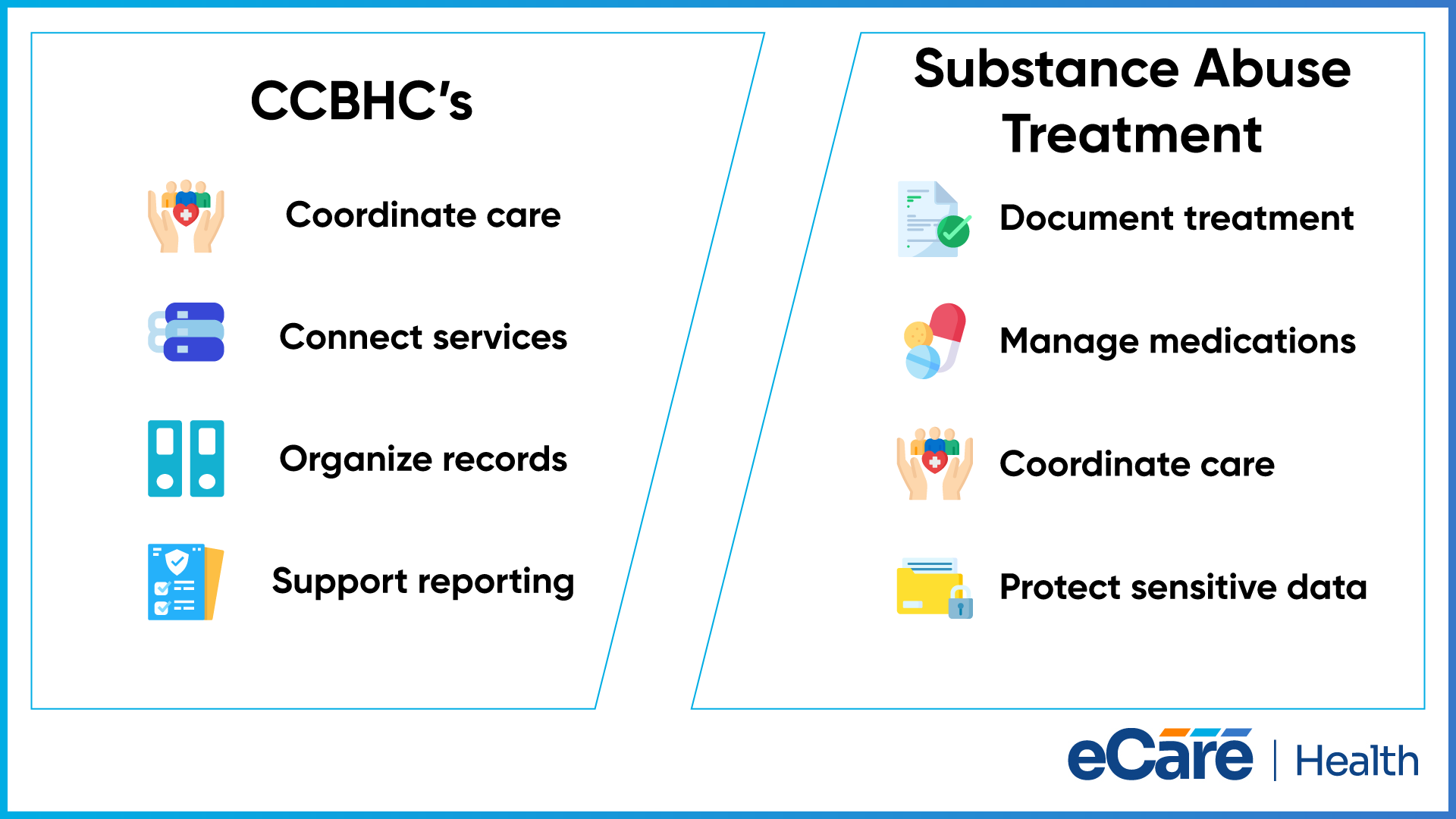
Behavioral health is a broad field, and the workflow of a community behavioral health organization may look very different from that of a substance-use treatment program. That means the right EHR should be flexible enough to support the specific services, documentation, and coordination needs of the organization.
CCBHC EHR Capabilities
For Certified Community Behavioral Health Clinics (CCBHCs), an EHR needs to support more than clinical documentation. Care often involves multiple providers, services, and community resources, making care coordination and information sharing particularly important.
A suitable system should support integrated behavioral health services, organized documentation, reporting, and interoperability with other healthcare systems. These capabilities can help CCBHCs keep patient information connected across services while supporting their day-to-day operational and reporting needs.
Substance Abuse Treatment EHR Capabilities
Substance-use treatment brings another set of requirements. Providers may need to manage addiction-treatment documentation, treatment histories, medication-related workflows, and ongoing care coordination within the same system.
Privacy also deserves extra attention. Substance-use treatment information can be highly sensitive, so practices should consider whether their EHR provides the appropriate controls for managing and sharing this information. A HIPAA-compliant mental health EHR software for therapists and psychologists should therefore be evaluated not only for general security, but also for how well it supports the specific type of behavioral health care being delivered.
What to Verify in HIPAA-Compliant Mental Health EHR Software
A vendor's “HIPAA-compliant” claim is a starting point, not the finish line. Before choosing HIPAA-compliant mental health software, practices should look behind the label and understand how the platform actually protects patient information.
Start by asking for the vendor's security and compliance documentation. Find out where patient data is stored, how it is protected when shared, how backups are handled, and who can access it. It is also worth asking how often security controls are reviewed and what happens if a security incident occurs.
Don't Overlook the Business Associate Agreement
If an EHR vendor handles protected health information on behalf of a healthcare practice, the relationship generally requires a Business Associate Agreement (BAA). The BAA establishes what the vendor can do with PHI and sets out its responsibilities for protecting that information.
Before signing, providers should read the agreement rather than treating it as just another document in the onboarding process. Check what services and data it covers, how PHI may be used or disclosed, the vendor's responsibilities if a breach occurs, and what happens to the information when the relationship ends.
Common Mistakes to Avoid When Choosing Mental Health EHR Software
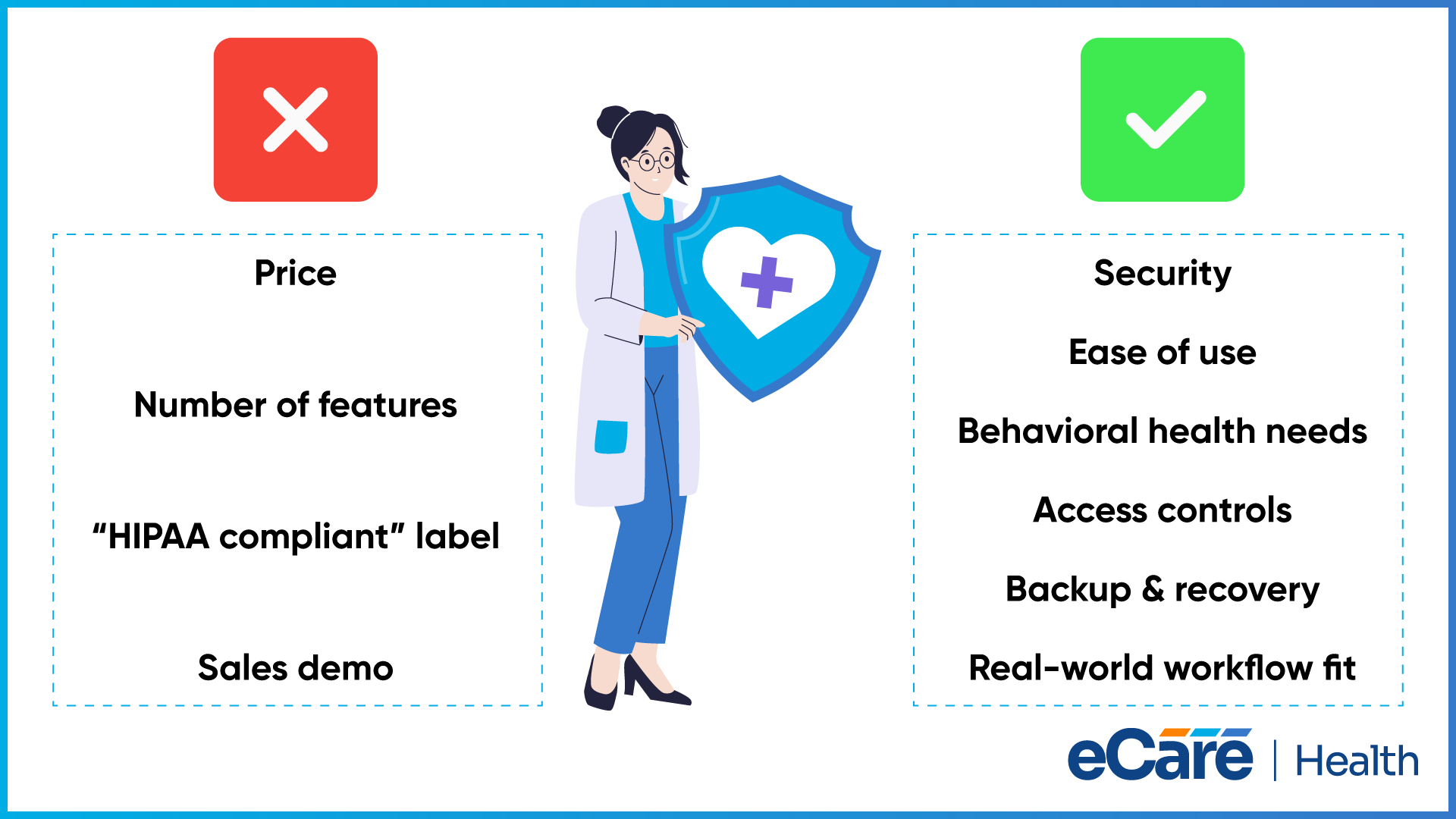
Choosing an EHR is a long-term decision, but practices can easily focus on the wrong things during the buying process. A low price or a long feature list may look attractive at first, but neither tells you whether the system is secure, practical, or suited to your workflow.
Here are some common mistakes worth avoiding:
- Choosing based only on price: A cheaper EHR may save money upfront but lack important security, support, or behavioral health capabilities.
- Counting features instead of value: More features do not always mean a better system. Focus on whether the tools your team actually needs are easy to use.
- Treating “HIPAA compliant” as a complete solution: The vendor provides safeguards, but the practice still has its own HIPAA responsibilities.
- Ignoring user permissions: Make sure the EHR lets you control who can access different types of patient information.
- Overlooking backup and recovery: Ask how patient data is backed up and how quickly it can be restored if something goes wrong.
- Forgetting secure communication: Patient portals, messaging, telehealth, and document sharing should all be considered when evaluating data protection.
- Asking only surface-level security questions: Don't stop at “Is your platform HIPAA compliant?” Ask how data is protected, monitored, backed up, and handled during a security incident.
- Skipping a real workflow test: A system can look impressive during a sales demo but feel completely different in daily use. Let the people who will actually use it test documentation, scheduling, communication, and other key workflows before making the decision.
Ultimately, the right HIPAA-compliant mental health EHR is not necessarily the cheapest or the one with the longest feature list. It is the one that protects patient information while making everyday work easier for the people who use it.
2026 Mental Health EHR Evaluation Checklist
Before choosing a HIPAA-compliant mental health EHR, use this checklist to make sure the platform covers both security and everyday behavioral health needs:
Security & Privacy
- Encryption for data at rest and in transit
- Role-based access controls and user permissions
- Multi-factor authentication (MFA)
- Audit logs and activity monitoring
- Secure messaging
- Patient portal with appropriate access controls
Clinical & Behavioral Health Workflows
- Secure clinical documentation
- Treatment planning
- Telehealth
- Secure scheduling and privacy-conscious reminders
- Behavioral health workflow support
Data Protection & Vendor Readiness
- Backup and disaster recovery
- Business Associate Agreement (BAA)
- Security and compliance documentation
- Clear incident-response process
- Regular security updates
A checklist like this can help practices move beyond a vendor's marketing claims and compare what each platform actually offers. The goal isn't simply to find an EHR with the most security features; it is to find one that protects sensitive patient information while supporting the way your behavioral health team works every day.
How to Choose the Right HIPAA-Compliant Mental Health EHR
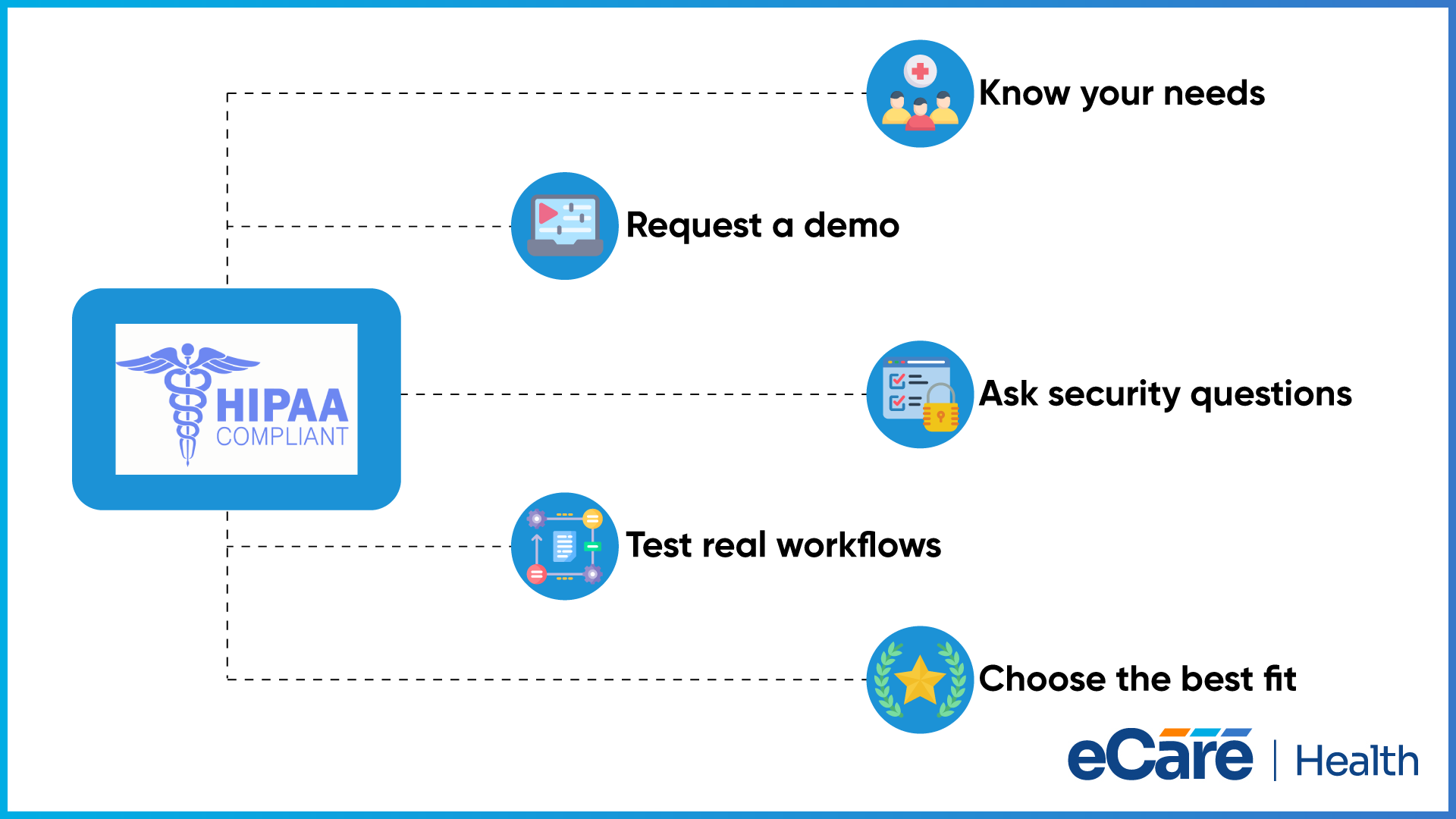
Finding the right EHR becomes easier when the decision is based on your practice's needs rather than a long list of vendor features. Instead of asking, “Which EHR has the most?”, focus on a better question: “Which system fits the way our practice actually works?”
Define Your Practice's Requirements
Start with the basics. Consider your specialty, number of providers and staff, patient volume, clinical workflows, and documentation needs. Then look at the systems your EHR will need to connect with, such as billing, labs, e-prescribing, or telehealth platforms.
Security requirements should be part of this list from day one. Identify the access controls, authentication, data protection, backup, and compliance capabilities your practice expects before you start comparing vendors.
Request a Demo and Ask Targeted Questions
A demo should be more than a sales presentation. Ask the vendor to show you how the system works.
Test the tasks your team performs every day:
- Create and update clinical documentation.
- Change user permissions.
- Send a secure message.
- Schedule an appointment and review reminder settings.
- Start a telehealth session.
- Access information from different user roles.
At the same time, ask direct questions about security. How is patient data protected? How are security incidents handled? How often are updates made? Is a BAA available?
The answers and how clearly the vendor provides them can tell you a lot.
Test the Workflow Before Making a Decision
A polished demo does not always reflect everyday use. Give the people who will actually use the EHR a chance to test it.
Can clinicians document without unnecessary clicks? Can staff complete their tasks without jumping between screens? Can patients easily use the portal? Does security feel built into the workflow rather than getting in the way?
The right HIPAA-compliant mental health EHR software for therapists and psychologists should strike that balance: strong protection behind the scenes, with a workflow that feels straightforward in practice.
Conclusion
Choosing an EHR for a behavioral health practice is about more than finding a platform with a “HIPAA-compliant” label. Security, privacy, usability, behavioral-health functionality, and vendor reliability all need to work together.
The right system should help protect sensitive patient information through strong access controls, secure communication, data protection, and reliable recovery measures. At the same time, it should make everyday work easier, from clinical documentation and treatment planning to scheduling, telehealth, and patient communication.
Before making a decision, look beyond the feature list. Ask the right security questions, review the vendor's responsibilities, test the actual workflow, and make sure the platform fits the way your practice operates.
With the right mental health EHR, practices can build stronger data protection into everyday care without creating unnecessary work for providers and staff. If you're looking for an EHR that brings security, behavioral-health workflows, and usability together, explore eCareHealth to see how it can support your practice.
Frequently Asked Questions (FAQs)
1. What makes a mental health EHR HIPAA compliant?
A mental health EHR is HIPAA compliant when it includes appropriate safeguards to protect electronic protected health information (ePHI). These may include encryption, access controls, authentication, audit logs, secure transmission, and backup and recovery measures. Practices should also review the vendor's security documentation and BAA, when applicable, rather than relying only on a “HIPAA compliant” claim.
2. Is a behavioral health EHR different from a general EHR?
Yes. A general EHR supports broad healthcare workflows, while a behavioral health EHR is designed around mental health and behavioral care. It may include specialized tools for therapy documentation, assessments, treatment planning, progress notes, telehealth, and care coordination. This specialty focus can make the system more practical for therapists, psychologists, psychiatrists, and behavioral health teams.
3. What are the three types of HIPAA safeguards?
HIPAA's Security Rule identifies three types of safeguards: administrative, physical, and technical. Administrative safeguards cover policies, training, and risk management. Physical safeguards protect facilities and devices, while technical safeguards use technology such as access controls, authentication, and audit controls to protect ePHI.
4. What's the difference between the HIPAA Security Rule and Privacy Rule?
The Privacy Rule governs how PHI can be used and disclosed and gives patients certain rights over their health information. The Security Rule focuses specifically on electronic PHI and the safeguards used to protect it. In simple terms, the Privacy Rule addresses how information is handled, while the Security Rule focuses on securing electronic information.
5. What security features should a HIPAA-compliant mental health EHR have?
Important features include encryption, role-based access controls, MFA, audit logs, secure messaging, controlled patient-portal access, backups, and disaster recovery. Providers should also ask about security updates and incident response. Rather than simply counting security features, practices should verify how these safeguards work together to protect patient information.
6. How are psychotherapy notes protected differently under HIPAA?
Psychotherapy notes receive special HIPAA protections when they are maintained separately from the patient's medical record. In many circumstances, written patient authorization is required before these notes can be used or disclosed. They are also generally treated differently from other clinical information when patients request access to their records.
7. What is a Business Associate Agreement and why does it matter?
A Business Associate Agreement (BAA) is a written agreement that establishes how a business associate will handle and protect PHI. When an EHR vendor handles PHI on behalf of a healthcare practice, a BAA is generally required. Practices should review what information the agreement covers, the vendor's responsibilities, breach reporting, and how PHI is handled when the relationship ends.
8. What are the proposed 2026 HIPAA Security Rule changes?
HHS proposed updates to the HIPAA Security Rule to strengthen cybersecurity protections for electronic PHI. The proposal included measures such as stronger authentication, encryption, network security, and more detailed security documentation. Because these were proposed changes, practices should check the latest HHS guidance before treating them as mandatory 2026 requirements.
9. Does a HIPAA-compliant EHR make my practice automatically compliant?
No. An EHR can provide important security safeguards, but the practice still has its own HIPAA responsibilities. These include appropriate policies, workforce training, risk management, access controls, and secure handling of PHI. The way the EHR is configured and used also matters. HIPAA compliance is therefore a shared responsibility between the practice and applicable vendors or business associates.
10. Can a HIPAA-compliant EHR still have security risks?
Yes. HIPAA compliance does not eliminate every security risk. Weak passwords, excessive permissions, phishing, poor configuration, outdated software, or improper information sharing can still create vulnerabilities. Practices should continue reviewing access, security updates, monitoring, backups, and incident-response procedures even after selecting a HIPAA-compliant EHR.
11. How do I evaluate a vendor's HIPAA compliance?
Ask the vendor how it protects, stores, transmits, backs up, and accesses patient information. Review its security documentation, BAA, access controls, encryption, audit logs, backup procedures, and incident-response process. It is also helpful to test the EHR during a demo and ask the vendor to show how security controls work within actual clinical workflows.
12. Does HIPAA apply to mental health records?
Yes. HIPAA generally applies to protected health information handled by covered mental health providers and applicable business associates. However, separately maintained psychotherapy notes receive additional protections under the HIPAA Privacy Rule. Other information, such as diagnoses, treatment plans, medications, and progress notes, is generally covered under the standard HIPAA privacy and security requirements.
13. What should mental health providers look for in an EHR in 2026?
Providers should evaluate security, privacy, behavioral health functionality, usability, and vendor reliability. Key considerations include encryption, access controls, MFA, audit logs, secure communication, telehealth, clinical documentation, treatment planning, backups, disaster recovery, and a BAA when applicable. Most importantly, the EHR should fit the practice's real workflow while protecting sensitive patient information.