Hidden Costs of a Bad EHR: What No Vendor Tells You at Demo Time

An EHR system may look affordable when a vendor presents its pricing, but the actual cost can be different once your practice starts to use it.
You might observe that certain features require extra fees, integrations cost more than expected, or staff needs additional training to manage everyday tasks. All these expenses can turn what seemed like a reasonable investment into a much bigger one.
The hidden costs of EHR go beyond software fees. Slow workflows can take up staff time, technical issues can interrupt daily operations, and ongoing support may come with additional charges. Even when a system meets your initial requirements, these expenses can add up over months or years.
When evaluating HIPAA-compliant EHR software, it is important to understand not only the features offered but also what the vendor includes in the price and what costs extra.
This guide explores the expenses vendors may not make clear during a demo, how these costs affect your budget, and what to check before signing a contract. Understanding the full picture can help your practice avoid unexpected expenses and choose an EHR system that works for both your team and your budget.
What Makes an EHR System Outdated or Problematic?
An EHR system can become problematic when it no longer meets a practice’s daily needs. Missing features, complicated workflows, and technical limitations can force staff to spend more time on routine tasks and rely on additional tools.
Limited Functionality
When an EHR lacks essential features, staff may need separate software or manual processes to complete routine tasks. This can increase software expenses and add extra steps to daily workflows.
Poor Usability
Complicated navigation and lengthy documentation processes can slow down patient visits. Staff may spend more time entering information, searching for records, and learning how to use the system.
Limited Integration Capabilities
If the EHR does not connect with billing, laboratory, or scheduling systems, staff may need to enter the same information multiple times or transfer data manually. This creates inefficiencies and increases the risk of errors.
Inadequate Vendor Support
Slow responses to technical issues can disrupt appointments and administrative work. Practices may also face additional support charges or spend staff time finding temporary solutions to recurring problems.
These limitations can increase the overall cost of an EHR beyond its subscription or licensing fee, making it important to evaluate how well the system supports everyday operations.
What Are the Hidden Costs of an EHR System?
The hidden costs of an EHR system often become clear only after a practice starts using the software. Beyond the initial price, additional fees and everyday workflow challenges can increase the overall expense.
| Hidden cost | How it affects your practice |
|---|---|
| Additional Fees and Paid Features | Integrations, premium modules, additional user accounts, and certain support services may require extra payments. These EGR pricing hidden fees can increase the cost beyond the advertised price. |
| Staff Training and Lost Productivity | Staff need time to learn the system. Complicated workflows and repeated training can take time away from patient care and other daily responsibilities. |
| Maintenance and Technical Support | Software upgrades, maintenance, and certain support services may involve ongoing charges, depending on the vendor’s pricing model and contract. |
| Workflow Inefficiencies | Duplicate data entry, manual tasks, and switching between disconnected applications increase administrative workload and consume staff time. |
| Security and Compliance Gaps | Improving inadequate security controls may require additional spending on system improvements, staff training, or external assessments. |
These expenses contribute to the EHR total cost of ownership, which includes more than the initial software price. Reviewing these costs before signing a contract can help your practice make a more informed decision.
How Do Hidden Fees Affect the Total Cost of EHR Ownership?
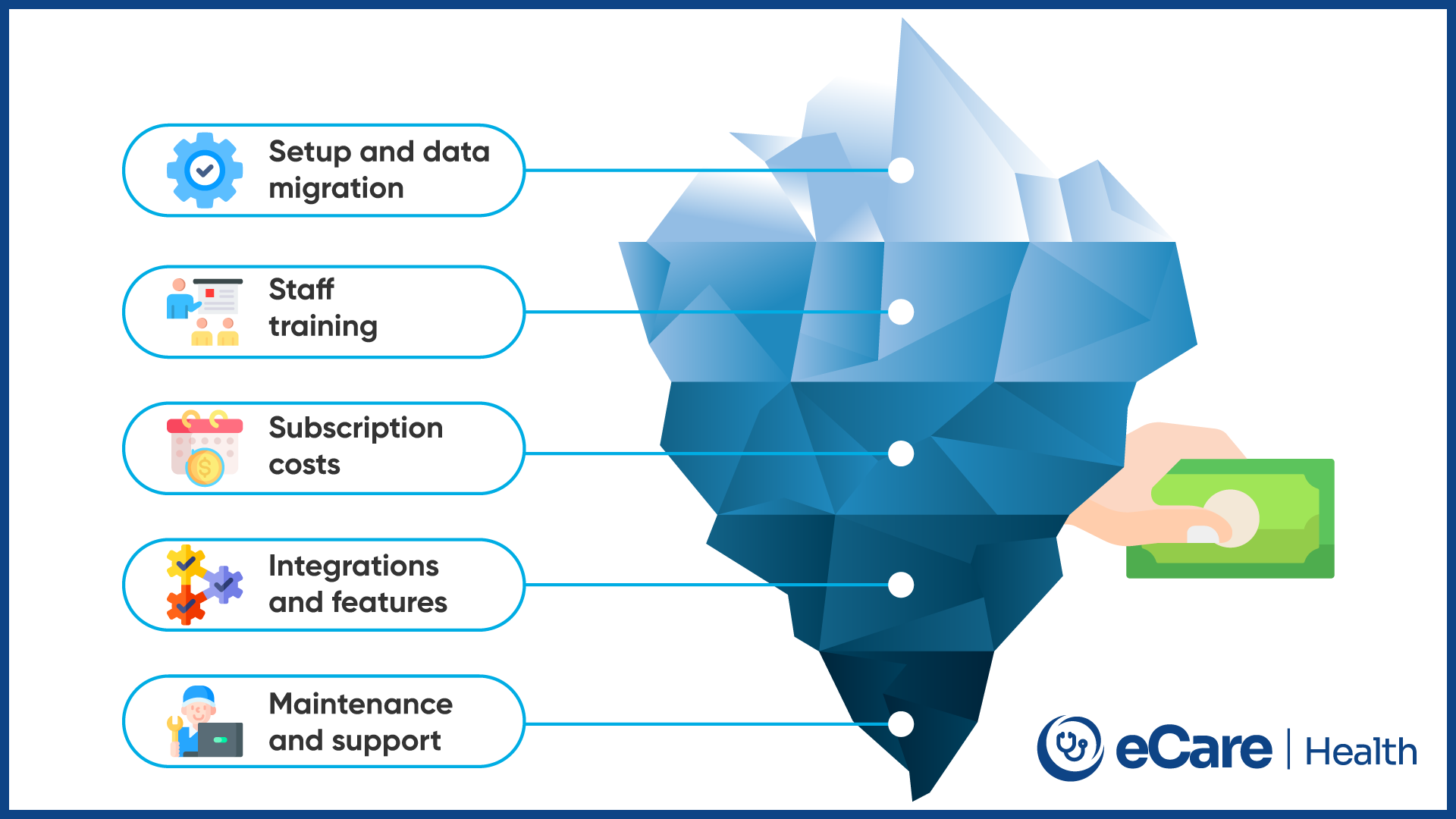
An EHR subscription may look affordable when you first compare vendors. However, the amount your practice pays can increase once setup, training, integrations, and ongoing maintenance are included. Understanding these expenses helps you see the difference between the advertised price and the actual cost of using the system.
Advertised Price vs. Actual Spending
The quoted subscription fee may cover only basic access to the software. Your practice might need to pay extra for additional users, premium features, or technical support. These EHR pricing hidden fees can make a system more expensive than it initially appears.
One-Time vs. Recurring Expenses
EHR costs generally fall into two categories. One-time expenses may include initial setup, data migration, and implementation training. Recurring expenses can include monthly or annual subscriptions, maintenance, support plans, and certain integrations. Separating these costs helps you understand what you will pay upfront and what will continue throughout the contract.
Unexpected Integration and Upgrade Fees
Your practice may need to connect the EHR with billing software, laboratories, pharmacies, or other existing tools. Some integrations may be included, while others require additional payments. Upgrades, extra modules, and expanded support services can also increase spending over time.
How to Calculate the Total Cost of Ownership of an EHR
To estimate the EHR total cost of ownership, add the initial expenses to the recurring costs over your chosen period. For a three-to-five-year estimate, include:
- Initial setup and data migration
- Staff training and implementation
- Subscription fees over the full period
- Paid integrations and additional features
- Ongoing maintenance and technical support
For example, if an EHR costs $500 per month, the subscription alone totals $18,000 over three years. If setup costs $2,000 and training costs $1,000, the total reaches $21,000 before any additional fees.
This is a simple way to understand how to calculate the total cost of ownership of an EHR. Ask vendors for a complete breakdown of charges so you can compare systems using the same time frame and avoid overlooking expenses.
What Are the Warning Signs That Your EHR Is Costing You More?
Your EHR may be costing your practice more than its monthly fee suggests. The signs often appear in everyday work, from unfinished documentation to extra software bills. Watch for these common problems:
- Staff regularly fall behind on documentation: If clinicians spend too much time completing notes or searching for patient information, routine tasks can take longer and create backlogs.
- Employees rely on spreadsheets or paper notes: When staff need separate tools to fill gaps in the EHR, they spend more time entering, updating, and checking information.
- Technical problems keep interrupting work: Frequent downtime, unresolved errors, and slow vendor support can delay appointments and force staff to repeat tasks.
- Software expenses keep increasing: Renewal price hikes, paid add-ons, and extra support charges can push spending beyond the original budget.
- Patient data is difficult to share: If the EHR cannot exchange information smoothly with laboratories, pharmacies, or billing systems, staff may need to transfer records manually.
One issue may not justify replacing your EHR, but several recurring problems deserve attention. Review how often they occur, how much staff time they consume, and what they cost your practice. This gives you a clearer basis for deciding whether to improve your current system or explore alternatives.
Why Practices Are Choosing eCareHealth
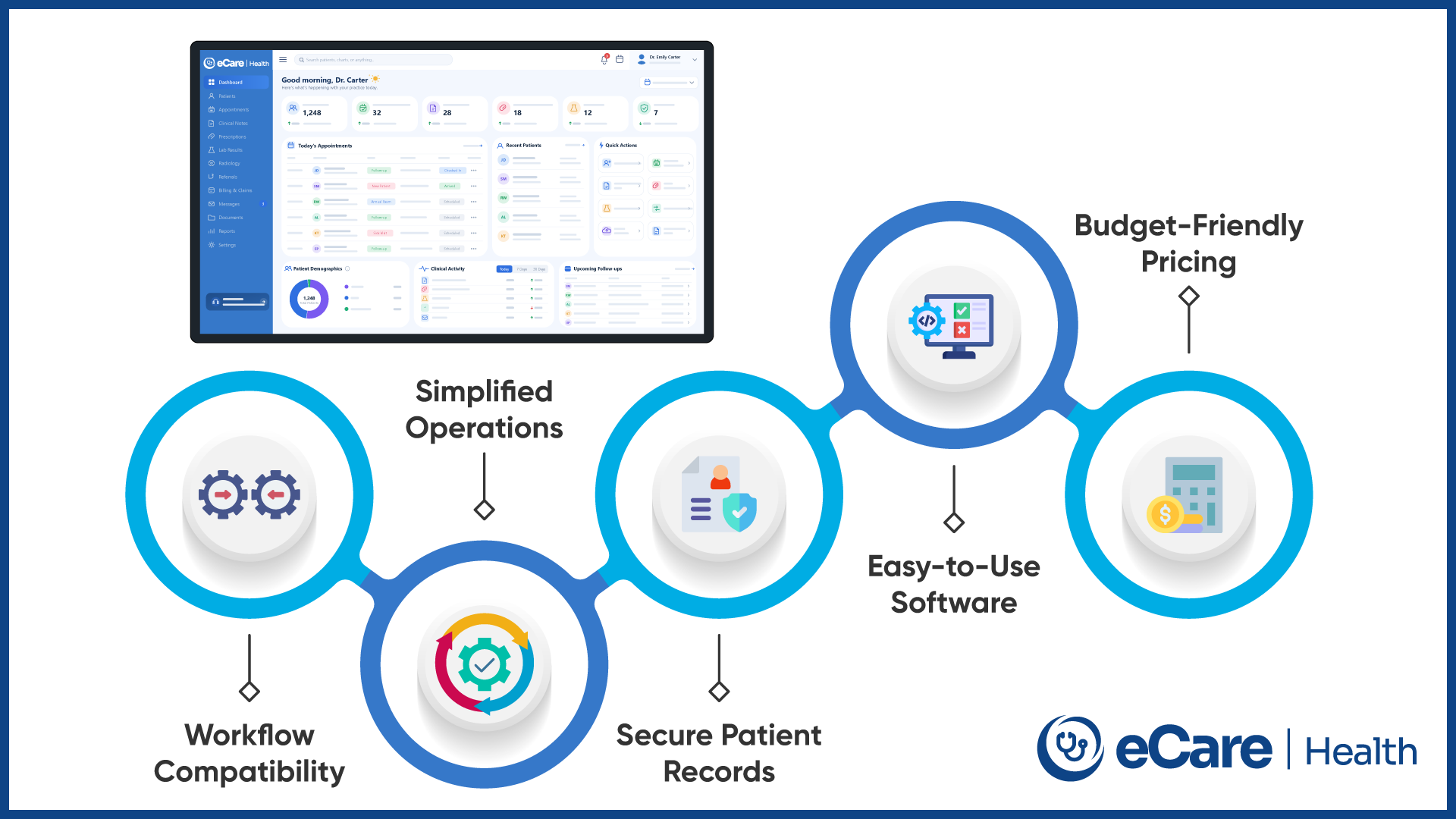
Managing clinical and administrative tasks across different tools can add to a practice's workload and expenses. eCareHealth offers an EHR platform with features such as patient records, clinical documentation, appointment scheduling, billing, and e-prescribing. These tools give practices an option to manage several daily tasks in one system.
The platform also offers an AI scribe to help providers prepare clinical notes. Practices can evaluate whether this feature fits their documentation needs and helps reduce repetitive work.
Security and ongoing costs also matter when evaluating an EHR. eCareHealth lists security measures such as access controls, encryption, and audit logs. Before choosing the platform, practices should review its security documentation, implementation requirements, support options, and pricing to understand the full cost.
Ultimately, the right EHR should fit your practice's workflows and budget without adding unnecessary complexity or expenses.
Conclusion: Understanding the Full Cost of an EHR System
The cost of an EHR goes beyond its subscription fee. Additional charges, complicated workflows, technical issues, and staff time can increase expenses over time. Evaluating the EHR total cost of ownership helps you understand what your practice will actually pay and whether the system meets your needs.
Before making a decision, consider both the financial and operational impact of your EHR. To explore a solution that fits your practice, request more information from eCareHealth.
Frequently Asked Questions (FAQs)
1. What are the hidden costs of an EHR system?
Hidden EHR costs may include setup, data migration, staff training, paid integrations, premium features, maintenance, and technical support. Poor usability and manual workarounds can also increase staff time and operating expenses.
2. What hidden fees should practices look for in EHR pricing?
Practices should check for additional user fees, charges for integrations, premium modules, data storage, upgrades, support services, and contract renewal increases. Ask vendors for a complete breakdown of costs before signing an agreement.
3. How do you calculate the total cost of ownership of an EHR?
Add the initial setup, data migration, and training costs to all subscription fees and ongoing expenses over three to five years. Include integrations, maintenance, support, and paid features to estimate the full cost.
4. How can poor EHR usability increase operating costs?
Complicated workflows can make documentation and routine tasks take longer. Staff may need extra training or use separate tools to complete their work, increasing administrative time and potentially reducing productivity.
5. Are EHR implementation and training costs included in the subscription fee?
It depends on the vendor and pricing plan. Some include implementation and training, while others charge separately. Practices should confirm what is covered and ask about additional fees before committing.
6. How can practices identify unexpected EHR expenses before signing a contract?
Request a detailed pricing breakdown, review the contract, and ask about integrations, upgrades, additional users, support, renewals, and cancellation fees. A vendor demo and written cost estimate can help clarify what is included.
7. What should practices consider when evaluating the long-term cost of EHR software?
Consider subscription fees, implementation, training, maintenance, integrations, support, and staff time. Also review contract terms, future pricing changes, data export options, and potential switching costs to understand the long-term financial impact.