EHR ROI: How to Calculate the True Return on Your EHR Investment

An EHR system costs money, but ever wondered how much value it brings to your practice over time?
Beyond the initial price, there are many expenses like staff training, maintenance, and monthly fees. Alongside this, the system also helps to reduce paperwork, save staff time, and make billing tasks easier.
If you look at both costs and benefits, your practice can understand whether your investment is paying off or not. For healthcare practices, the main goal goes beyond implementing a new system to understand whether it delivers enough value to justify the expense.
This is where EHR ROI starts to come into play, helping you compare the cost of the system with the financial benefits it brings over time. With the right EHR software, your staff can complete routine tasks faster, reduce manual work, and enhance billing workflows.
Even so, the actual benefits rely on the system’s features, implementation, and how well it fits your practice’s daily requirements. And if you are calculating EHR return on investment, it’s necessary to consider both the costs that continue after implementation and the savings the system may provide.
Let’s dive into the blog to explore how to calculate ROI for an EHR system, which costs and benefits to consider, and how to evaluate the financial value of your investment over time.
What Is EHR ROI and Why Does It Matter?
EHR ROI (return on investment) measures the financial value your practice gets from its electronic health record system compared with the cost of using it. For example, expenses like software fees, implementation, staff training, and maintenance are considered alongside the savings and other benefits the system provides.
By understanding electronic health records ROI, it becomes easier for your practice to determine whether your EHR investment supports your financial goals. If a system helps your staff to complete tasks faster, reduces paperwork, or makes billing more efficient, your practice might save money over time. Still, all these benefits need to be weighed against the total cost of the system.
Moreover, EHR benefits can be direct or indirect. Lower spending on paper records, printing, and manual administrative tasks is one of the direct financial benefits. On the other hand, indirect financial benefits include less time spent searching for patient information, seamless workflows, and fewer repetitive tasks.
All of these improvements may not result in immediate savings, but they can definitely help your staff use their time more efficiently. Considering both these benefit types helps practices get a clear picture of their EHR return on investment, while making better decisions about their technology spending.
What Costs Should Be Included When Calculating EHR ROI?
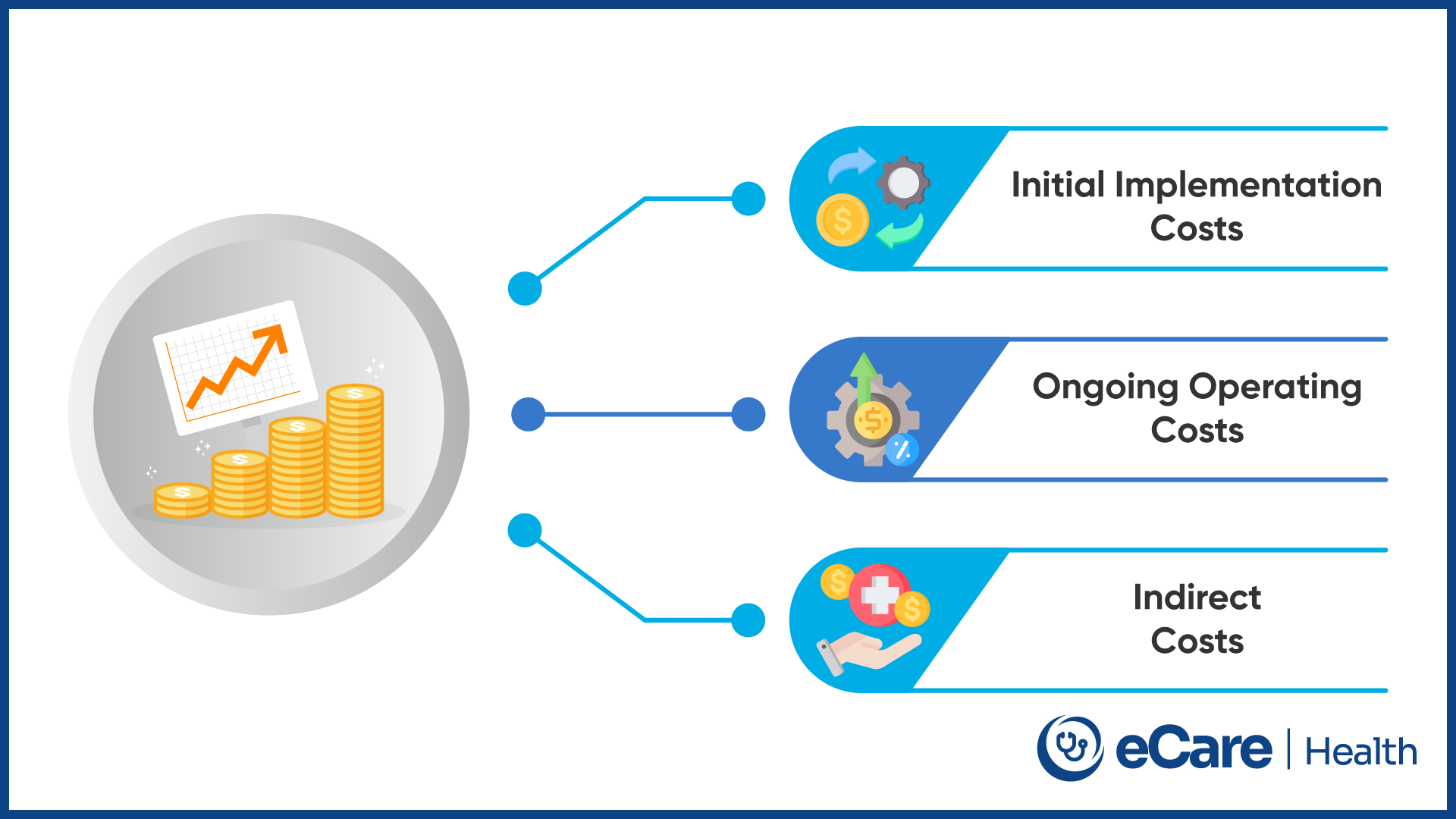
For calculating EHR ROI precisely, your practice should go further than considering software price. The total cost may involve upfront expenses, ongoing fees, and the time staff spend learning and adjusting to the new system.
Initial Implementation Costs
All the above expenses are involved in getting the EHR system ready for use. They may also involve software setup, transferring existing patient records, system configuration, and staff training.
Furthermore, practices using on-premise systems also have to pay for computers, servers, or other infrastructure.
Ongoing Operating Costs
Once the system starts running seamlessly, expenses might continue through monthly subscriptions or licensing fees. Practices also must account for technical support, maintenance, software upgrades, and fees for connecting the EHR with other tools like billing systems or laboratories.
Indirect Costs
Many costs are less apparent, as they involve staff time instead of direct payments. Employees require extra time to learn the system, and daily work might slow down during the transition. Additionally, staff can also spend more time correcting data or handling tasks manually while adjusting to new workflows.
Including all these expenses gives your practice a more realistic view of total EHR investment. Without them, the calculation may underestimate the actual cost and make the expected EHR return on investment appear higher than it is.
What Financial Benefits Can an EHR System Deliver?
An EHR system can offer numerous benefits beyond just storing patient records. When it fits your practice’s daily workflows, it can reduce routine expenses, save staff time, and make administrative tasks easier to manage. Ultimately, all these improvements can contribute to EHR cost savings over time.
| Financial Benefit | How It Helps a Medical Practice |
|---|---|
| Reduced Administrative Expenses | Digital records and automated workflows may reduce spending on paper, printing, filing, and manual data entry. |
| Improved Staff Productivity | Easier access to patient information and streamlined documentation can save staff time and help them manage daily tasks more efficiently. |
| More Efficient Billing Processes | Organized documentation and connected billing workflows can help reduce avoidable claim errors, resubmissions, and time spent correcting billing issues. |
| Lower Record Management Costs | Digital storage can reduce the need for physical filing space and make patient records easier to retrieve and maintain. |
These improvements contribute to the EHR financial benefits a practice may experience over time. However, actual savings depend on the system’s features, implementation, and how consistently staff use it.
How to Calculate ROI for an EHR System
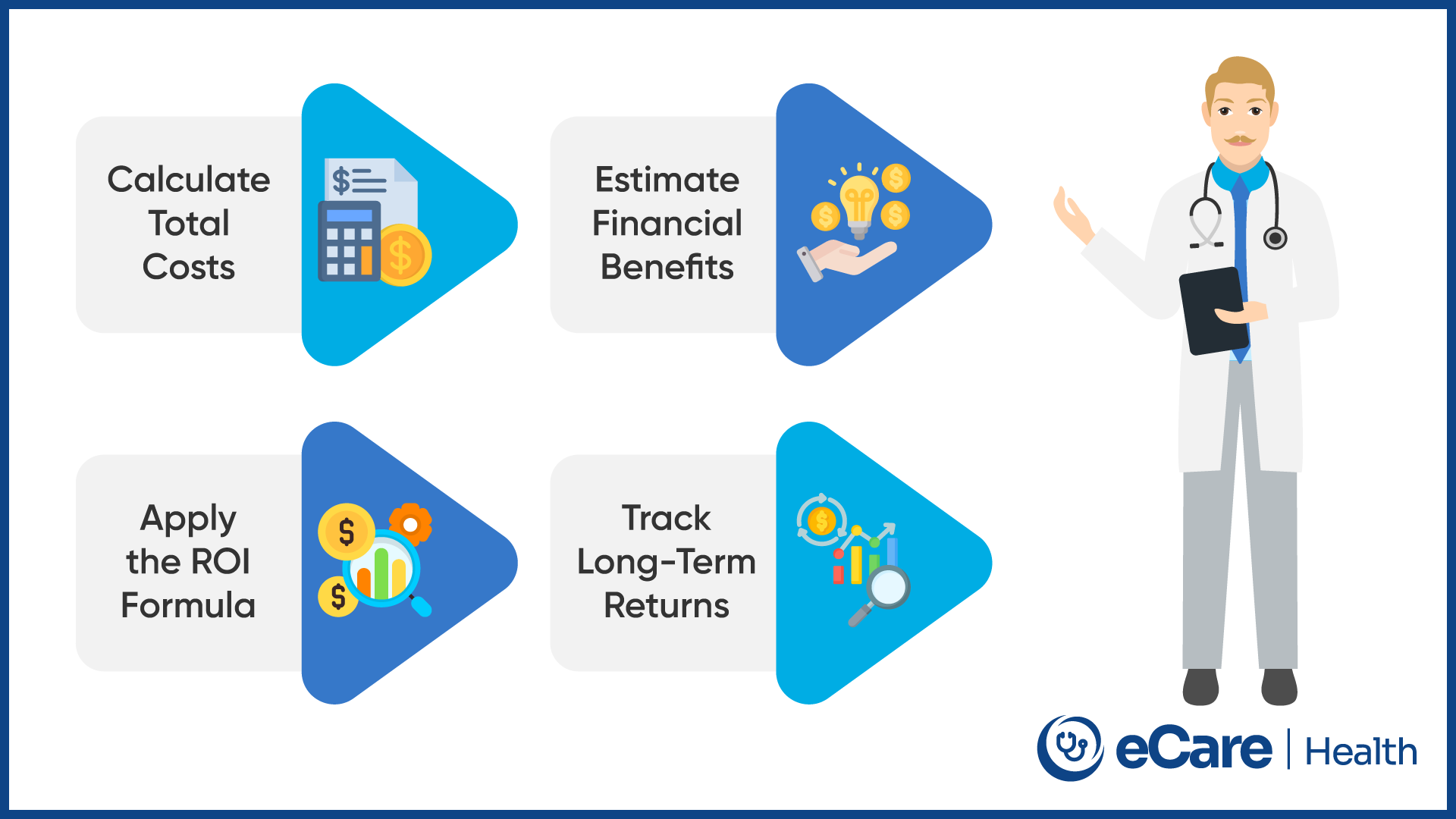
As we discussed earlier, calculating EHR ROI helps your practice understand whether the financial benefits of its EHR system outweigh the costs. You can also get a realistic estimate by collecting information about software expenses, implementation, training, and measurable savings. Use figures from your own practice wherever possible.
Step 1: Calculate the Total EHR Investment
Add all relevant expenses for your chosen period, such as implementation, staff training, software fees, integrations, maintenance, and technical support. This helps to give the total cost of the investment.
Step 2: Estimate the Financial Benefits
Start to identify measurable savings, including lower spending on paper and printing, reduced administrative costs, and less time spent correcting billing errors. Instead of assuming every potential benefit will result in savings, use actual practice data when available.
Step 3: Apply the ROI Formula
To calculate the percentage return, use the formula: ROI (%)= Total Benefits - Total Costs/Total Costs *100
For example, if your practice spends $20,000 on an EHR and receives $30,000 in measurable benefits over the same period, the ROI is 50%.
A positive result means the measured benefits exceed the costs, while a negative result means the costs are higher than the measured benefits.
Step 4: Evaluate the Results Over Time
Review your EHR return on investment over a suitable period, such as three to five years. Initial implementation expenses may affect early results, while savings from improved workflows may build gradually.
Understanding how to calculate ROI for an EHR system helps practices assess the financial value of their investment and make better-informed technology decisions.
What Factors Affect the Return on an EHR Investment?
The financial results of an EHR system rely on more than its features or price. Your practice’s daily workload, staff readiness, and ongoing expenses all contribute to how much value the system delivers.
Practice Size and Patient Volume:
If your practice handles more patient visits, then you have greater opportunities to save time through digital documentation and streamlined workflows. Meanwhile, small practices might have totally different cost requirements and saving potential depending on their workload.
Staff Training and Adoption:
Buying an EHR system is only half of the story, as your staff needs to understand how to use it in their daily work. Without proper training, your staff can continue depending on manual processes, limiting the expected EHR cost savings.
System Features and Integrations:
Moreover, features must also match your practice's requirements. For example, connecting billing tools with clinical documentation can reduce data entry, while helping staff to manage claims more efficiently.
Implementation and Ongoing Costs:
Many factors, including setup fees, subscriptions, maintenance, and additional charges, can affect the final return. Even when a system improves efficiency, high operating costs can reduce its overall financial value.
Considering these factors together helps practices set realistic expectations and understand what may influence their EHR ROI over time.
How eCareHealth Can Support Your EHR Investment
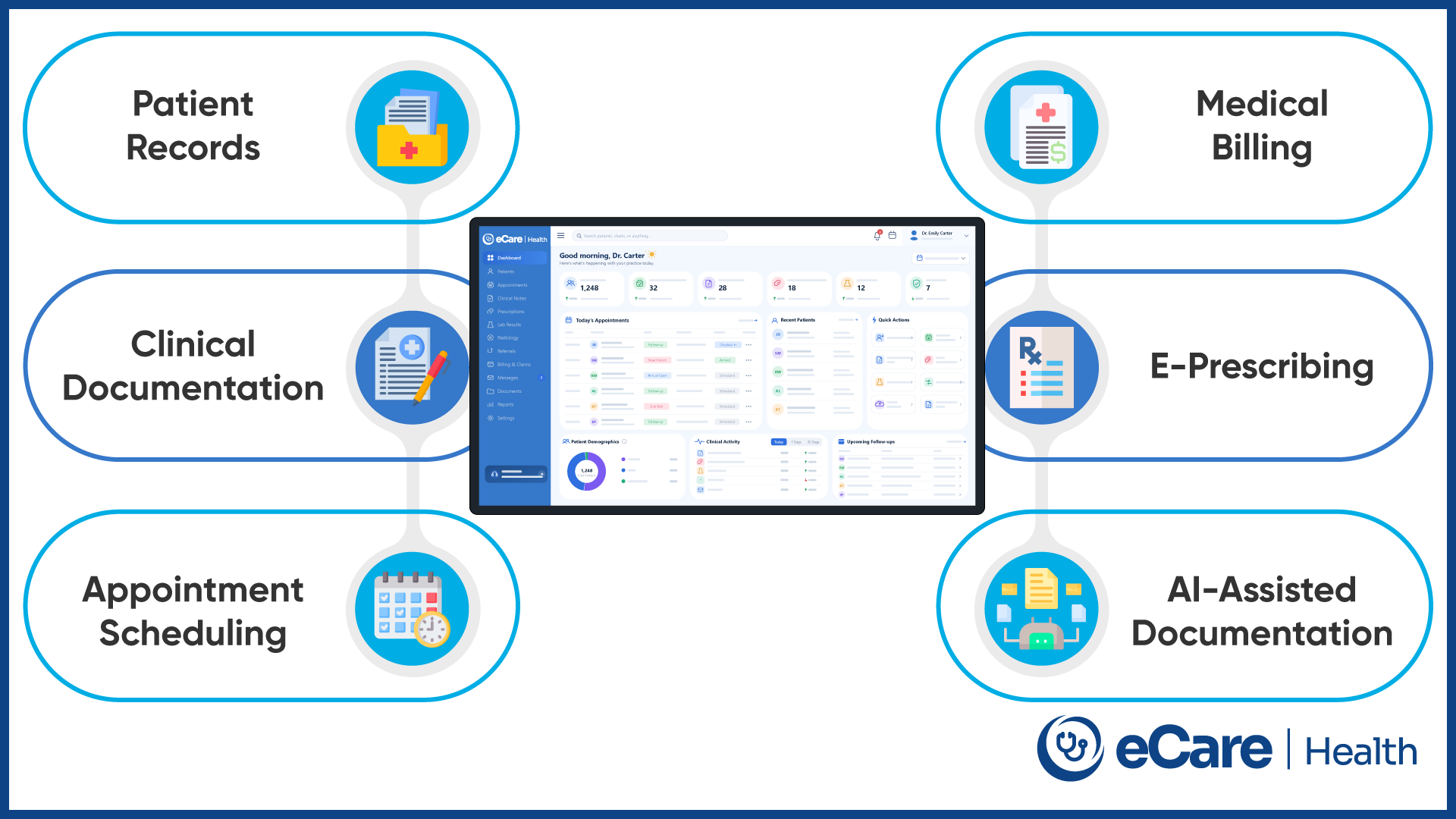
Selecting an EHR system is all about finding one that fits your practice’s needs and budget. eCareHealth offers features such as patient records, clinical documentation, appointment scheduling, billing, and e-prescribing in one platform. Having these tools together may help practices manage daily tasks more easily.
The platform also offers AI-assisted clinical documentation and integrations with other healthcare systems. These features may help reduce repetitive work and save staff time. However, the actual benefits depend on how well the system fits your practice and how your team uses it.
Before making a decision, consider the setup costs, training, ongoing fees, and features your practice needs. Comparing these expenses with the potential savings can help you understand the expected EHR ROI.
Conclusion: Understanding the Full Cost of an EHR System
Calculating EHR ROI helps healthcare practices understand whether their EHR investment is worth the cost. By considering setup expenses, ongoing fees, potential savings, and staff productivity, practices can make more informed decisions. However, the actual return depends on the practice’s needs, workflows, and how well the team uses the system.
The goal is to find an EHR that supports your daily operations while making financial sense over time. To explore a solution that fits your practice, discuss your requirements with eCareHealth.
Frequently Asked Questions (FAQs)
1. What is EHR ROI?
EHR ROI measures the financial value a healthcare practice receives from its electronic health record system compared with its total cost. It considers expenses such as software fees, implementation, and training alongside savings from reduced paperwork, improved productivity, and more efficient workflows.
2. How do you calculate ROI for an EHR system?
Subtract the total EHR costs from the total measurable benefits, divide the result by the total costs, and multiply by 100. Include expenses and benefits from the same period to calculate the return percentage accurately.
3. What costs should be included when calculating EHR ROI?
Include implementation, data migration, staff training, software subscriptions, integrations, maintenance, technical support, and upgrades. You should also consider staff time spent learning the system and any temporary productivity losses during implementation.
4. What are the financial benefits of EHR software for medical practices?
EHR software may reduce spending on paper records, printing, and physical storage. It can also help staff complete documentation faster, reduce repetitive administrative work, and support more efficient billing processes. Actual savings depend on the system and its use.
5. Can an EHR system help reduce administrative costs?
Yes. Digital records, reusable templates, and automated workflows can reduce manual data entry and paperwork. Easier access to patient information may also save staff time. However, the extent of these savings depends on the system's features and how well it fits the practice's workflows.
6. How long does it take to see a return on an EHR investment?
The timeline varies by practice. Some benefits may appear within the first year, while recovering implementation and training costs may take longer. Practice size, system adoption, ongoing expenses, and workflow improvements all influence how quickly the investment delivers measurable value.
7. What factors affect the return on investment of an EHR system?
Key factors include practice size, patient volume, staff training, system features, integrations, implementation costs, and ongoing fees. Consistent system use and well-designed workflows can improve the potential return, while high costs and limited adoption may reduce it.