Behavioral Health Data Security: How to Protect Sensitive Mental Health Records in Your EHR
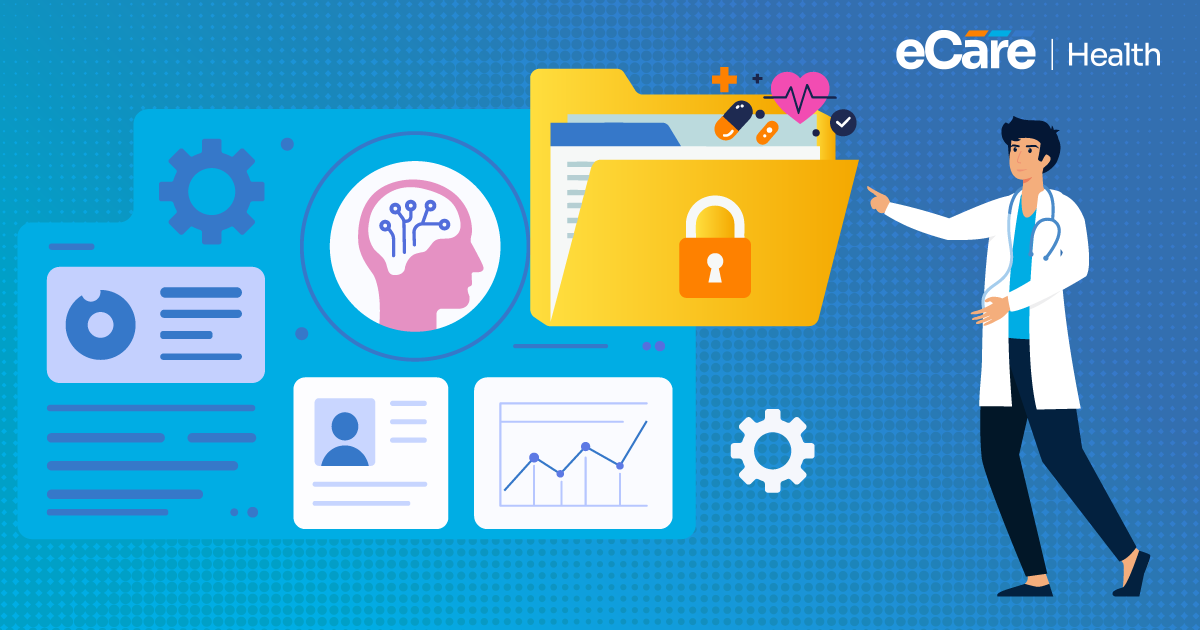
A behavioral health practice can go through an entire day without thinking much about security.
Now picture you, as a therapist, logging in to review yesterday’s session notes. Your staff member sends patient information to another provider. At the same time, someone new joins the team and needs access to the EHR.
Before the day is over, dozens of records may have been opened, shared, updated, or accessed. Everything feels like business as usual. But somewhere in between this routine, even one small gap can be enough.
An account may have more access than it requires. A file could be sent to the wrong person. Your staff member might fall for a phishing email. And suddenly, the same everyday workflows that are actually designed to support patient care can put most sensitive information in healthcare at risk.
This is the key challenge behind behavioral health data security. Protecting mental health records is not just about stopping sophisticated cyberattacks; it also means securing the everyday ways information is accessed, stored, shared, and handled.
With a secure behavioral health EHR, it becomes easy to create stronger controls around these workflows. However, effective protection also relies on the people and practices behind the technology.
In this guide, we will walk you through the common threats facing behavioral health organizations, practical steps for protecting sensitive records, and the EHR security practices that can help prevent small gaps from turning into serious data breaches.
Key Takeaways
- Understand the major threats to behavioral health data
- Reduce the risk of unauthorized access and data breaches
- Protect sensitive records across access, storage, sharing, and transmission
- Combine secure EHR technology with effective policies and staff training.
Common Threats to Sensitive Mental Health Records
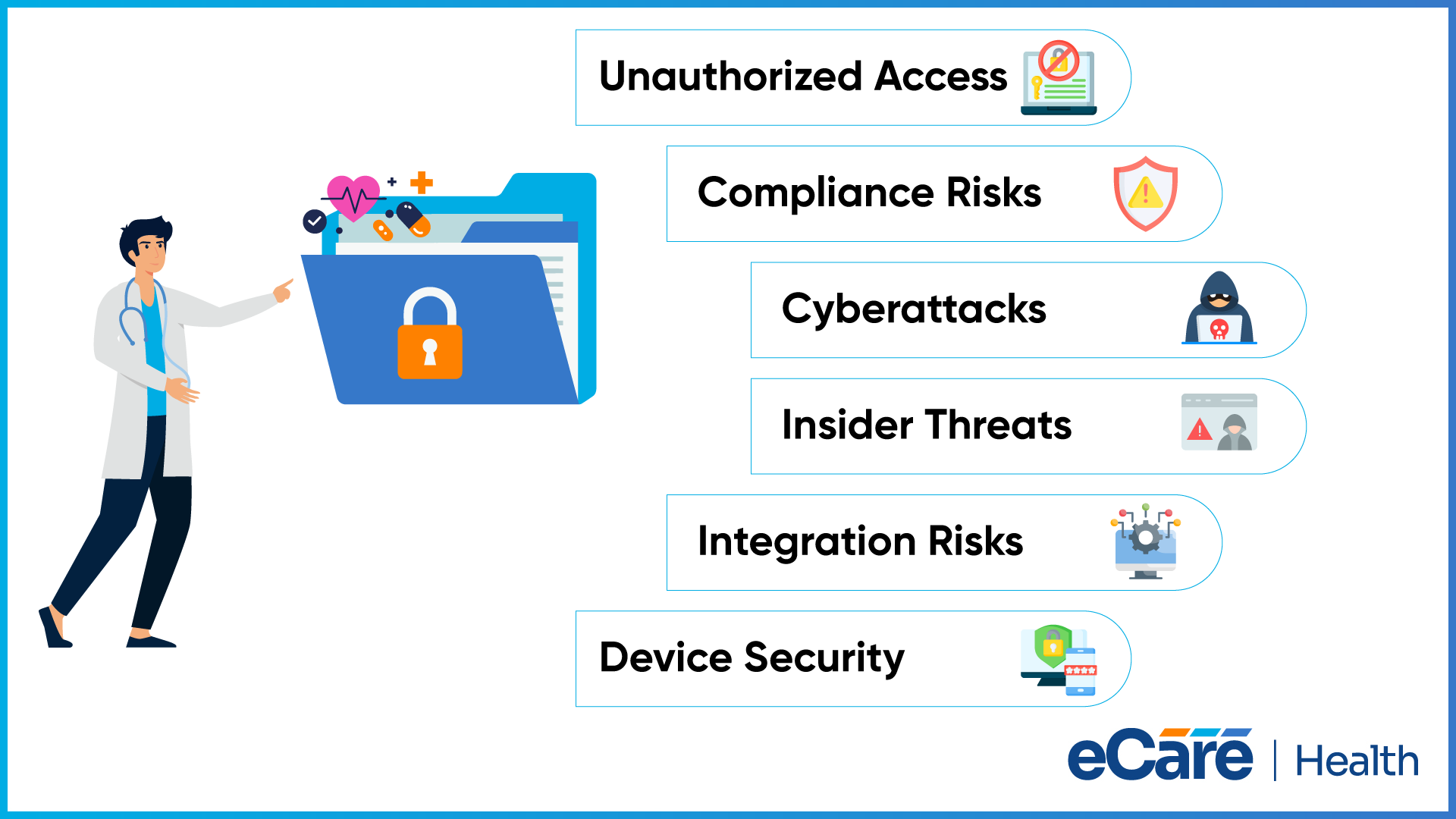
The risk factors we discussed above do not always start with a major cyberattack. Sometimes even one small mistake, like a stolen password, a suspicious email, or even an employee accessing a record they should not see, is enough.
Let’s see some of the more common threats behavioral health organizations need to watch for:
Unauthorized Access and Compromised Credentials
With a stolen username and password, the wrong person can access your patient’s sensitive information. This can happen because of weak passwords, phishing emails, or shared login details.
When employees can see more information than they actually need, access can also become a problem. Not everyone in your practice needs access to every patient record. If you limit access on the basis of a person’s role, it can help you to keep sensitive information in the right hands.
Regulatory Non-Compliance and Penalties
Furthermore, a data security issue can also lead to compliance trouble.
Behavioral health organizations should follow HIPAA, and certain substance use disorder records may have additional protections under 42 CFR Part 2. If you fail to protect this information, it can result in penalties, legal issues, and damage to your organization’s reputation.
Simply put, HIPAA data security in mental health is not limited to meeting a requirement. It is also about making sure patient information is handled safely every day.
Phishing, Ransomware, and Cyberattacks
Moving forward, it is a fact that not every cyberattack starts with advanced technology; it can also start with one click.
For example, your staff member receives an email that looks legitimate and clicks a malicious link. As a result, attackers can steal login credentials, access your patient information, or lock systems through ransomware.
Ultimately, your organization may lose access to necessary records, and normal operations can hit a wall. Because of this, behavioral health cybersecurity also relies on staff awareness and safe day-to-day practices.
Insider Threats and Improper Access
However, sometimes the risk actually comes from inside the organization. Without a valid reason, an employee or other authorized users can access your patient’s record. On the other hand, someone may still have access even after changing their roles or leaving the organization.
Clear permissions and regular access review can help prevent this, as not everyone requires a key to every door.
Third-Party and Integration Risks
As you may already know, behavioral health organizations frequently use more than one system. An EHR needs to connect with almost everything from billing platforms and telehealth tools to patient portals and other applications.
Although these connections can make work easier, they can also create additional security risks. If even one connected system is not secured properly, patient data can be at risk when it moves between platforms.
Physical and Device-Level Vulnerabilities
Not every security risk happens online.
Factors like a lost laptop, an unlocked computer, or an unencrypted mobile device can also expose sensitive information. Even leaving a workstation open in a busy clinic can create unnecessary risk.
Simple steps like locking devices, encrypting data, and securing physical records can go a long way toward protecting mental health records.
How to Protect Sensitive Mental Health Records in Your EHR
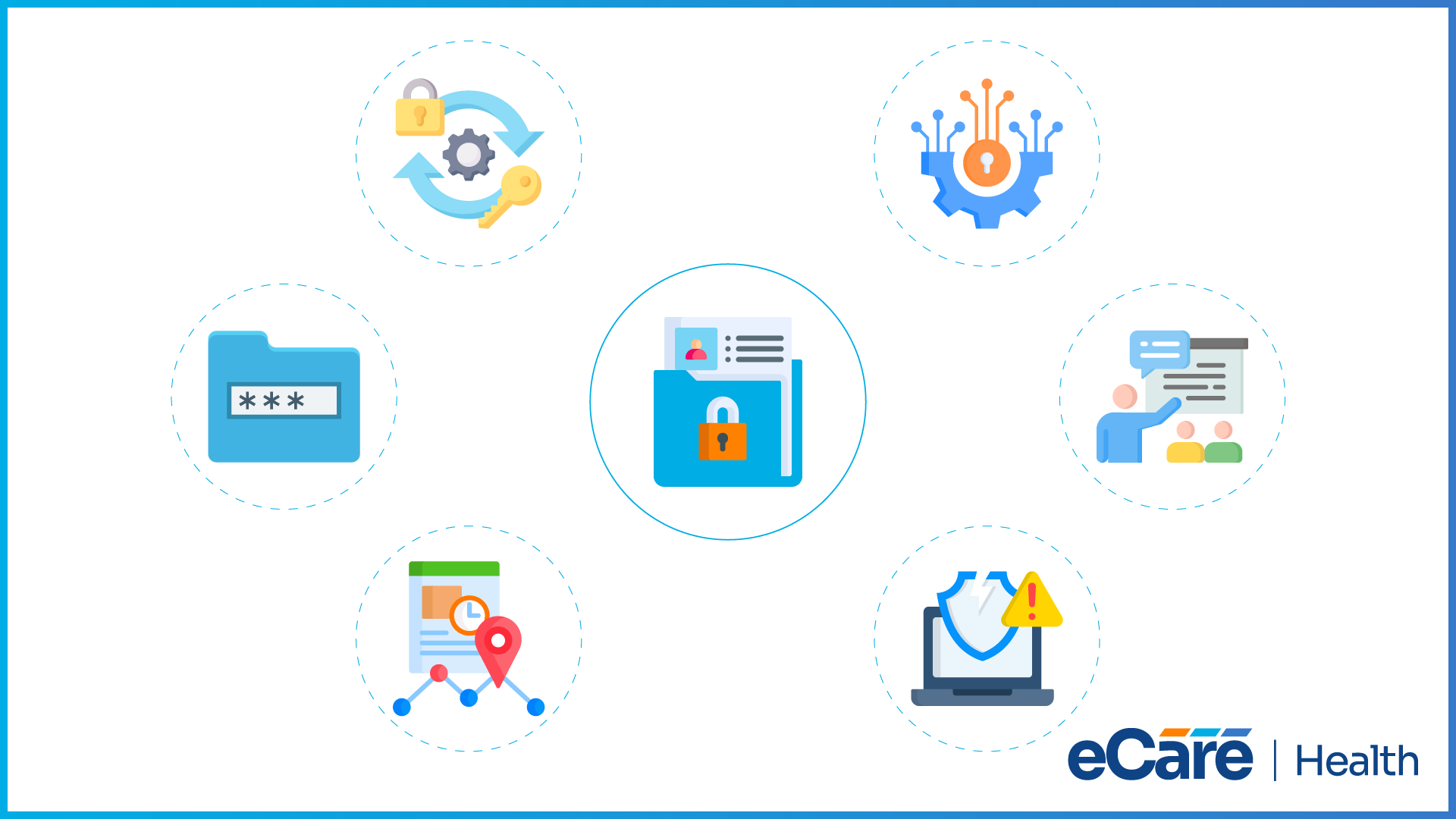
Understanding all the risks is half of the story; reducing them is where the real work starts.
Protection of sensitive mental health information does not rely on one security feature or one policy. Records should always stay protected at every stage, whether someone accesses them, stores them, shares them, or connects them with another system.
Let’s see some of the more practical ways to strengthen behavioral health data security within your EHR:
Control Access to Sensitive Records
As discussed above, not every person in a behavioral health practice requires access to every patient record.
For example, a front-desk employee, billing professional, therapist, and administrator require different access levels. If you set permissions on the basis of each person’s role, it can help you to limit unnecessary exposure to sensitive information.
Along with this, it is also important to review all these permissions regularly. If someone changes roles or leaves the organization, their access must be updated or removed. Otherwise, old permissions can quickly snowball into a security gap.
Protect Data During Storage and Transmission
No matter whether sitting in the EHR or moving from one system to another, mental health records must remain protected.
With encryption, you can protect sensitive information during storage and transmission, while making the data much harder to read in the case of interception or access without authorization.
Furthermore, secure methods must also be used while sharing behavioral health information with other providers, systems, or authorized parties. Simply put, data should never lose its protection just because it leaves one screen and moves to another.
Maintain Comprehensive Audit Logs
There should also be a clear record of what happens when sensitive information is accessed.
Audit logs allow you to track who accessed a record, what changes were made, and whether information was exported or shared. This can create visibility into how your patient data is being handled and can help organizations identify unusual or unauthorized activity.
Equally important is regularly reviewing these logs. A record of suspicious activity is useful only if someone notices it.
Secure Connected Systems and Integrations
An EHR rarely works alone. It may connect with telehealth platforms, billing tools, patient portals, laboratories, or other applications.
Each connection creates another path through which data can move and another area that needs to be secured. Behavioral health organizations should review the security practices of systems and vendors that interact with sensitive patient information instead of assuming that every connected platform provides the same level of protection.
Train Staff on Data Security
Technology can provide strong security controls, but one careless click can still create problems.
Staff should know how to identify suspicious emails, avoid unsafe links, handle patient information properly, and report possible security incidents. Training should also be ongoing because new threats and risks continue to emerge.
After all, security is not something employees learn once and forget. It needs to become part of everyday work.
Prepare for Security Incidents
Even with the right safeguards in place, no organization can assume that an incident will never happen.
A clear response plan can help teams act quickly when suspicious activity, unauthorized access, or a possible breach is identified. The plan should outline who needs to be informed, how the issue will be contained, and what steps should be taken to investigate and respond.
The simple goal here is to not wait until something goes wrong to decide what to do next.
Together, all these practices create a stronger foundation for mental health EHR security. However, putting these measures into place is only part of the equation. The security capabilities built into the EHR itself can make it easier to maintain these protections consistently across the organization.
How eCareHealth Supports Behavioral Health Data Security
The right security practices need the right system behind them.
As mentioned earlier, protecting sensitive records involves much more than limiting access or training staff. The EHR itself also plays a key role in how patient information is managed every day.
eCareHealth assists behavioral health organizations in bringing sensitive patient data and related workflows into one system, which further makes it easier to maintain greater control over how information is accessed, handled, and managed.
| Security Need | How eCareHealth Can Support It |
|---|---|
| Controlled access to records | Helps manage user access based on roles and responsibilities, reducing unnecessary exposure to sensitive patient information. |
| Visibility into user activity | Supports activity monitoring, helping organizations maintain greater visibility into how patient information is accessed and handled. |
| Centralized data management | Keeps behavioral health information and related workflows within one system instead of relying on scattered records and disconnected processes. |
| More controlled workflows | Supports structured workflows for documenting and managing sensitive patient information within the EHR. |
| Support for broader security practices | Provides a secure technology foundation that can work alongside organizational policies, processes, and staff security awareness efforts. |
All these capabilities help to address some of the security gaps which we discussed earlier, including unnecessary access, limited visibility into data activity, and risks created by disconnected workflows.
Even so, technology is not just a set-it-and-forget-it solution. Even a secure EHR cannot prevent every risk if user permissions are left unchecked, staff members are unaware of common threats, or the organization has no clear process for responding to an incident.
That is why behavioral health data security works best as an ongoing effort. eCareHealth can provide a stronger foundation for managing sensitive information, while access policies, staff awareness, regular reviews, and incident response processes help strengthen protection around it.
Together, these layers can support stronger mental health records protection and reduce the chances of a small security gap turning into a much larger problem.
Conclusion
Protecting sensitive mental health records is an ongoing responsibility, not a one-time security task. A stolen password, phishing attack, improper access, or unsecured device can put patient information at risk, while weak controls can make the damage even harder to contain.
Strong behavioral health data security comes from putting several layers of protection together. Access controls, encryption, audit logs, secure integrations, staff training, and incident response all have a role to play.
When these measures are supported by secure technology and clear organizational policies, behavioral health practices can reduce security gaps and protect patient information more consistently.
A secure mental health EHR can provide an important foundation for this effort by helping organizations manage sensitive records in a more controlled environment. Ultimately, protecting behavioral health information means keeping it secure throughout its lifecycle from the moment it is entered into the system to every time it is accessed, shared, or stored.
Frequently Asked Questions (FAQs)
1. What is behavioral health data security?
Behavioral health data security refers to the policies, processes, and technologies used to protect sensitive mental health and behavioral health information from unauthorized access, misuse, loss, or theft. It covers the entire data lifecycle, including how records are accessed, stored, shared, and transmitted. Common safeguards include role-based access controls, encryption, audit logs, secure integrations, staff training, and incident response procedures. The goal is to keep patient information private and secure while still allowing authorized providers to access the records they need for care.
2. Why is behavioral health data particularly sensitive?
Behavioral health records can contain deeply personal information, including diagnoses, therapy notes, treatment plans, medications, family or social history, and substance use information. Patients often share these details with the expectation that they will remain private. If this information is exposed without authorization, it can affect patient trust and potentially lead to stigma, discrimination, or other personal consequences. This is why behavioral health organizations need strong privacy and security measures in addition to following applicable requirements such as HIPAA and, where applicable, 42 CFR Part 2.
3. What are the biggest security threats to behavioral health data?
Some of the biggest threats include stolen credentials, phishing, ransomware, unauthorized employee access, insecure third-party applications, and lost or stolen devices. Human error can also create security gaps, such as sending information to the wrong recipient or leaving a workstation unlocked. Because behavioral health organizations often use several connected systems, data can also become vulnerable while being transferred between platforms. Addressing these risks requires a combination of technical safeguards, appropriate user permissions, regular security reviews, and ongoing staff awareness.
4. How can behavioral health organizations protect patient records?
Behavioral health organizations can protect patient records by controlling who can access sensitive information and regularly reviewing those permissions. Encryption should be used to protect data during storage and transmission, while audit logs can help track access and changes to records. Organizations should also secure connected applications, train employees to recognize phishing and other threats, and establish clear procedures for responding to security incidents. Regular security assessments can help identify weaknesses before they become larger problems and ensure that protection measures continue to meet the organization’s needs.
5. How can an EHR improve mental health record security?
A secure EHR can provide several safeguards that make it easier to protect sensitive mental health information during everyday clinical work. Role-based access can limit users to the information they need, while audit trails can provide visibility into who accessed or changed a record. Encryption can help protect information when it is stored or transmitted, and secure integrations can reduce risks when data moves between connected systems. A centralized EHR can also reduce reliance on scattered files and disconnected workflows, giving organizations greater control over how sensitive information is managed.
6. How can behavioral health organizations prevent data breaches?
Preventing data breaches starts with identifying where sensitive information could be exposed and putting safeguards around those areas. Organizations should use strong access controls, secure authentication, encryption, regular permission reviews, and audit monitoring. Staff should also receive ongoing training on phishing, password security, appropriate data handling, and reporting suspicious activity. Connected applications and devices should be reviewed for security risks as well. Finally, organizations should maintain an incident response plan so that if a breach does occur, the team knows how to contain the issue, investigate it, and communicate appropriately.
7. What role does cybersecurity play in behavioral health data protection?
Cybersecurity provides the technical and operational safeguards needed to protect behavioral health information from digital threats. It can help organizations defend against phishing, ransomware, malware, compromised accounts, and unauthorized system access. However, cybersecurity is not limited to installing security software. It also involves access management, encryption, monitoring, secure system configuration, employee awareness, and incident response. For behavioral health organizations, a strong cybersecurity approach helps protect both patient information and the systems clinicians rely on to provide care.
8. What should providers look for in a secure Behavioral Health EHR?
Providers should look for an EHR with strong access controls, encryption, audit trails, secure data management, and activity monitoring. It is also important to understand how the system handles integrations with third-party applications and how sensitive information is protected when it moves between systems. Beyond individual features, providers should consider whether the EHR can support their organization’s broader security policies and workflows. A secure EHR should make it easier to control access, monitor activity, protect patient information, and maintain consistent security practices without unnecessarily complicating everyday clinical work.