10 Patient Engagement Strategies That Actually Move Outcomes
In healthcare, engaging patients is one of the hardest tasks as tracking every patient and their behaviors is not humanly possible. However, in 2026, you don’t need to track every patient yourself as AI can now help you in doing that.
However, you have to move away from viewing engagement as just a marketing or communication challenge. Lower engagement means fewer appointments, fewer follow-ups, and ultimately revenue loss because of missed opportunities.
This is where using an EHR that integrates AI-powered patient engagement features and some key strategies can change your entire engagement rate. For instance, automating routine interactions and personalizing them for each patient becomes possible with AI features.
eCareHealth is one such EHR that helps practices create a seamless patient experience by connecting everything from scheduling and reminders to virtual visits and ongoing care management.
In this guide, we’ll explore 10 patient engagement strategies that are helping high-performing healthcare organizations improve patient participation, enhance outcomes, and build stronger, long-term patient relationships in 2026 and beyond.
Strategy 1 — Make Scheduling Effortless (self-scheduling + smart reminders)
Patient engagement usually starts long before the appointment itself. The scheduling process is the first interaction a patient has with a practice. If that experience is frustrating, engagement can take a hit before even care begins.
In today’s digital world, patients also expect the same convenience from healthcare. For example, they want to book appointments when it works for them, no matter if that is during a lunch break or late at night.
Offering patient self-scheduling helps to offer greater flexibility to patients while reducing the administrative burden on staff. It is a win-win situation for not only the practices but also for patients.
Appointment reminders are equally important. Automated reminders are generally delivered via text messages, emails, or phone calls. With automated reminders, your patients are more likely to stay informed and reduce the chances of missed visits. This simple reminder can further prevent scheduling gaps as well as lost revenue.
Along with convenience improvement, these tools can also directly affect outcomes. Practices that make scheduling easy and communicate proactively are more likely to see fewer no-shows, better resource utilization, and a seamless patient experience.
Moving forward, implementing automation and multi-channel communication that reaches patients anywhere is one of the most effective answers to how to reduce patient no-shows with reminders. This also helps your practice to stay organized and keep your patients engaged across their overall care journey.
Strategy 2 — Close the Pre-Visit Gap with Digital Intake
Patient engagement never starts when a patient walks through the door; it has already started even before the appointment. Even though the period between scheduling and the actual visit is overlooked, it always plays a key role in shaping your patient experience.
Tools like digital forms, pre-visit instructions, and online check-in help your patients arrive informed and prepared. Patients can complete important steps from their comfort space, rather than filling out paperwork in the waiting room. This can save time and reduce stress for both patients and staff.
Many practices realized that digital intake creates seamless workflows and cleaner data. Front-desk teams are also likely to spend less time on entering information manually, reducing errors, while helping appointments stay on schedule. The entire care journey becomes more efficient when everyone is on the same page.
And this is exactly where patient portal engagement becomes especially measurable. With a well-designed patient portal, individuals can easily access forms, appointment details, educational resources, and secure communication, all in one place. Stronger engagement before the visits usually results in better engagement during and after care.
Strategy 3 — Offer Flexible Access with Telehealth
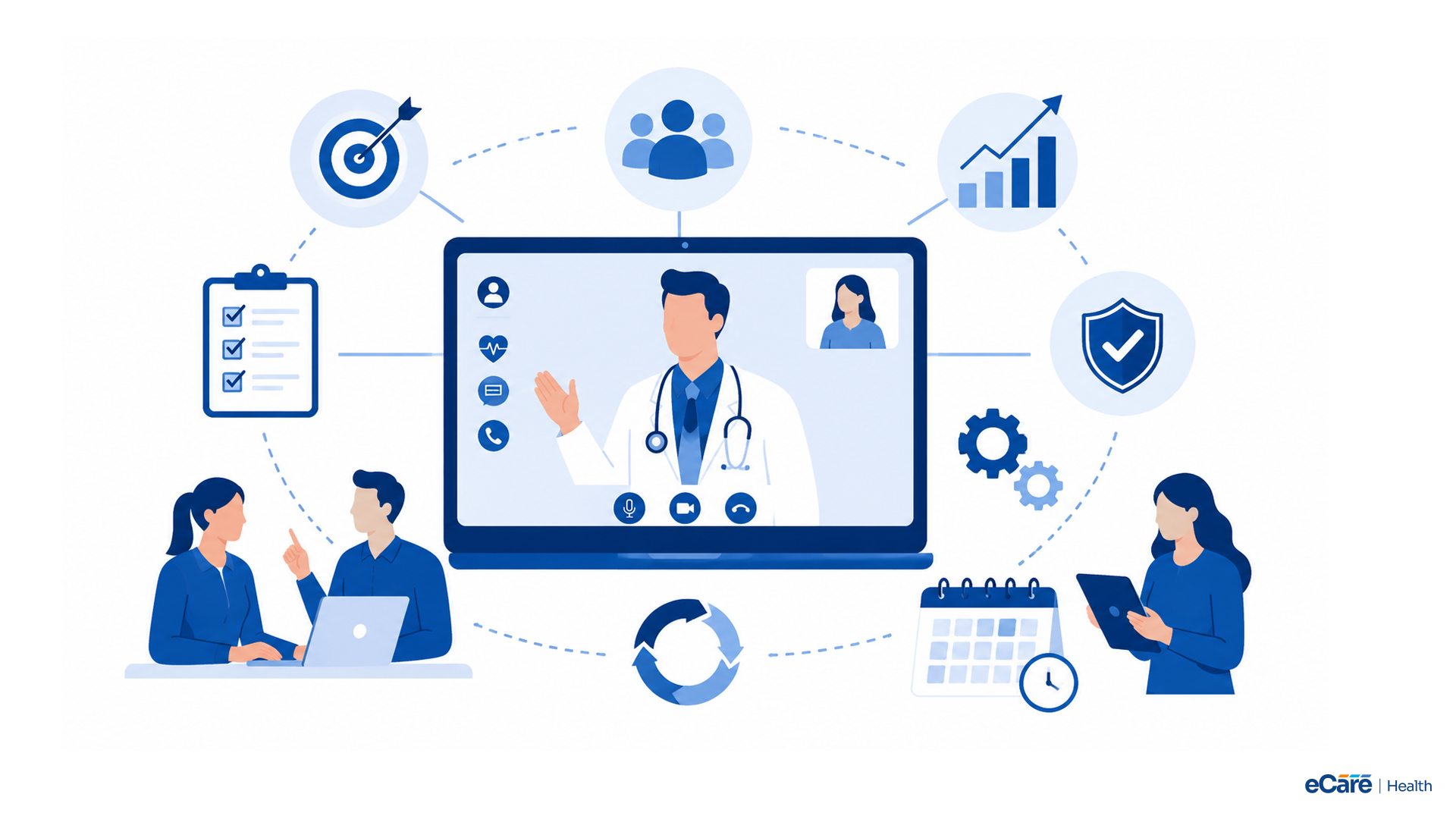
For patient engagement, convenience has become a key player. Your patients are more likely to delay appointments or skip follow-ups altogether when they find accessing care is difficult. That’s why telehealth has evolved from a temporary solution to a long-term strategy for better care delivery.
With virtual visits, it becomes easy for patients to connect with their providers without any challenges of travel, time off work, or transportation. Consequently, practices can reach more patients and reduce drop-offs throughout the care journey. This is valuable for follow-up visits, chronic care management, and behavioral health services.
The first thing you should understand here is that telehealth is not a replacement for every in-person visit. However, for routine check-ins, medication reviews, and post-treatment follow-ups, virtual care is one of the most convenient options.
By meeting your patients where they are, you can also strengthen relationships and encourage ongoing participation in care.
This shift has made telehealth patient engagement a key part of modern healthcare. Patients with easy access to care are more likely to stay connected, adhere to all treatment plans, and return for future visits.
Strategy 4 — Personalize Outreach with AI
When communication feels relevant and timely, your patients are more likely to engage. A generic message sent to every patient may check a box, but personalized outreach is something that actually moves the needle.
And, this is exactly where AI patient engagement starts to transform healthcare. With AI-powered tools, you can analyze your patient preferences, behaviors, and care histories. This further helps you to determine the best time, channel, and message for communication.
Whether it is a text reminder, an email, or a follow-up notification, the right message delivered at the right moment can significantly improve engagement.
Furthermore, by automatically identifying high-risk patients or those who are overdue for appointments, screenings, or follow-up care, AI also helps practices to work smarter. Rather than depending on manual outreach, your staff can focus on their efforts where they matter the most. This ensures that fewer patients fall through the cracks.
In fact, using AI to personalize patient communication is one of the key trends in patient engagement in healthcare. As patient expectations continue to evolve, personalized experiences are quickly becoming the norm, instead of the exception.
Moving forward, supporting this shift with AI-driven patient engagement capabilities can also help your practice to automate outreach, emphasize care gaps, and maintain stronger patient relationships over time.
Strategy 5 — Use the Patient Portal as an Engagement Hub
Patient engagement never ends when an appointment is over, as the actual work usually starts afterward. If your patients find it easy to access their health information, they are more likely to stay involved in their care and follow treatment plans.
From medical records and test results to educational resources and appointment scheduling, a patient portal helps to bring everything together in just one place. Rather than calling the office for every update, patients can find the information when they need it.
This convenience level improves the patient experience and also reduces your staff burden.
Yet, it’s not enough to simply have a portal. By making enrollment easy, highlighting its benefits during visits, and sending reminders for features like secure messaging and online bookings, practices need to encourage adoption. The easier the portal is to use, the more likely patients will make it to their healthcare routine.
Moving forward, strong patient portal engagement creates a win-win situation for both providers and patients. For example, patients feel more informed and connected; on the other hand, providers gain a better channel for communication and follow-up care.
An integrated patient portal also gives patients convenient access to records, results, communication tools, and appointment management, all in a single platform. When your patients have the right information at their fingertips, they are more likely to make better-informed decisions.
Strategy 6 — Automate Follow-Ups & Close Care Gaps
A patient’s journey never ends when they leave the clinic, as what happens after the visit can have a significant impact on outcomes. Patients are more likely to miss important next steps in their care journey without timely follow-ups, medication reminders, or preventive care notifications.
With automated follow-ups, practices can stay connected with patients even after the appointment. Timely communication keeps patients engaged and informed, no matter if it is a post-visit survey, medication reminder, annual wellness visit notification, or screening alert.
These reminders are valuable, especially for closing care gaps. With these reminders, you can automatically identify and contact patients who are overdue for follow-up appointments, vaccinations, or preventive screenings. This proactive approach makes sure that fewer patients fall through the cracks and supports better health outcomes.
Furthermore, automation also helps to reduce the staff burden. Rather than manually tracking every patient, your care teams can focus on delivering high-quality care. On the other hand, technology also handles repetitive outreach behind the scenes.
Strategy 7 — Enable Secure Two-Way Messaging
In healthcare, communication should not be a one-way street. Your patients often have questions regarding medications, follow-up instructions, or test results. Delays in getting answers can impact not only satisfaction but also adherence to care plans.
Secure two-way messaging offers patients a convenient way to communicate with their providers without even requiring phone calls or unnecessary office visits. When your patients ask questions and receive timely responses, they are more likely to feel connected to their care team and more confident in managing their own health.
Moving forward, it is a fact that convenience should never come at the expense of security. Every healthcare organization should always use a HIPAA-compliant messaging platform to protect its patient information.
Moreover, practices using text messaging must obtain appropriate patient consent to comply with TCPA requirements for SMS communications. The benefits of it go beyond. For example, faster communication can enhance medication adherence, minimize confusion, and help to resolve minor concerns before they become major issues.
Clear communication also keeps everyone on the same page. At the same time, they also allow providers and patients to communicate safely while keeping conversations connected to your patient’s health record.
Strategy 8 — Collect & Act on Patient Feedback (PROs)
Before moving forward, the first thing you must understand is that patient engagement is not all about sharing information; it is also about listening. It is a human tendency that if you feel heard, you are more likely to trust. Just like that, if your patients feel heard, they are more likely to trust their providers, stay engaged in care, and follow treatment care.
With post-visit surveys and patient-reported outcomes (PROs), practices can gain measurable insights into the patient experience. From satisfaction scores and symptom tracking to feedback on care quality, all these inputs help providers to understand what is working and where improvements are actually needed.
Anyhow, feedback collection is only half of the battle, as the real impact comes from acting on it. For example, if your patient reported long wait times or communication gaps, your practice must use that feedback to refine workflows and enhance the overall care experience.
This continuous feedback loop is beneficial for everyone. Your patients can feel that their voices actually matter; on the other hand, providers gain the insights required to deliver more personalized and effective care. Even though it seems like these are small improvements, they can move the needle on both engagement and outcomes.
Strategy 9 — Support Self-Management Between Visits
As we discussed earlier, patient engagement should never begin and end with appointments. As you may already know, for chronic condition patients, the time in between visits is as important as the visit itself. Even the best treatment plans can fail if ongoing support is not there.
Providing educational resources, regular check-ins, and remote monitoring tools helps your patients to take a more active role in their health. No matter if it is managing diabetes, hypertension, or other chronic conditions, informed patients are more likely to follow care plans while making healthier decisions.
As the long-term outcomes depend on consistent participation outside the clinic, this approach becomes even more important, especially in patient engagement in healthcare. Small actions like reviewing educational materials or responding to care reminders can add up over time, while improving adherence.
Furthermore, with care management programs and remote patient monitoring (RPM) providers can stay more connected with their patients in between visits. Tracking health data and identifying potential concerns early can help care teams intervene early.
They also help your practices to maintain continuity of care and keep your patients more engaged throughout their entire healthcare journey.
Strategy 10 — Measure Engagement by Outcomes, Not Vanity Metrics
Engagement is only valuable if it leads to better outcomes. Even though high app downloads or email open rates look impressive on paper, they actually do not always translate into improved patient care. It makes one thing clear: the metrics that truly matter are those that reflect patient behavior and practice performance.
Practices must focus on indicators like no-show rates, patient retention, portal adoption, and follow-up completion rates. All these metrics help practices to get a clear picture of whether your engagement efforts are actually enhancing care access, strengthening relationships, and supporting better outcomes.
For instance, strong patient portal engagement is only measurable if patients are actively using the portal for scheduling appointments, reviewing records, or communicating with providers. Similar to this, lower no-show rates and higher follow-up completion rates also indicate that engagement strategies are working as intended.
When it comes to measurement, consistency always matters more than perfection. A weekly review of key metrics can allow you to identify trends earlier, make timely adjustments, and stay one step ahead of potential issues.
Finally, the most efficient patient engagement strategies are not the ones that generate the most clicks; they are actually the ones that enhance patient experiences and lead to better health outcomes.
How eCareHealth Ties These Strategies Together
Implementation of a few engagement initiatives can certainly help, but managing them across disconnected systems may create new challenges. If your one tool handles scheduling, another manages messaging, and another stores patient data, it is obvious that your team may struggle to handle multiple platforms while information slips through the cracks.
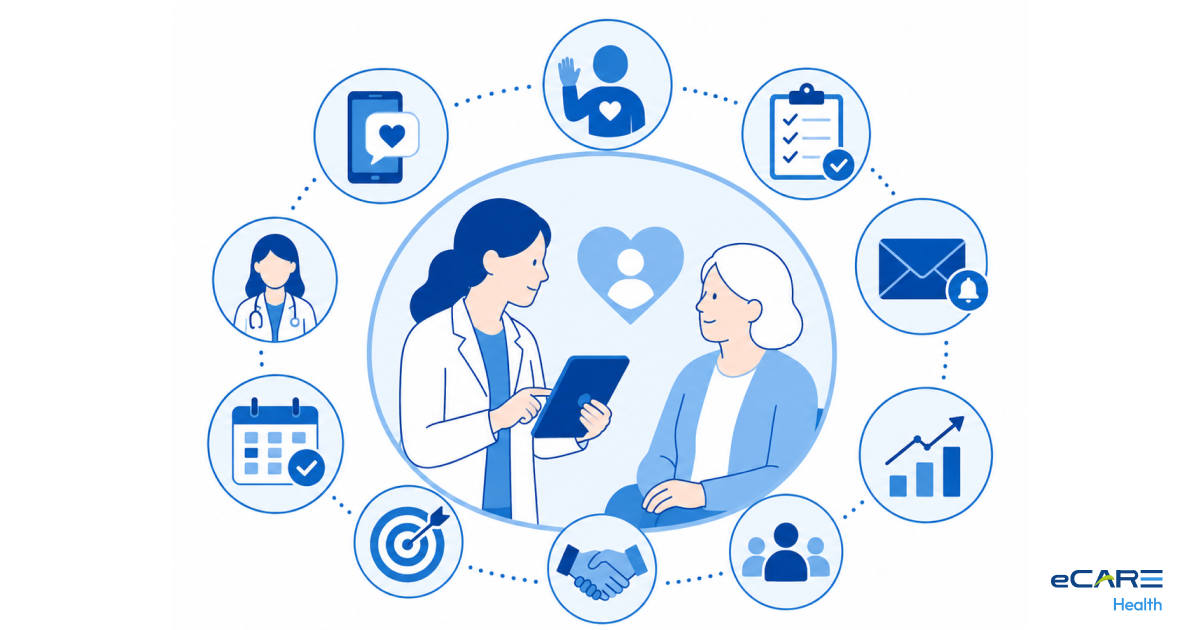
The truth here is that successful patient engagement strategies work best when they are connected. Scheduling, reminders, telehealth, patient portals, follow-ups, and analytics must work together to create a smooth patient experience from the first appointment to long-term care management.
And this is exactly where an integrated platform like eCareHealth starts to make a huge difference. Bringing scheduling, communication, telehealth, patient engagement, and care management into one ecosystem can help practices in streamlining workflows while reducing administrative complexity. Engagement becomes easier to manage and more effective at driving outcomes when all the pieces fit together.
Conclusion
Effective patient engagement is not about sending more messages or adopting more tools. It is about creating connected experiences that make it easier for patients to access care, stay informed, and remain active participants in their health journey.
From scheduling and telehealth to follow-ups and secure messaging, the most successful patient engagement strategies work together to improve outcomes, strengthen relationships, and build long-term loyalty. In today's healthcare landscape, engagement is no longer a nice-to-have; it is a competitive advantage.
Ready to elevate your patient experience? Book an eCareHealth demo to see how an integrated platform can help your practice deliver seamless, patient-centered care.
Frequently Asked Questions
What are patient engagement strategies?
Patient engagement strategies are methods healthcare organizations use to actively involve patients in their care journey. These strategies may include self-scheduling, telehealth, patient portals, automated reminders, secure messaging, and personalized communication to improve health outcomes and patient satisfaction.
Why is patient engagement important in healthcare?
Strong patient engagement in healthcare leads to better outcomes, improved treatment adherence, and higher patient satisfaction. Engaged patients are more likely to attend appointments, follow care plans, and take an active role in managing their health.
How does AI improve patient engagement?
AI patient engagement tools help practices personalize communication based on patient preferences, behavior, and care needs. AI can automate reminders, identify high-risk patients, and support using AI to personalize patient communication, helping providers deliver more timely and relevant outreach.
How do you measure patient engagement?
Patient engagement can be measured using metrics such as portal adoption, follow-up completion rates, patient satisfaction scores, no-show rates, and retention rates. Reviewing these metrics regularly helps practices understand whether their engagement efforts are driving meaningful outcomes.
What is a good patient engagement rate?
There is no single benchmark for patient engagement because it varies by specialty and practice size. However, high portal usage, strong follow-up completion rates, and low no-show rates are generally indicators of successful engagement efforts.
How can clinics reduce no-show rates?
Clinics can reduce no-shows by implementing appointment reminders, offering patient self-scheduling, and providing flexible care options such as telehealth. In fact, one of the most effective ways for how to reduce patient no-shows with reminders is through automated text, email, and phone notifications.
Is patient engagement / messaging software HIPAA compliant?
Patient engagement software can be HIPAA compliant if it includes safeguards such as encryption, secure access controls, audit logs, and protected communication channels. Practices should also ensure proper patient consent is obtained for SMS communications when required.
Can patient engagement tools integrate with my EHR?
Yes. Many modern patient engagement software solutions support interoperability standards such as HL7 and FHIR, allowing them to integrate with existing EHR systems. This helps practices streamline workflows and create a more connected patient experience.