EHR Interoperability in 2026: Your Roadmap to True Data Liquidity
In 2026, healthcare is more connected than ever before, and interoperability is essential if you want to deliver a seamless care experience. Not only that, but many healthcare interoperability standards are changing how data is exchanged, and EHRs are designed.
For instance, TEFCA, USCDI v3, and FHIR R4 APIs are changing the way healthcare organizations exchange patient data. More importantly, today’s information is not just a line of data but a valuable asset that you need to prove that the care you provided actually happened.
And for that, you need an EHR system that seamlessly integrates with multiple healthcare systems, including different labs, third-party vendors, billing systems, pharmacies, and digital health platforms.
At the same time, many healthcare leaders are discovering that interoperability is about much more than connecting systems. True success comes from achieving data liquidity—the ability to move accurate, timely, and actionable data wherever it is needed.
With eCareHealth, healthcare organizations can simplify interoperability initiatives through modern integration capabilities, streamlined data exchange, and scalable connectivity across the healthcare ecosystem. In this guide, we’ll explore the roadmap to achieving true data liquidity in 2026 and the practical steps organizations can take to build a more connected future.
What Is Data Liquidity in Healthcare (vs Basic Interoperability)?
Today, most healthcare organizations can exchange data in some form. However, exchanging data and actually using it effectively are two totally different things. Just because your systems can talk to each other does not mean they truly understand one another.
This is exactly where data liquidity in healthcare jumps in. Simply put, data is liquid when it can move securely and smoothly to the right place, at the right time, and in a format that can be used immediately. In other words, clinicians should not have to struggle for information or manually re-enter data that already exists elsewhere.
EHR interoperability is all about connectivity; on the other hand, data liquidity is all about usability. For example, data that cannot be acted upon is like water trapped in a pipe; even though it exists, it cannot flow where it is needed most.
Mainly, healthcare interoperability operates across three levels:
- Foundational interoperability: Systems can send and receive data.
- Structural interoperability: Data follows a standardized format so systems can interpret it correctly.
- Semantic interoperability: Systems exchange data with shared meaning, enabling accurate and actionable information.
In everyday workflows, the difference becomes even clearer. When data is truly liquid, lab results can flow directly into the EHR in real time, and e-prescription confirmations update the patient’s chart automatically. Without additional steps, providers get the information they actually need.
Conversely, when your staff members re-key faxed referral notes or upload PDFs that cannot be searched, analyzed, or acted upon, data is not liquid. As a result, these manual processes can slow down care, increase errors, and create unnecessary administrative burden.
The core goal of modern healthcare is not just simply to connect systems; actually, it is to make data usable. In today’s digital landscape, connected systems are only half the battle, and action data is what truly drives better care.
TEFCA in 2026: What Changed and Why It Matters
The need for smooth data sharing continues to grow, as healthcare becomes more connected. Today, providers exchange information with hospitals, labs, pharmacies, payers, and specialists every day. However, when these systems fail to communicate effectively, care can slow down, while staff end up doing extra work.
And this is exactly where Trusted Exchange Framework and Common Agreement (TEFCA) jumps in, which was created to make healthcare data sharing easier and consistent across the country. Instead of relying on multiple disconnected networks, it offers a common framework to exchange information securely.
Moving forward, Qualified Health Information Networks, or QHINs, are a key part of TEFCA. These networks act as trusted intermediaries, which can help healthcare organizations to share data with one another. You can think of them as bridges that connect different systems so information can flow seamlessly from one to another.
In 2026, TEFCA continues to expand its reach to support more organizations and broader use cases like treatment, payment, operations, and patient access. This process further helps the industry to move closer to true healthcare interoperability and more efficient health information exchange (HIE).
For practices, the benefits are less time tracking down records, fewer manual processes, and better access to patient information when it is needed the most.
Here you might be wondering about: what this means for your practice?
Well, choosing systems that support modern interoperability standards can help your organization to share data more efficiently and stay ready for future requirements.
USCDI v3: The Data Elements You Must Capture
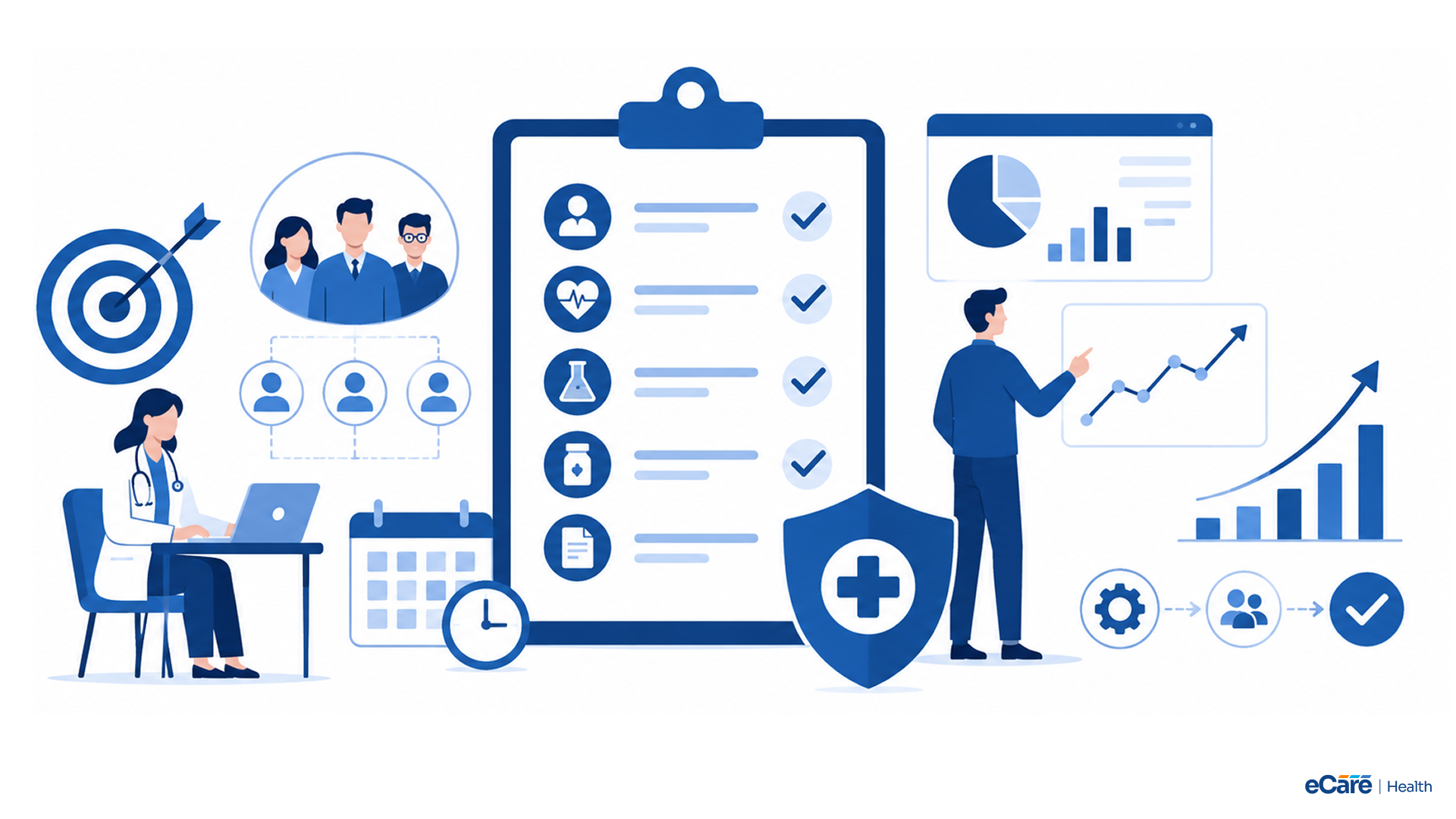
Along with moving data, interoperability is also about ensuring everyone is speaking the same language. And this is exactly where the United States Core Data for Interoperability (USCDI) starts to show up, as it defines the standard data elements that healthcare systems should capture and exchange.
By expanding the information types that can be shared across systems, USCDI v3 builds on earlier versions. New and updated data classes help to create a more complete picture of your patient’s health. This further makes it easier for you to coordinate care, while supporting better outcomes.
The simple goal behind it is that when your organization captures data in a standardized way, information becomes easier to exchange, search, and use. This is one of the key steps toward stronger EHR interoperability and more reliable healthcare data interoperability.
Let’s have a quick look at some of the key USCDI v3 data classes and examples of the elements they include:
| USCDI v3 Data Class | Example Elements |
|---|---|
| Allergies & Intolerances | Substance, reaction, severity |
| Care Team Members | Provider name, role, contact details |
| Clinical Notes | Progress notes, discharge summaries |
| Goals | Patient goals, target outcomes |
| Health Insurance Information | Coverage details, payer information |
While the list continues to evolve, the clear message behind it is: standardized data results in better communication between systems and fewer gaps in care.
Building a FHIR-First Integration Layer
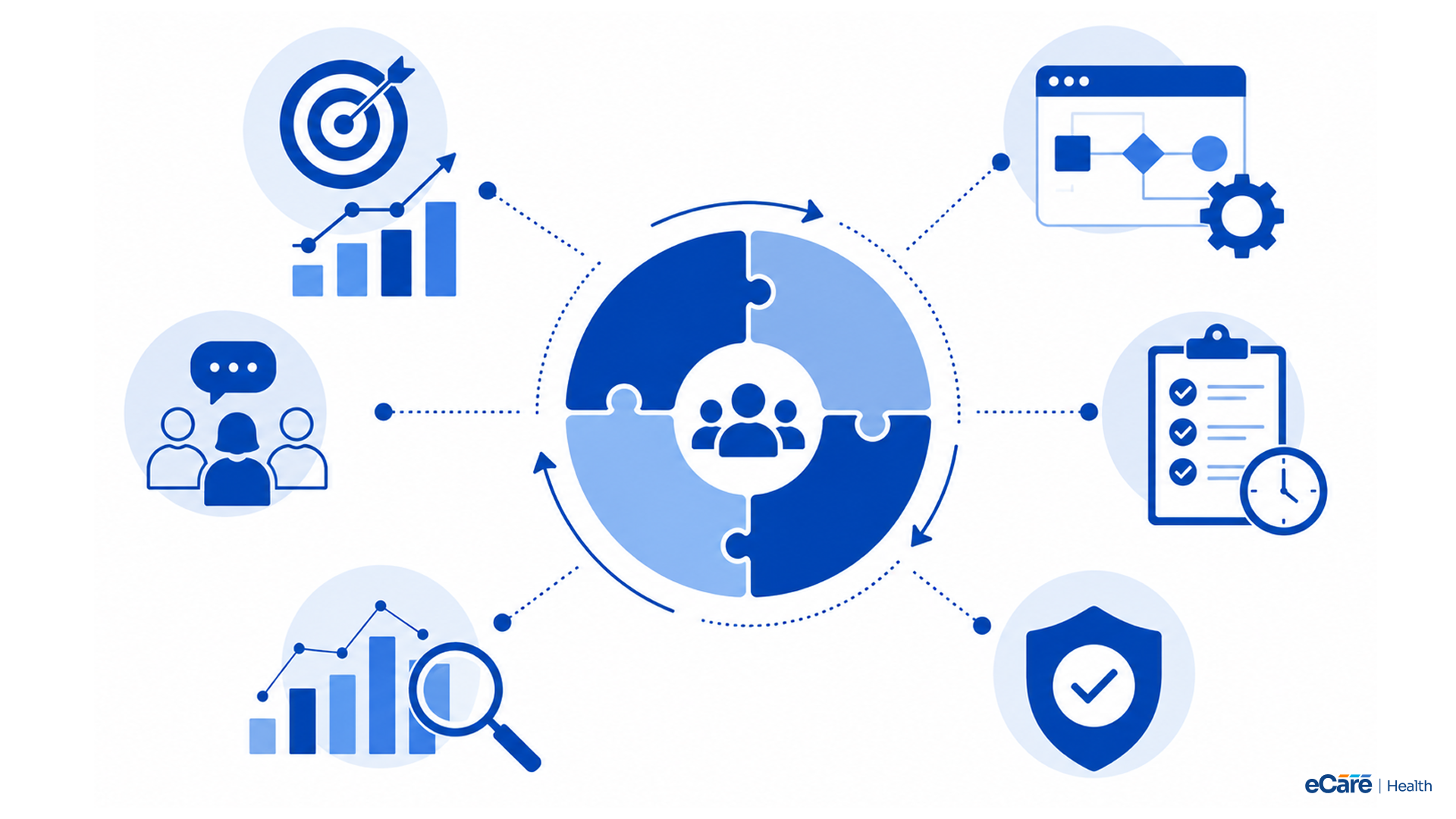
If data liquidity is the goal, Fast Healthcare Interoperability Resources (FHIR) is one of the key technologies that help healthcare to reach there. FHIR offers a standardized way for systems to not only exchange data immediately, but also securely. It helps various applications speak the same language.
FHIR R4 is a widely adopted version of the standard, and today most of the modern healthcare integrations are built on it. Combined with US core profiles, it defines how common data should be structured and shared. This data may involve patient demographics, medications, and allergies.
Furthermore, by allowing third-party apps to connect securely to EHRs using standardized APIs, SMART on FHIR adds another layer.
So far, you may have been wondering how to achieve EHR interoperability, right?
Well, the answer usually starts with a FHIR-first approach. Rather than building custom integrations for every new application, your practice can create a flexible integration layer that can further support future growth and easier connectivity.
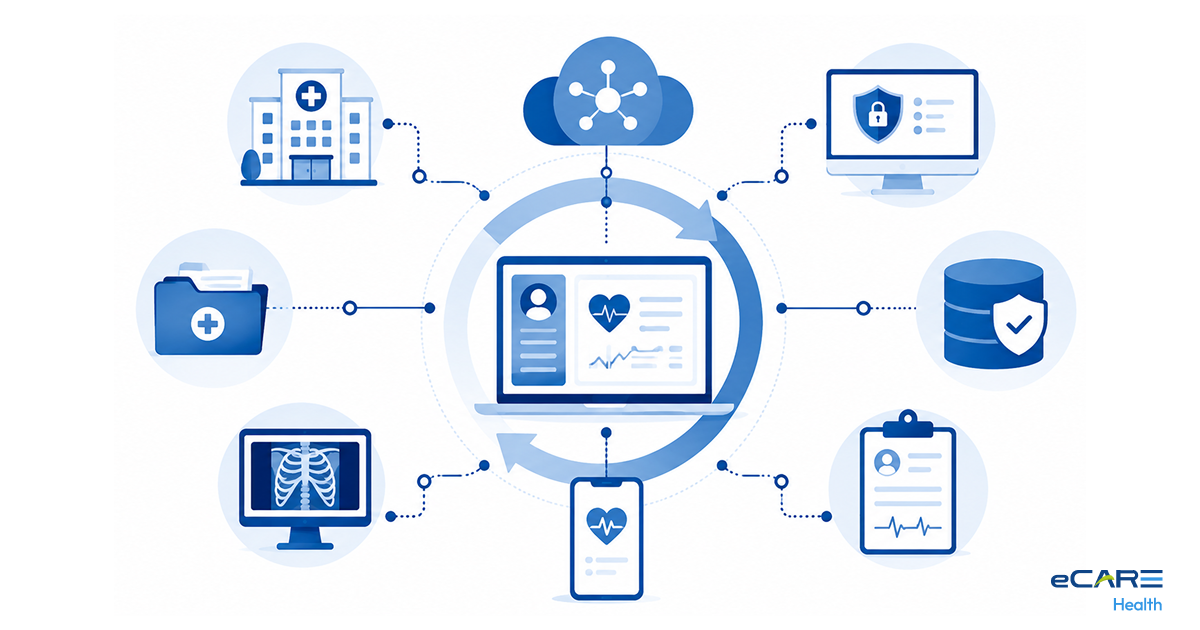
A common architecture looks something like: EHR → API Gateway → Partners/HIE.
In this model, the EHR is like the source of trust. On the other hand, an API gateway helps to manage secure data exchange between labs, pharmacies, billing systems, digital health applications, and health information exchange (HIE) networks.
Healthcare organizations generally use several integration patterns depending on their needs:
- Point-to-point: Direct connections between two systems, often difficult to maintain over time.
- Hub-and-spoke: A central platform connects multiple applications through a single hub.
- HIE-based exchange: Organizations share data through regional or national exchange networks.
- API-based integrations: Modern APIs connect EHRs with labs, e-prescribing systems, billing tools, and remote monitoring devices.
Many organizations explore FHIR API integrations as a long-term strategy for connected care, as interoperability needs continue to grow. Because of this, it becomes necessary now to understand how to build a FHIR integration layer.
Interoperability Audit-Readiness Checklist
The main fact is that building an integration layer is only half the battle. Proving that your systems actually exchange data securely, accurately, and in compliance with evolving regulations is the next step. It is obvious that interoperability without governance can silently become a double-edged sword.
Healthcare organizations should also be prepared for audits, security reviews, and compliance checks, as EHR interoperability becomes more widespread. Being audit-ready can help your organization to reduce risk while building trust across the healthcare ecosystem.
Here is the checklist if you are wondering about how to prepare for an interoperability audit:
- Maintain detailed audit logs that track who accessed data, when, and why.
- Document data provenance to show where information originated and how it moved across systems.
- Implement role-based access controls to ensure users only access the information they need.
- Manage patient consent preferences and document data-sharing permissions.
- Review compliance with the Information Blocking Rule under the 21st Century Cures Act.
- Verify HIPAA safeguards, including encryption, secure transmission, and access monitoring.
- Conduct regular security assessments to identify vulnerabilities before they become risks.
- Test integrations periodically to ensure data remains accurate, complete, and reliable.
Strong interoperability is not only about exchanging information, but also about exchanging it responsibly. When organizations emphasize security, transparency, and compliance, they are more likely to stay better positioned to support trusted healthcare data interoperability.
How eCareHealth Enable Data Liquidity
Achieving interoperability is all about making sure that data moves securely, accurately, and with context. And this is the strong foundation of data liquidity in healthcare, where information is available when and where it is needed. The simple goal here is to get the right information to the right person at the right time.
This is where eCareHealth starts to play a key role as it serves as the EHR platform that can not only capture, but also manage clinical, operational, and patient data. As it supports standards-based integrations and secure data exchange, it also helps your practice to connect with labs, pharmacies, billing systems, and other healthcare applications more effectively.
This connected approach breaks down data silos while supporting stronger EHR interoperability across the care continuum. You are more likely to spend less time searching for records and more time focusing on patient care when information flows seamlessly within systems.
The benefits of it extend beyond convenience. With secure and scalable data exchange, practices can see improvements in care coordination and a reduction in duplicate work, while supporting compliance with evolving interoperability requirements. After all, healthcare works best when everyone works together.
Conclusion
True interoperability is not just about connecting systems—it is about ensuring data arrives accurately, on time, and ready to use. That is the real meaning of data liquidity in healthcare.
The roadmap for 2026 is clear: get TEFCA, USCDI v3, and FHIR R4 right, build a FHIR-first integration layer, and keep your systems audit-ready. The result is stronger EHR interoperability, better care coordination, less manual re-entry, and fewer Information Blocking risks.
Ready to make healthcare data work harder for your practice? Schedule an eCareHealth demo to see interoperable care in action.
Frequently Asked Questions
What is the difference between interoperability and data liquidity in healthcare?
EHR interoperability refers to the ability of different healthcare systems to exchange information. Data liquidity in healthcare, however, goes a step further. It means data is not only exchanged but also arrives in a format that is accurate, timely, and immediately usable by clinicians and staff.
What is TEFCA and what changed in 2026?
TEFCA (Trusted Exchange Framework and Common Agreement) is a nationwide framework designed to simplify health data exchange across organizations. In 2026, TEFCA continues to expand through Qualified Health Information Networks (QHINs), supporting broader use cases such as treatment, payment, operations, and patient access.
What is USCDI v3 and which data elements does it require?
USCDI v3 is a standardized set of health data classes and elements that healthcare systems should capture and exchange. These include patient demographics, medications, allergies, vital signs, clinical notes, procedures, and care team information, among others.
What is FHIR R4 and SMART on FHIR?
FHIR R4 is a widely adopted interoperability standard that enables healthcare applications to exchange data using APIs. SMART on FHIR builds on this by allowing third-party applications to connect securely with EHRs, making integrations easier and more scalable.
What is the Information Blocking Rule and how does it affect healthcare providers?
The Information Blocking Rule, established under the 21st Century Cures Act, prohibits practices that interfere with the access, exchange, or use of electronic health information. Healthcare providers must ensure that patient data can be shared appropriately unless a permitted exception applies.
What are the consequences of not achieving EHR interoperability by 2026?
Organizations that fail to achieve interoperability may face inefficient workflows, duplicate data entry, delayed care coordination, and increased compliance risks. Limited data sharing can also affect patient experiences and operational efficiency as industry expectations continue to evolve.
How do EHRs exchange data with labs, pharmacies, and partners?
EHRs exchange information through interoperability standards such as HL7 and FHIR, APIs, and health information exchange (HIE) networks. These connections allow healthcare organizations to securely share lab results, prescriptions, billing information, and clinical data.
How does eCareHealth support EHR interoperability and data exchange?
eCareHealth supports healthcare data interoperability through standards-based integrations and secure data exchange capabilities. By connecting with external systems and healthcare applications, it helps organizations reduce data silos and support more connected care workflows.